How to Get Your Peace Lily to Flower More
If your peace lily has lots of leaves but few flowers, light is usually the first thing to check. Peace lilies tolerate low light, but they generally flower better in bright, indirect light.
1. ☀️ Give it brighter indirect light
Put it near a bright window where it receives plenty of filtered light, but avoid strong direct afternoon sunlight, which can scorch the leaves.
2. 💧 Keep the soil evenly moist
Water thoroughly when the upper portion of the soil has dried somewhat, then let excess water drain away. Don’t leave the pot sitting in water—constantly soggy roots can lead to root problems.
3. 🌱 Fertilize lightly
Peace lilies aren’t heavy feeders. During active growth, a balanced liquid houseplant fertilizer at about one-quarter strength every 6–8 weeks is sufficient according to Clemson Extension. Too much fertilizer can burn roots and leaf tips.
Don’t use extra fertilizer simply because it isn’t flowering. If the plant doesn’t have enough light, more fertilizer won’t solve the problem.
4. 🌡️ Keep it warm and away from drafts
Peace lilies prefer warm indoor conditions and should be protected from cold drafts and direct blasts from heating or air-conditioning vents.
5. ✂️ Remove old flowers
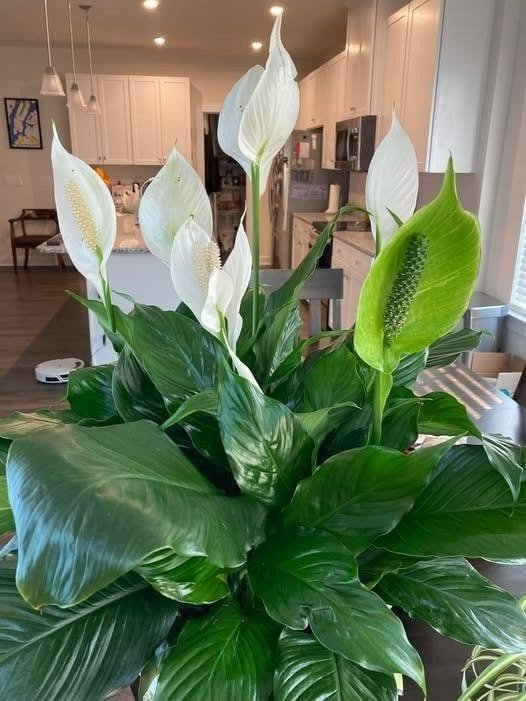
When a white flower (actually a modified leaf called a spathe) has faded and turned green or brown, cut the flower stalk down near its base. This keeps the plant looking tidy and allows it to concentrate on new growth.
6. 🪴 Don’t rush to repot
Peace lilies actually tolerate being slightly root-bound. Repot when roots are emerging from drainage holes or circling heavily around the soil, and move only one or two pot sizes larger.
🌸 The “secret” isn’t a kitchen ingredient
You may see advice recommending coffee grounds, banana water, rice water, or other homemade fertilizers to force blooms. There’s no need for these. Extension guidance specifically warns that excessive or inappropriate fertilization can damage peace lilies.
Best formula:
Bright indirect light + consistent moisture + light feeding during active growth + warmth = the best chance of more flowers.