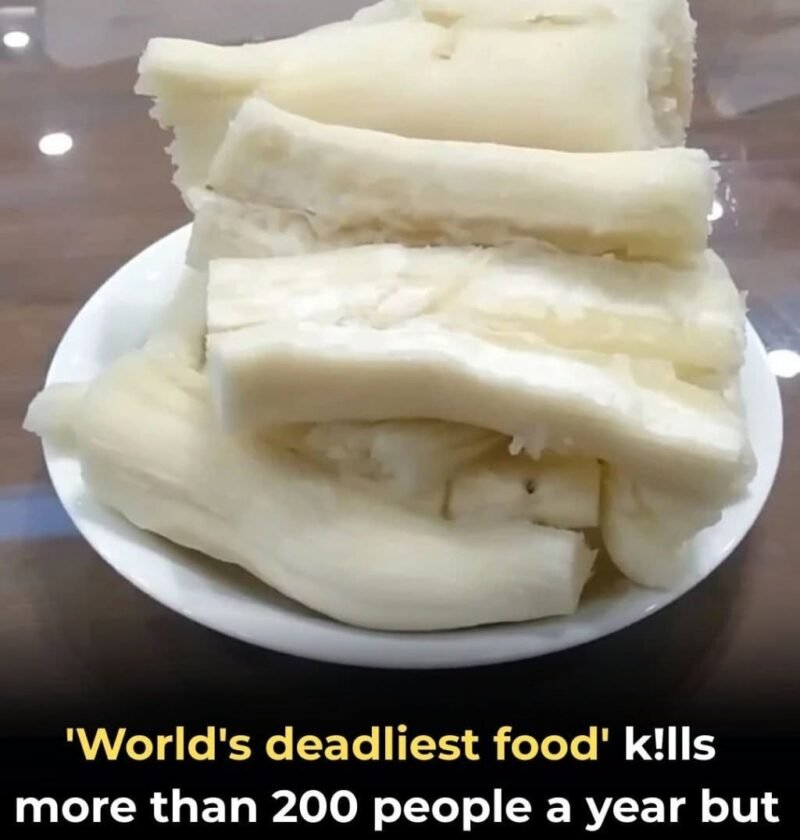
🌿 Why cassava can be dangerous
Cassava naturally contains cyanogenic glycosides. When cassava is improperly processed, these compounds can release hydrogen cyanide, which can cause serious poisoning and, in severe cases, death.
Cassava is nevertheless an important staple food. Older scientific literature estimates that roughly 500 million people rely on it as a significant food source, while CDC material has estimated that around 600 million tropical residents rely on it as a main food source.
⚠️ The important part: preparation
Cassava shouldn’t simply be eaten raw or inadequately processed. Peeling, soaking/fermenting, drying and thorough cooking are among the established processing methods used to reduce cyanogenic compounds. The exact procedure depends on the variety and the food being prepared.
There have been documented outbreaks. For example, a 2017 outbreak in Uganda involved 98 suspected cases and two deaths after consumption of cassava flour with high cyanogenic content.
🚨 Symptoms of acute cassava poisoning
Possible symptoms include dizziness, headache, nausea, vomiting, abdominal pain, diarrhea, rapid breathing, confusion, seizures or loss of consciousness. Severe poisoning can be fatal.
Bottom line: Cassava isn’t inherently a “deadly food.” It is a nutritious and important staple that can become dangerous when varieties with high cyanogenic content are improperly processed. If you’re unfamiliar with preparing fresh cassava, use established local food-safety preparation methods rather than experimenting with it.