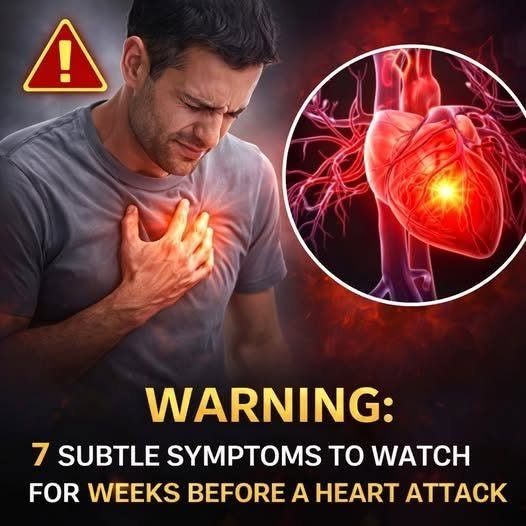
7 Warning Signs of a Heart Attack You Should Not Ignore ❤️
A heart attack doesn’t always begin with dramatic chest pain. Symptoms can be mild, develop gradually, or come and go. Recognizing them early can save heart muscle—and potentially a life. (www.heart.org)
1. Chest pressure, squeezing, or discomfort
This is the classic warning sign. It may feel like pressure, fullness, tightness, squeezing, or pain in the center of the chest and may last several minutes or disappear and return. (www.heart.org)
2. Pain spreading to the upper body
Discomfort can travel to one or both arms, the shoulder, back, neck, jaw, or upper stomach. (www.heart.org)
3. Shortness of breath
Breathing difficulty can occur with or without chest discomfort and shouldn’t be dismissed, particularly when it is sudden or unexplained. (www.heart.org)
4. Sudden cold sweating
Breaking out in an unexplained cold sweat, especially together with chest discomfort, nausea, or weakness, can be a warning sign. (www.heart.org)
5. Nausea or vomiting
A heart attack can sometimes resemble indigestion or a stomach problem. Nausea, vomiting, or an upset stomach can occur, and these symptoms may be more easily overlooked in women. (www.heart.org)
6. Unusual tiredness or weakness
Sudden or unusual exhaustion—particularly when accompanied by breathlessness, chest discomfort, or other symptoms—can be associated with a heart attack. (www.heart.org)
7. Dizziness, lightheadedness, or faintness
Feeling suddenly faint or lightheaded can occur during a heart attack, particularly when combined with other warning signs. (www.heart.org)
🚨 Don’t wait for symptoms to become severe
If you or someone else develops possible heart-attack symptoms, seek emergency medical help immediately. Don’t wait to see whether they disappear. The American Heart Association recommends calling emergency medical services even when you’re unsure whether it’s a heart attack, because rapid treatment can limit heart damage. (www.heart.org)
Women can experience the same classic chest symptoms as men, but may also have symptoms such as unusual fatigue, shortness of breath, nausea, or back/shoulder/jaw discomfort. (www.heart.org)
Bottom line: Chest pressure is not the only warning sign. Unexplained breathlessness, sweating, nausea, unusual weakness, dizziness, or pain in the jaw, back, arm, or shoulder can also signal a medical emergency.