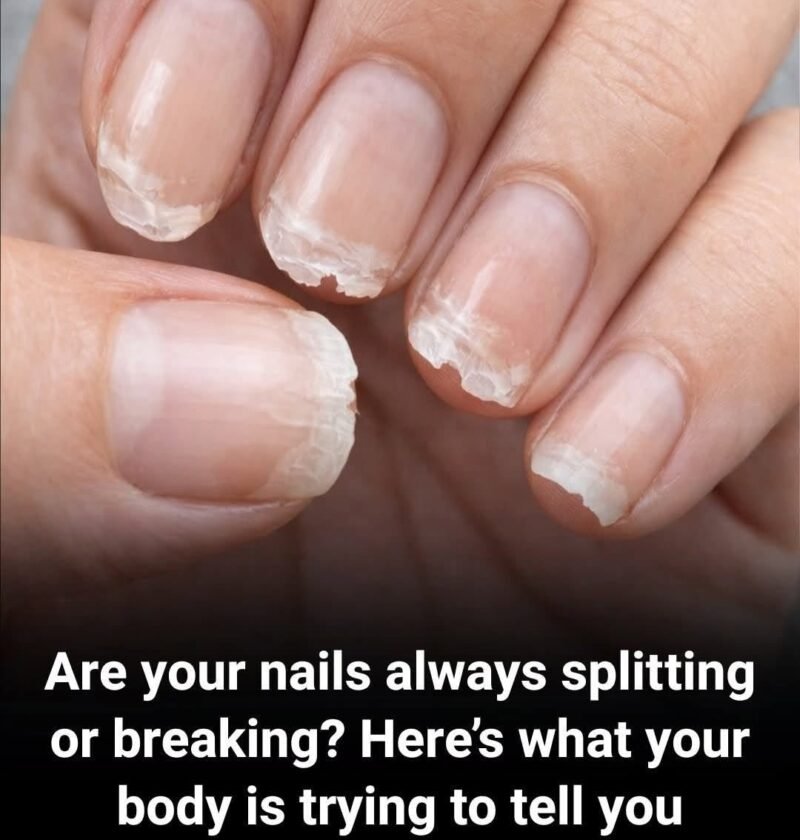
“Brittle or weak nails may signal…” — what could it mean?
This headline is partly true but often exaggerated. Brittle, splitting, or peeling nails are common and are not automatically a sign of a serious disease.
Possible causes include:
- Frequent water exposure or chemicals — repeated washing, cleaning products, and nail-polish remover can weaken nails.
- Nail fungus — often causes nails to become brittle, thickened, discolored, cracked, or crumbly. (American Academy of Dermatology)
- Iron deficiency — particularly when nails become thin and spoon-shaped (the center dips downward). (American Academy of Dermatology)
- Thyroid disorders — both underactive and overactive thyroid disease can be associated with dry, brittle, peeling or otherwise changed nails. (American Academy of Dermatology)
- Psoriasis or other nail conditions can alter nail texture and appearance.
- Repeated manicures, acrylics or gel treatments can make natural nails thin and brittle. (American Academy of Dermatology)
🩺 When should you get them checked?
It’s worth seeing a doctor or dermatologist if nail changes are new, persistent, worsening, affecting several nails, or accompanied by fatigue, hair loss, skin changes, weight changes, or other symptoms.
A doctor may decide whether blood tests—such as an iron or thyroid evaluation—or examination/testing for fungal infection is appropriate.
💅 Protecting weak nails
Keep nails reasonably short, moisturize them regularly, wear gloves when working with water or cleaning chemicals, and avoid aggressively filing or cutting the cuticles. The American Academy of Dermatology notes that moisturizing can help prevent dry nails from splitting. (American Academy of Dermatology)
Bottom line: Brittle nails can sometimes provide a clue to iron deficiency, thyroid disease, or fungal infection, but they are much more often related to everyday nail damage or dryness. Don’t start iron or other supplements just because your nails are weak—find the cause first.