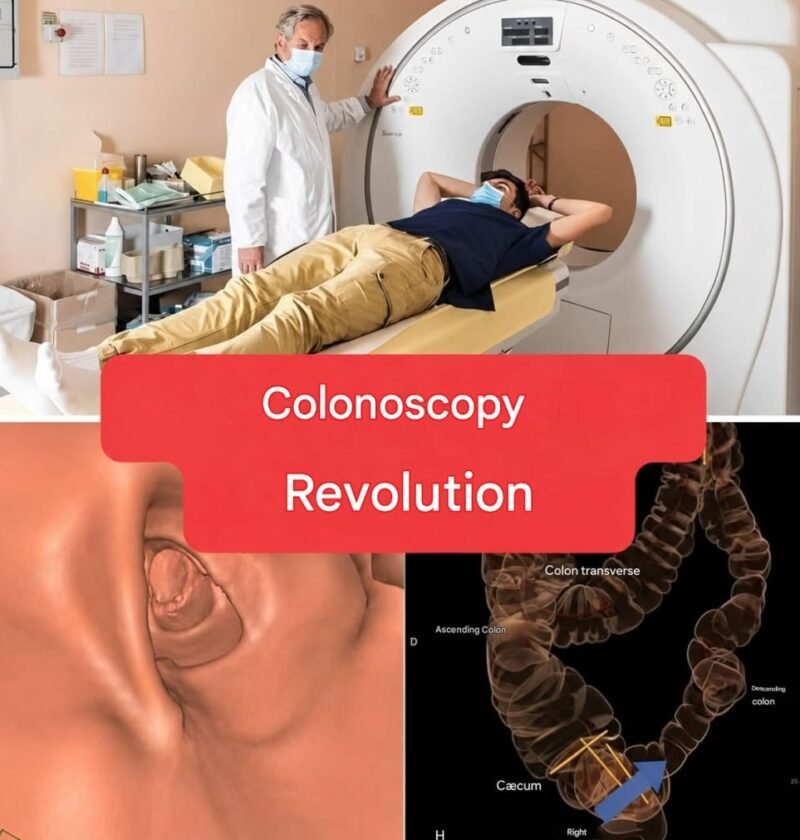
The headline “New method: colonoscopy will no longer be an invasive examination” is misleading. There are newer, less-invasive ways to screen for colorectal cancer, but colonoscopy has not been replaced.
What are the newer options?
For people at average risk, current 2026 recommendations include:
- FIT stool test — at home, usually every year.
- Stool DNA/RNA tests — generally every 3 years.
- CT colonography (“virtual colonoscopy”) — imaging rather than inserting a traditional colonoscope, generally every 5 years.
- Blood-based tests — now an option, although the American Cancer Society says they aren’t preferred over established stool or visual tests. (American Cancer Society MediaRoom)
Does this mean you can avoid a colonoscopy?
Sometimes, yes—for screening. But there’s an important catch: if a stool, blood, or other screening test comes back abnormal, you generally need a follow-up colonoscopy to investigate the finding and potentially remove a precancerous polyp. (American Cancer Society MediaRoom)
A colonoscopy also has an advantage that many noninvasive tests don’t: doctors can see the entire colon, take biopsies, and remove polyps during the same procedure. (American Cancer Society)
What about capsule colonoscopy?
Swallowing a camera capsule sounds like the “new method” these headlines often promote. Capsule-based approaches are being studied, but they have not replaced standard colonoscopy as routine colorectal-cancer screening. FDA material notes that some capsule/serum/urine approaches have had insufficient evidence for routine recommendation. (U.S. Food and Drug Administration)
Bottom line
There are genuine alternatives to traditional colonoscopy, and that’s good news for people who are reluctant or unable to undergo it. But the claim that colonoscopy is “no longer invasive” or no longer necessary is false.
For average-risk adults, the American Cancer Society currently recommends beginning colorectal-cancer screening at 45, with several test options available. (American Cancer Society)
If you have blood in your stool, unexplained weight loss, persistent changes in bowel habits, or other concerning symptoms, screening alternatives shouldn’t be used as a reason to postpone a medical evaluation.