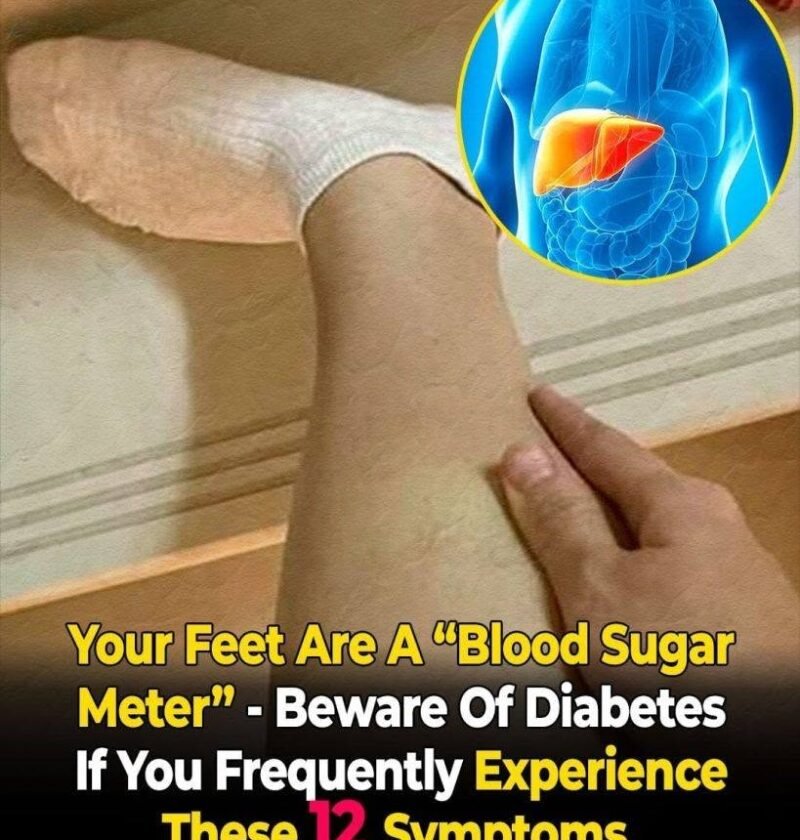
The headline “Your Feet Are a Blood Sugar Meter” is misleading. Your feet cannot measure your blood glucose, and foot symptoms alone cannot diagnose diabetes. However, diabetes can affect the nerves and blood vessels supplying the feet, so certain changes are worth taking seriously. (NIDDK)
🦶 Foot symptoms that can occur with diabetes
- Tingling or pins-and-needles
- Burning sensations, sometimes worse at night
- Numbness or reduced ability to feel pain/temperature
- Sharp, shooting, or unusual foot pain
- Unexplained weakness or balance problems
- Cuts or blisters that you don’t notice
- Sores that heal slowly
- Repeated foot infections
- Swelling of the feet
- Changes in skin color or temperature
- Reduced hair growth or unusually shiny skin, which can sometimes accompany poor circulation
- Changes in the shape of the foot, including rare diabetes-related Charcot foot. (NIDDK)
But none of these symptoms proves that you have diabetes. Neuropathy can have other causes, including vitamin B12 deficiency, kidney or thyroid problems, alcohol use, and certain medications. (NIDDK)
🩸 How to actually check for diabetes
The reliable way is a blood test, such as an A1C or fasting blood-glucose test. Type 2 diabetes can develop slowly and sometimes causes no noticeable symptoms at all. (NIDDK)
If you already have diabetes, inspect your feet every day for cuts, blisters, redness, swelling, or sores. A wound that isn’t beginning to heal after a few days, or a foot that becomes red, warm, painful, or infected, should be assessed promptly. (NIDDK)
Bottom line: Your feet can sometimes provide clues to diabetes-related complications, but they are not a “blood sugar meter.” If you’re experiencing several of these symptoms, getting your blood glucose checked is far more useful than trying to diagnose yourself from your feet.