6 Overlooked Signs of a Silent Heart Attack
-
Unexplained, Unusual Fatigue: Sudden or extreme exhaustion during routine tasks—like climbing a short flight of stairs, carrying groceries, or making the bed—that feels disproportionate to your activity level.
-
Discomfort in the Jaw, Neck, Upper Back, or Arms: A dull ache, tightness, or pressure that radiates to the jaw, throat, between the shoulder blades, or down one or both arms rather than staying centered in the chest.
-
Indigestion, Heartburn, or Nausea: Persistent upper stomach discomfort, fullness, belching, or mild nausea that does not resolve with antacids or is unrelated to a specific meal.
-
Shortness of Breath Without Chest Pain: Feeling winded, air-hungry, or unable to catch your breath during light exertion or even while resting or lying flat.
-
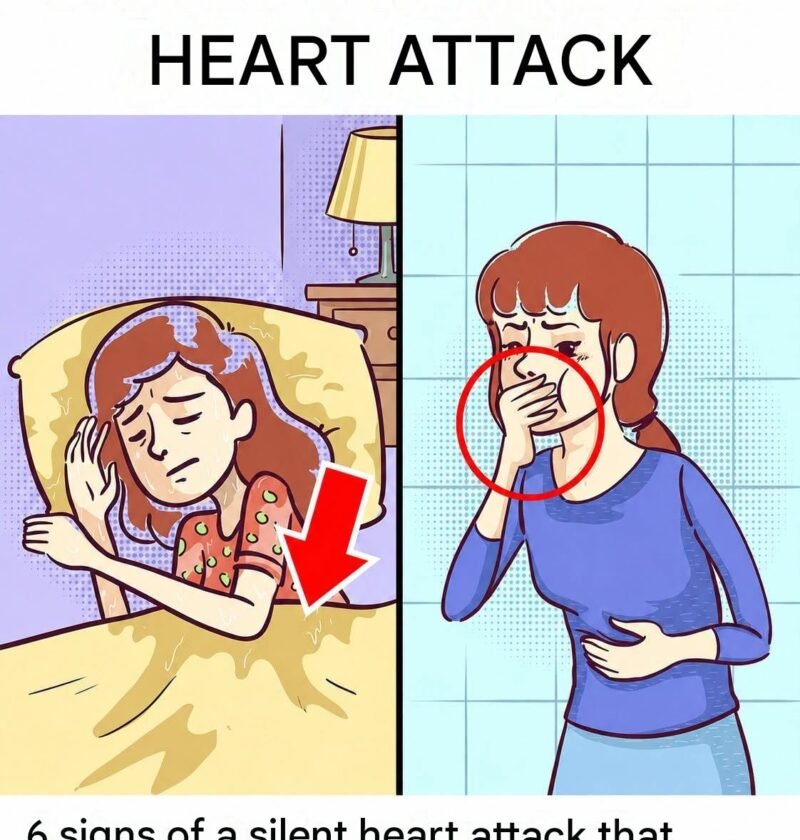
Cold Sweats or Clammy Skin: Breaking out into an unexpected cold sweat accompanied by paleness or a sudden feeling of unease without fever or physical exertion.
-
Lightheadedness or Dizziness: Sudden wooziness, near-fainting, or feeling unsteady on your feet, caused by a temporary drop in blood pressure and cardiac output.
Silent vs. Classic Heart Attack Symptoms
| Feature | Classic Heart Attack | Silent Heart Attack |
| Chest Sensation | Intense pressure, squeezing, fullness, or pain in the center of the chest | Mild tightness, vague fullness, or no chest discomfort at all |
| Pain Location | Center of chest radiating outward | Often isolated to the jaw, neck, upper back, shoulders, or upper stomach |
| Onset & Intensity | Dramatic and immediately alarming | Subtle, gradual, or easily blamed on stress, flu, or reflux |
| Who Is Most at Risk | Adults with cardiovascular risk factors | Higher frequency in women, older adults, and people with diabetes (nerve damage can blunt pain signals) |
What to Do If You Suspect Symptoms
-
Seek emergency medical care immediately: Do not wait to see if subtle symptoms pass, and do not drive yourself to the hospital. Call your local emergency number right away—in Pakistan, dial 1122 (Rescue 1122) or 15, or have someone take you to the nearest emergency department immediately.
-
Ask a doctor if you noticed past warning episodes: Even if unusual shortness of breath, jaw ache, or unexplained fatigue resolved days or weeks ago, a doctor can check for prior silent heart muscle injury using an electrocardiogram (ECG), troponin blood tests, or an echocardiogram.