How It Works
-
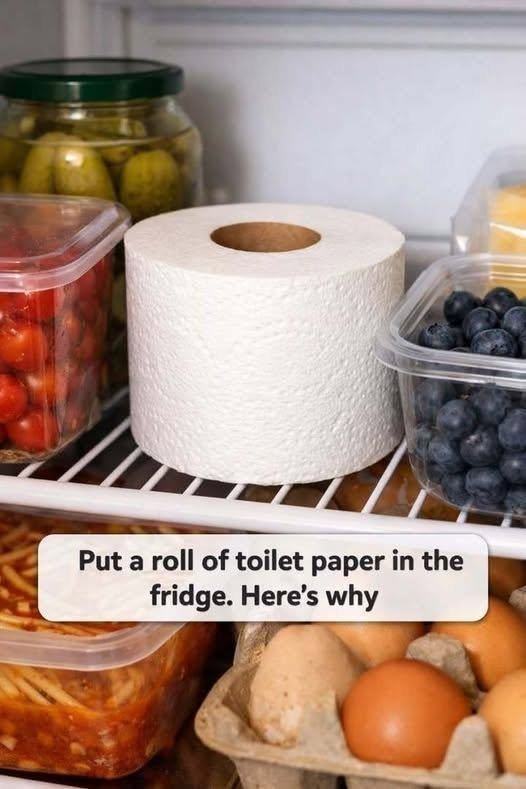
Moisture absorption: Toilet paper and its cardboard core consist of porous that draw excess humidity and condensation out of the air.
-
Mild odor capture: Excess moisture inside a fridge encourages mustiness and helps odor molecules linger. By pulling in humidity, a dry roll can slightly reduce mild musty or food smells.
-
Short shelf life: Once the fibers absorb moisture and become damp or heavy, absorption slows down. Replace the roll every 2 to 3 weeks (or sooner if it gets damp).
Practical Rules and Limits
-
Use a fresh roll only: Never use a roll that has been kept in a bathroom or handled with dirty hands, and keep it away from raw meat or leaking containers.
-
Doesn’t fix the source: Strong odors from spoiled food, unsealed onions or fish, or dirty shelves require wiping down surfaces and tossing expired items.
-
Takes up space: A full roll eats up shelf space and offers weaker odor control than dedicated alternatives.
Better Alternatives for Fridge Odors
| Method | How It Helps | Typical Swap Interval |
| Baking soda | Neutralizes acidic odor compounds directly; takes less space than a roll. | Every 2 to 3 months |
| Activated charcoal | Traps volatile odor molecules across a high-surface-area porous structure. | Every 1 to 2 months (or recharge per product instructions) |
| Regular wipe-down + airtight containers | Removes bacteria, spills, and odor sources before smells build up. | Weekly or as spills happen |