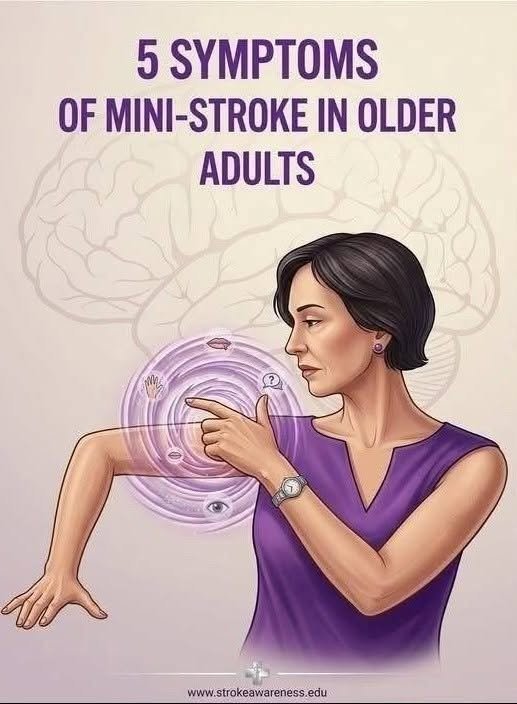
5 Classic Mini-Stroke (TIA) Symptoms (The BE FAST Check)
-
Sudden Weakness or Numbness on One Side of the Body: Sudden drooping on one side of the face (an uneven smile), or sudden weakness, heaviness, or numbness in one arm or leg—for example, suddenly dropping a cup or being unable to lift one arm evenly.
-
Sudden Trouble Speaking or Understanding Words: Slurred, garbled speech, difficulty finding simple words, or sudden confusion when trying to follow a normal conversation.
-
Sudden Vision Changes in One or Both Eyes: Sudden blurriness, double vision, or a dark “curtain” falling over the vision in one eye (medically known as amaurosis fugax).
-
Sudden Dizziness, Loss of Balance, or Poor Coordination: Abrupt vertigo (feeling the room spin), stumbling, or sudden loss of balance and coordination without a clear cause—especially when paired with nausea or double vision.
-
Sudden Severe Confusion or Sudden Unexplained Headache: Abrupt disorientation, trouble recognizing familiar surroundings, or a sudden severe headache with no known trigger (more typical of bleeding strokes, though urgent either way).
Why Older Adults Often Dismiss a Mini-Stroke (And Why That Is Dangerous)
-
“It Went Away on Its Own, So I’m Fine”: Because a TIA clot dissolves or moves quickly, an older adult may feel completely back to normal 15 minutes later and decide to “rest and see how tomorrow feels.” Waiting misses the critical window to prevent a full stroke.
-
Mistaking Symptoms for Fatigue, Low Blood Sugar, or Aging: Brief slurred speech, dizziness, or arm weakness is often blamed on poor sleep, blood pressure pills, or a “dizzy spell.”
-
Silent Atrial Fibrillation (AFib): In older adults, an irregular heartbeat (AFib) is a major hidden cause of mini-strokes because small clots can form in the upper heart chambers and travel to the brain.
What to Do Immediately If These Symptoms Appear
-
Treat It Like a Full Stroke—Go to Emergency Care Immediately: Do not wait to see if symptoms pass, and do not let the person drive themselves. Call emergency services or go straight to the nearest hospital equipped for stroke evaluation.
-
Note the Exact Time Symptoms Started: Doctors need the exact timestamp (“last known well” time) to decide on urgent imaging and clot-preventing treatments.
-
Do NOT Give Aspirin Before a Doctor Evaluates Them: While aspirin prevents future ischemic strokes, taking aspirin before a brain scan can worsen bleeding if the symptoms were actually caused by a small brain hemorrhage.