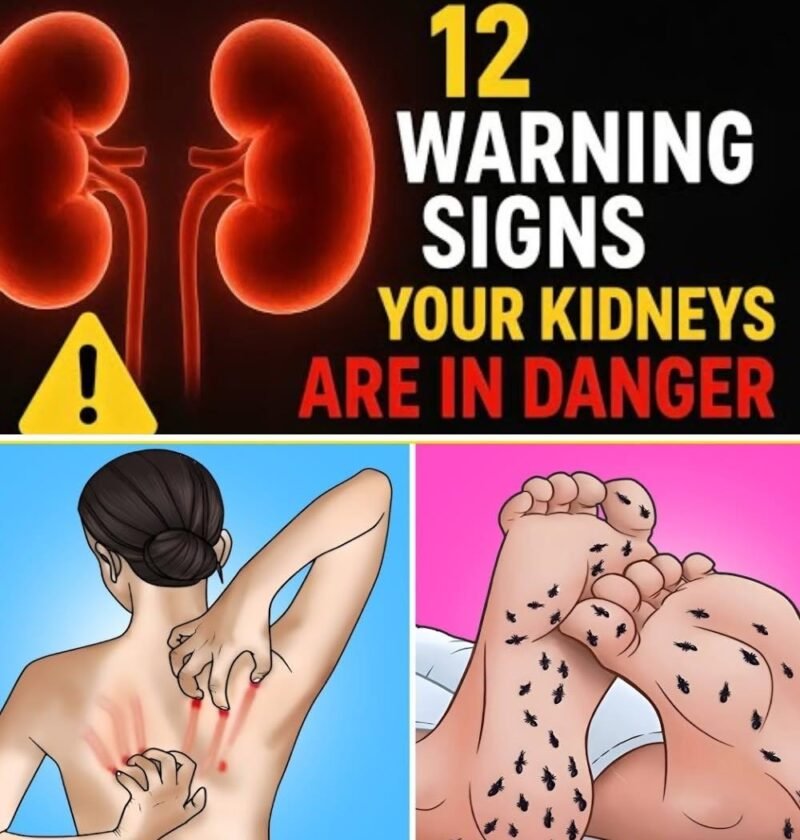
The headline “7 Strange Signs Your Kidneys Are Crying for Help” is attention-grabbing, but kidney disease is often silent in its early stages. Symptoms alone cannot reliably tell you whether your kidneys are in trouble. Blood and urine testing is often needed. (NIDDK)
7 signs that deserve attention
- Swelling in the feet, ankles, legs, hands, or face — damaged kidneys may have difficulty removing excess salt and fluid. (NIDDK)
- Foamy or unusually bubbly urine — can sometimes indicate excess protein in the urine. (NIDDK)
- Blood in the urine — pink, red, or cola-colored urine should be evaluated. (NIDDK)
- Changes in urination — noticeably more or less urine than usual can occur with kidney problems, although there are many other possible causes. (NIDDK)
- Persistent fatigue or weakness — advanced kidney disease can contribute to anemia and waste buildup. (NIDDK)
- Itching, nausea, poor appetite, or an unusual taste in the mouth — these can occur as kidney function becomes significantly impaired. (NIDDK)
- Muscle cramps, shortness of breath, or difficulty concentrating — these can occur in more advanced kidney disease, partly because fluid and electrolyte balance can be disrupted. (NIDDK)
The surprising part
You can have kidney disease without any of these symptoms. That’s why people with diabetes, high blood pressure, heart disease, or a family history of kidney failure may need periodic kidney testing even when they feel perfectly well. (NIDDK)
The basic checks are a blood test for estimated GFR (eGFR) and a urine test for albumin/protein. (NIDDK)
Seek prompt medical care for blood in the urine, severe flank/back pain, markedly reduced urine, or symptoms such as fever and chills with painful/frequent urination, which can indicate an infection or another urinary problem. (NIDDK)
Bottom line: Don’t wait for a dramatic “warning sign.” If you’re at increased risk, testing is much more useful than symptom lists for detecting kidney disease early.