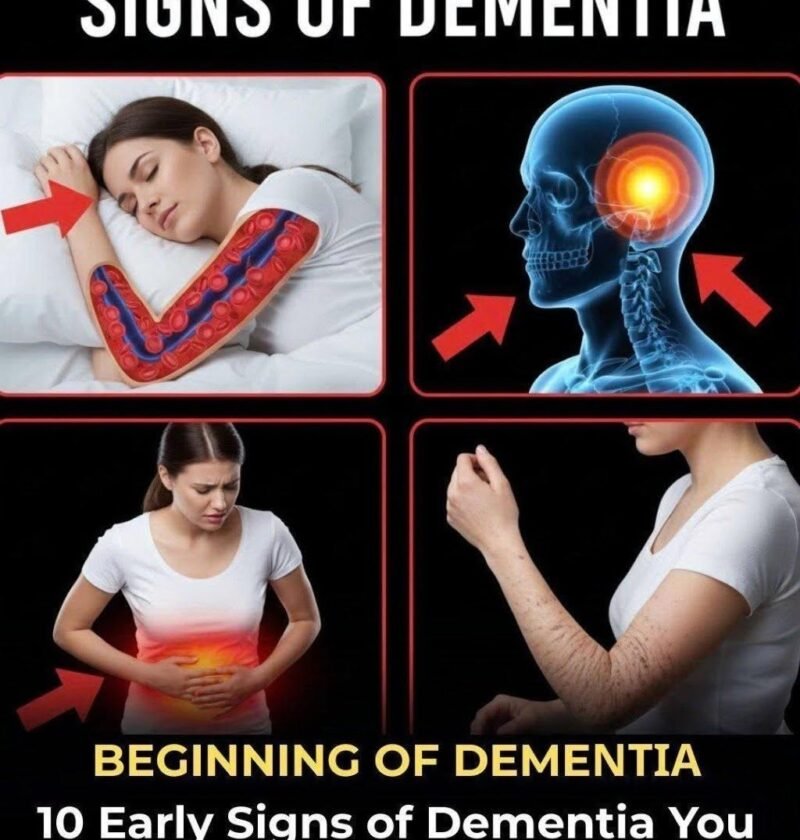
The headline “10 Early Signs of Dementia You Should NEVER Ignore” is useful as a prompt to pay attention to changes, but the word “never” is clickbait. Having one of these signs does not mean someone has dementia. Many treatable conditions can cause memory and thinking problems.
🧠 10 signs worth discussing with a doctor
- Memory loss that disrupts everyday life — especially repeatedly forgetting recently learned information.
- Repeating questions or stories because the person doesn’t remember having asked or said them.
- Difficulty with familiar tasks — for example, suddenly struggling with cooking, using appliances, or managing a familiar routine.
- Problems planning or solving problems — such as increasing difficulty with bills, finances, or following a familiar recipe.
- Getting lost in familiar places or becoming unusually confused about dates or locations.
- Difficulty finding or using words or following conversations.
- Frequently misplacing things and being unable to retrace steps to find them.
- Poorer judgment or unusual decisions, particularly when this represents a significant change from the person’s normal behavior.
- Withdrawal from previously enjoyed activities or a noticeable change in personality or behavior.
- Problems with visual-spatial abilities or movement, such as difficulty judging distances, recognizing objects, or maintaining balance. (NIA)
Normal aging vs. dementia
Occasionally forgetting a name, misplacing your keys, or struggling briefly to remember a word can happen with normal aging. The bigger concern is a persistent decline that interferes with everyday activities. (InfoSenior)
Also, dementia isn’t a normal or inevitable part of getting older. (NIA)
Don’t assume it’s dementia
Memory and concentration can also be affected by things such as medication side effects, depression, sleep problems, vitamin deficiencies, thyroid problems, infections, and other medical conditions. That’s why a proper medical assessment matters.
If you or a family member is developing progressively worsening memory or thinking problems, arrange a medical evaluation rather than relying on an online “dementia test.” Early assessment can identify treatable causes and, when dementia is present, provide opportunities for planning and treatment. (NIA)
Important: Sudden confusion, trouble speaking, facial drooping, or weakness/numbness on one side is not typical gradual dementia and can indicate a stroke—seek emergency medical care immediately.