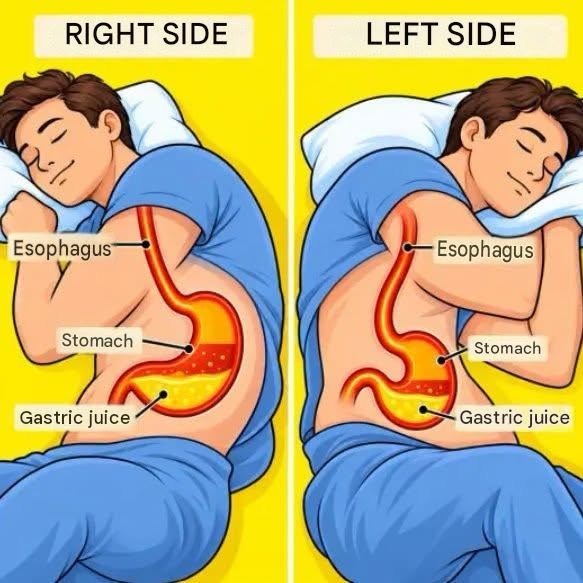
What Sleeping on Your Right Side Actually Does to Your Body
-
Acid Reflux & Heartburn (Often More Likely on the Right): When you lie on your right side, the stomach sits higher than the junction where the esophagus meets the stomach, and gravity can encourage stomach acid to pool toward that opening. Lying on the left side typically keeps the gastroesophageal junction higher and helps clear reflux faster.
-
Pregnancy Circulation: During the second and third trimesters, sleeping on the left side (with a pillow between the knees) helps optimize blood flow through the inferior vena cava and placenta; occasionally shifting or resting on the right side is not a reason to panic if you wake up there, but clinicians generally advise favoring left-side support.
-
Airway & Snoring: Side sleeping—whether left or right—tends to reduce tongue-base collapse compared with supine (back) sleeping, which can ease mild snoring for some people (though severe sleep apnea still needs formal evaluation).
-
Shoulder, Hip & Neck Pressure: Any side-sleeping position concentrates weight on the dependent shoulder and hip. Without proper pillow support, this can aggravate shoulder bursitis, hip pain, or neck strain on the side you sleep on.
When It Makes Sense to Switch Positions
-
Frequent Nighttime Heartburn or Acid Reflux: Try shifting toward your left side, elevating the head of your bed slightly (rather than just stacking flat pillows under your neck), and avoiding large or late meals close to bedtime.
-
Pregnancy: Favor left-side sleeping as your belly grows, using supportive pillows under your belly and between your knees.
-
Shoulder, Hip, or Rib Discomfort on Your Right Side: Switch to your left side or a supportive back position with a knee pillow, and use a lofted pillow between your arms or knees so your top shoulder and hip don’t drop forward and twist your spine.
-
Waking With Numbness or Tingling in Your Right Arm/Hand: Change position immediately to relieve nerve or blood-flow compression, and get recurring numbness checked.
When to Check With a Doctor
-
Routine Visit (Within 2–7 Days or Next Appointment): Schedule a checkup if nighttime reflux persists despite position and meal-timing changes, if you have loud snoring, gasping, or daytime exhaustion, or if shoulder/hip pain keeps disrupting your sleep.
-
Prompt / Emergency Care (
<1 hour): Seek immediate emergency medical attention (call 1122 in Pakistan or go to the nearest emergency hospital) if chest discomfort feels like pressure, squeezing, tightness, or pain spreading to the jaw, neck, back, or arm, or comes with shortness of breath, sweating, or lightheadedness—never assume chest symptoms are just heartburn.