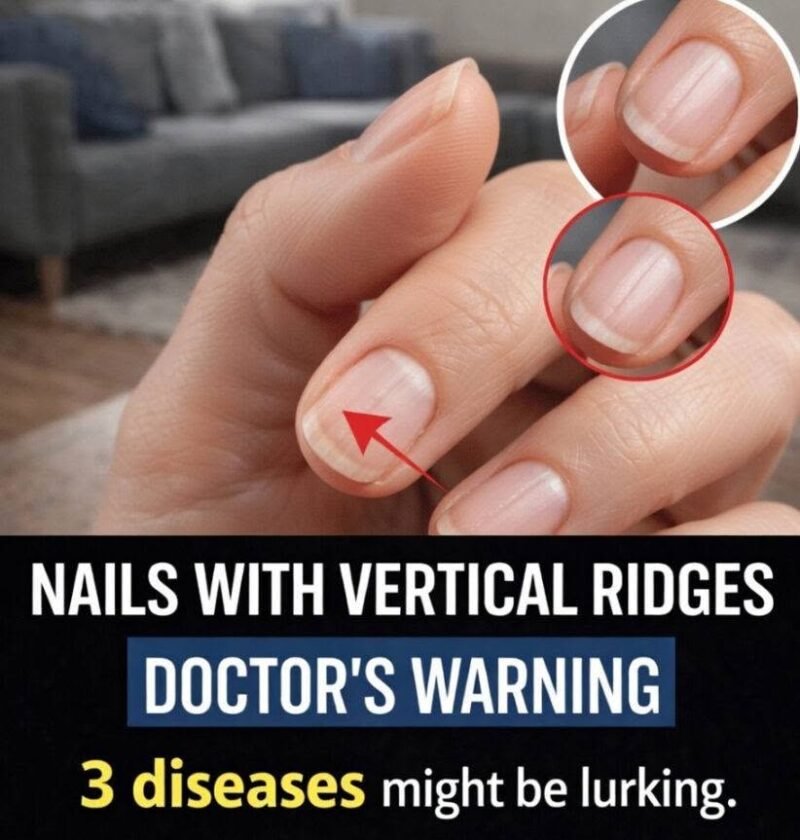
Faint vertical lines running from the cuticle to the tip of your fingernails—medically called longitudinal striations—are completely normal for most people and usually just a sign of aging and natural nail dryness, much like fine lines on skin.
As you get older, the nail matrix (the root under your cuticle where new nail cells form) slows down slightly and produces keratin a bit less evenly, creating subtle lengthwise ridges.
Common Everyday Causes (Usually Harmless)
-
Normal aging: The single most common reason; ridges often become more noticeable after age 40.
-
Dryness & frequent handwashing: Repeated exposure to water, dish soap, hand sanitizers, and acetone nail polish removers strips natural oils from the nail plate, making existing ridges look deeper.
-
Minor nutritional gaps: Mild deficiencies in iron, biotin (vitamin B7), zinc, or protein can contribute to brittle, ridged nails over time.
-
Over-buffing or aggressive manicures: Pushing cuticles back too hard or scraping gel polish damages the nail matrix where the nail grows.
Simple Daily Habits That Smooth and Strengthen Nails
Because ridges grow out from the base of the nail, existing lines take 4 to 6 months (the time it takes a fingernail to fully replace itself) to grow out—but daily care makes nails look smoother right away and helps new growth come in stronger:
-
Oil your cuticles and nail plates daily: Rub a drop of jojoba oil, sweet almond oil, vitamin E oil, or plain petroleum jelly (Vaseline) into your nails and cuticles every night before bed, and apply hand cream after washing your hands. Hydration immediately softens the appearance of ridges.
-
Wear gloves for dishes and cleaning: Protecting nails from hot soapy water and household chemicals prevents the repeated swelling-and-drying cycle that splits and grooves nails.
-
Switch to acetone-free polish remover & ridge-filling base coat: Avoid harsh acetone removers, and if you wear polish, use a hydrating ridge-filling base coat to create a smooth surface without sanding down the nail.
-
Skip aggressive buffing: Lightly buffing once a month with a fine-grit buffer is fine, but frequent buffing thins the nail plate and makes peeling and splitting worse.
-
Eat a balanced, protein- and iron-rich diet: Include eggs, lentils, leafy greens, nuts, fish, or lean meats. (Note: High-dose biotin supplements aren’t necessary unless recommended by a doctor, and can interfere with certain lab blood tests.)
When to Have a Doctor Check Your Nails
While vertical ridges are almost always harmless, check with a doctor or dermatologist if you notice any of these changes:
-
Deep horizontal grooves running side-to-side across the nail (Beau’s lines), which can follow a high fever, severe illness, or major physical stress.
-
Sudden changes accompanied by spoon-shaped nails (curving upward, linked to iron-deficiency anemia), severe brittleness/splitting, or nail lifting from the nail bed.
-
A single dark brown or black vertical stripe under one nail that widens or darkens over time.