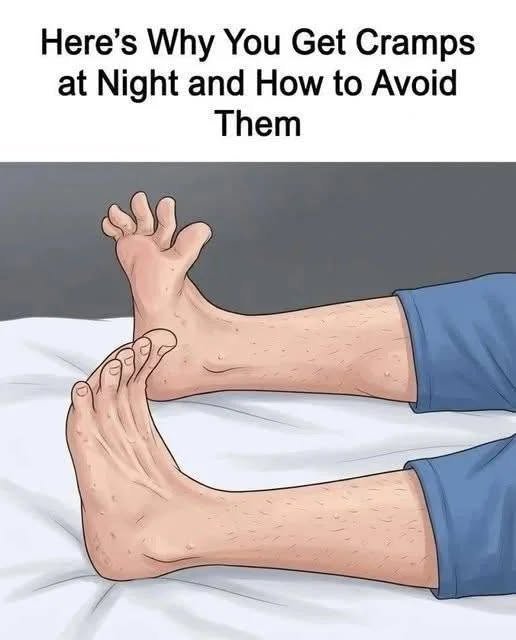
7 Common Causes of Nighttime Leg Cramps After 40
-
Age-Related Nerve & Tendon Shortening (Idiopathic Cramps): After 40, motor nerves become slightly more excitable at rest and calf tendons gradually lose elasticity. Lying in bed with your toes pointed downward shortens the calf muscle, making it prone to firing into a sudden involuntary spasm.
-
Medication Side Effects: Several common prescriptions trigger leg cramps—especially diuretics (“water pills” for blood pressure or fluid), statins (cholesterol medications), inhaled long-acting beta-agonists (for asthma/COPD), and certain osteoporosis or blood pressure drugs. Never stop a prescribed medication on your own, though a doctor can review alternatives if timing matches.
-
Mild Dehydration or Electrolyte Shifts: Sweating during the day, hot weather, heavy exercise, or diuretic use can alter fluid and potassium, magnesium, or calcium balance enough to irritate muscle-nerve signaling overnight.
-
Prolonged Sitting, Standing, or Muscle Overfatigue: Spending hours on hard floors, sitting all day with shortened calves, or suddenly increasing walking/exercise intensity leaves calf muscles fatigued and twitchy at night.
-
Venous Insufficiency (Sluggish Leg Vein Return): Weakened one-way valves in leg veins allow fluid and metabolic byproducts to pool in the lower legs by evening, often pairing nighttime cramps with ankle puffiness or heavy calves.
-
Lumbar Spine Narrowing or Nerve Irritation (Spinal Stenosis / Sciatica): Age-related wear in the lower back can subtly irritate nerve roots running down the legs, triggering calf or foot cramps at night or when lying flat.
-
Systemic Conditions (Diabetes, Thyroid, Kidney, or Circulation Issues): Peripheral nerve irritation from diabetes, underactive thyroid (hypothyroidism), reduced arterial blood flow (PAD), or kidney/liver conditions can all show up as frequent nocturnal cramps.
How to Stop a Cramp Fast & Prevent Future Ones Naturally
Immediate Relief During a Cramp
-
Stretch the Calf Immediately: Sit up, straighten your leg, and pull your toes and foot firmly upward toward your shin (dorsiflexion)—or stand up and gently press your heel flat into the floor while leaning forward.
-
Massage & Warmth: Gently knead the knotted calf muscle as it releases, then apply a warm towel or heating pad to relax residual soreness.
Daily Prevention Habits
-
5-Minute Bedtime Calf & Hamstring Stretch: Do gentle wall calf stretches (30 seconds per leg, 2–3 times) right before getting into bed.
-
Keep Feet Neutral Under the Covers: Loosen tight tucked-in sheets at the foot of the bed so blankets don’t force your toes downward all night; sleeping on your side with knees slightly bent also helps.
-
Steady Hydration & Mineral-Rich Foods: Sip water steadily across the day (rather than chugging right before bed) and include dietary sources of potassium and magnesium such as bananas, leafy greens, beans, nuts, seeds, and yogurt. (Evidence for over-the-counter magnesium pills for ordinary nighttime leg cramps is mixed, and high doses can cause diarrhea or interact with kidney disease—check with a doctor before starting supplements.)
-
Supportive Daytime Footwear: Wear shoes with good arch and heel support if you stand or walk on hard surfaces.
When to Seek Medical Care
-
Routine Doctor Visit (Within 2–7 Days): Schedule a checkup if cramps wake you up several nights a week, leave lingering muscle soreness, started soon after a new medication, or occur alongside numbness, tingling, or lower-back pain.
-
Prompt / Urgent Medical Attention: Seek immediate evaluation if leg pain is accompanied by sudden swelling, warmth, redness, or tenderness in one calf (possible blood clot/DVT), shortness of breath or chest pain, a cold, pale, or pulseless foot, or new leg weakness/trouble lifting your foot.