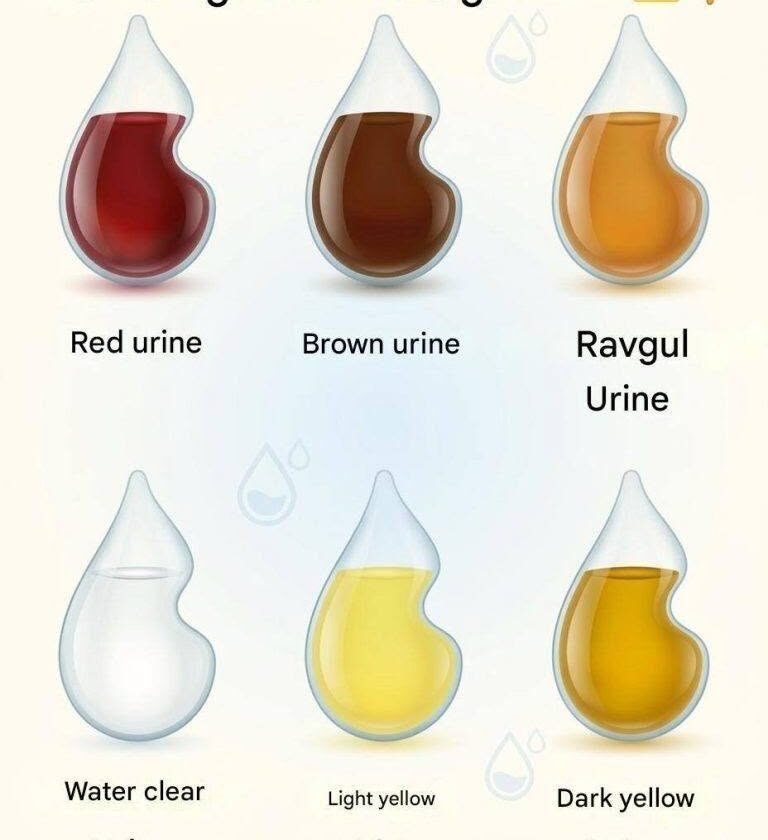
Your urine color is primarily a real-time indicator of your hydration levels, though distinct shifts in hue can also reflect foods, medications, or underlying medical conditions affecting your kidneys, liver, or urinary tract.
Normal, healthy urine ranges from pale straw to light amber, driven by a yellow pigment called urochrome (a byproduct of hemoglobin breakdown). The more water you drink, the more diluted that pigment becomes.
Urine Color Guide: From Hydration to Warning Signs
| Urine Color | Most Likely Causes | What to Do |
| Clear / Transparent | Overhydration; drinking large amounts of water rapidly; diuretic medications. | Cut back slightly on fluids if you are urinating excessively; occasional clear urine is harmless. |
| Pale Straw to Light Yellow | Optimal hydration. Healthy balance of water and waste products. | Keep doing what you’re doing. |
| Dark Yellow / Amber | Mild to moderate dehydration; concentrated urine (common first thing in the morning). | Drink a glass or two of water over the next hour. |
| Bright Neon Yellow | Excess water-soluble vitamins—especially B-complex vitamins (riboflavin/B2) and Vitamin C—being flushed out. | Harmless; your body is simply excreting what it doesn’t need. |
| Orange | Severe dehydration; certain medications (phenazopyridine for UTIs, rifampin, sulfasalazine); high intake of beta-carotene (carrots); or liver/bile duct issues (especially if accompanied by pale stools). | Rehydrate first. If it persists without an obvious food/drug cause, consult a doctor. |
| Pink or Red |
Foods: Beets, blackberries, rhubarb.
Medical: Blood in the urine (hematuria) from a urinary tract infection (UTI), kidney stones, enlarged prostate, intense exercise, or kidney disease.
|
If you haven’t eaten red/pink foods recently, see a doctor promptly—even a single episode of painless blood in urine warrants evaluation. |
| Dark Brown / Tea-Colored | Severe dehydration; foods (fava beans, aloe); medications (metronidazole, certain antimalarials); liver disease (bilirubin buildup); or rhabdomyolysis (severe muscle breakdown after extreme exertion). | Seek medical attention promptly, especially if paired with muscle pain, jaundice (yellow skin/eyes), or fatigue. |
| Blue or Green | Artificial food dyes; specific medications (amitriptyline, propofol, indomethacin, methylene blue); rarely, a Pseudomonas bacterial UTI. | Usually harmless if tied to food or medication; see a doctor if accompanied by burning or fever. |
| Cloudy or Foamy |
Cloudy: Dehydration, UTI, kidney stones, or normal crystals/mucus.
Foamy: Urinating quickly (harmless bubbles) or excess protein (proteinuria), an early sign of kidney strain.
|
If persistent, heavy foam doesn’t flush away easily—or if cloudiness comes with pain or odor—get a routine urinalysis. |
When to Seek Prompt Medical Attention
Color changes caused by food or vitamins typically clear up within 24 to 48 hours. Contact a healthcare provider right away if an unusual urine color is accompanied by:
-
Pain, burning, or urgency when urinating
-
Fever, chills, or lower back/flank pain
-
Yellowing of the skin or whites of the eyes (jaundice) or pale, clay-colored stools
-
Visible blood clots or persistent pink/red/tea-colored urine with no dietary explanation