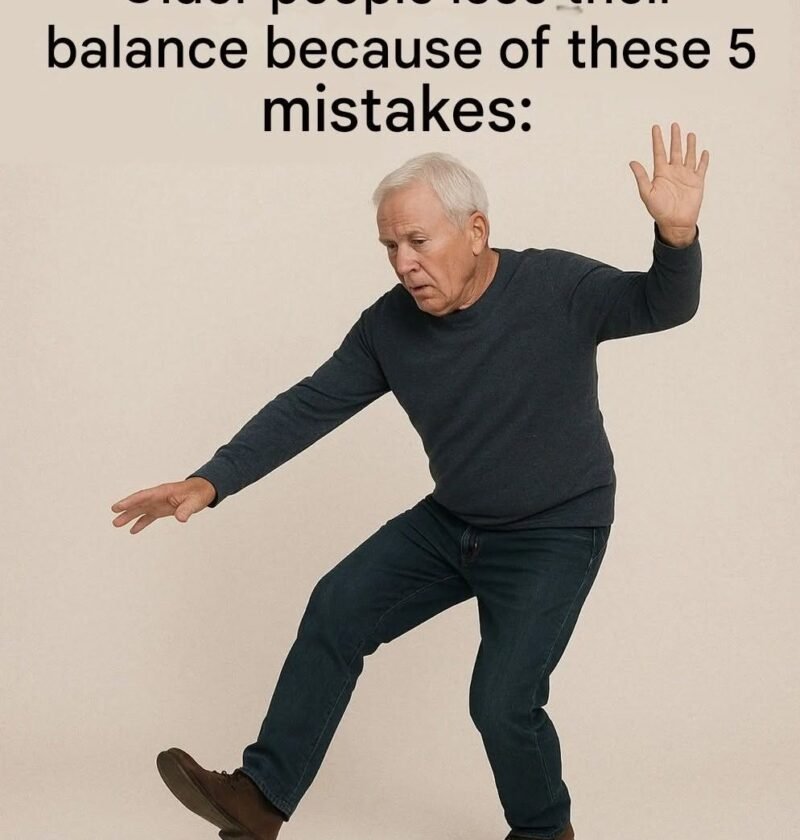
5 Common Mistakes That Can Cause Older Adults to Lose Their Balance
Balance problems aren’t simply an unavoidable part of getting older. Several everyday habits can increase fall risk, and many can be addressed.
-
Relying on furniture instead of using proper support
Holding onto tables, chairs, or counters may feel safe, but unstable furniture can move unexpectedly. If someone regularly needs support to walk, it’s worth discussing appropriate mobility aids with a healthcare professional. -
Wearing unsafe footwear 👟
Loose slippers, smooth soles, high heels, and poorly fitting shoes can make slipping or tripping more likely. Well-fitting shoes with a secure heel and good traction are generally safer. -
Getting up too quickly
Standing suddenly from a bed or chair can cause a temporary drop in blood pressure (orthostatic hypotension), producing dizziness or unsteadiness. Sitting at the edge of the bed briefly before standing can help. -
Ignoring vision or hearing changes 👓
Reduced vision can make obstacles, steps, and uneven surfaces harder to detect. Regular vision checks and appropriate eyewear can help reduce hazards. -
Avoiding movement because of fear of falling
Becoming increasingly inactive can lead to weaker leg and core muscles, which can further affect balance. Properly supervised strength and balance exercises can help maintain mobility.
Also check medications
Some medicines—including certain blood-pressure drugs, sedatives, sleep medicines, and other medications that cause dizziness or drowsiness—can increase fall risk. Don’t stop a prescribed medication yourself; ask a doctor or pharmacist to review the medication list.
When balance problems need medical attention
A new or rapidly worsening balance problem, repeated falls, fainting, severe dizziness, difficulty speaking, new weakness/numbness, or a sudden severe headache warrants prompt medical evaluation. A sudden loss of balance together with facial drooping, arm weakness, or speech difficulty can be a sign of stroke and requires emergency care.
For an older adult who is having ongoing balance problems, a clinician or physical therapist can assess gait, strength, vision, medications, blood pressure, and other possible causes rather than assuming it’s simply aging.