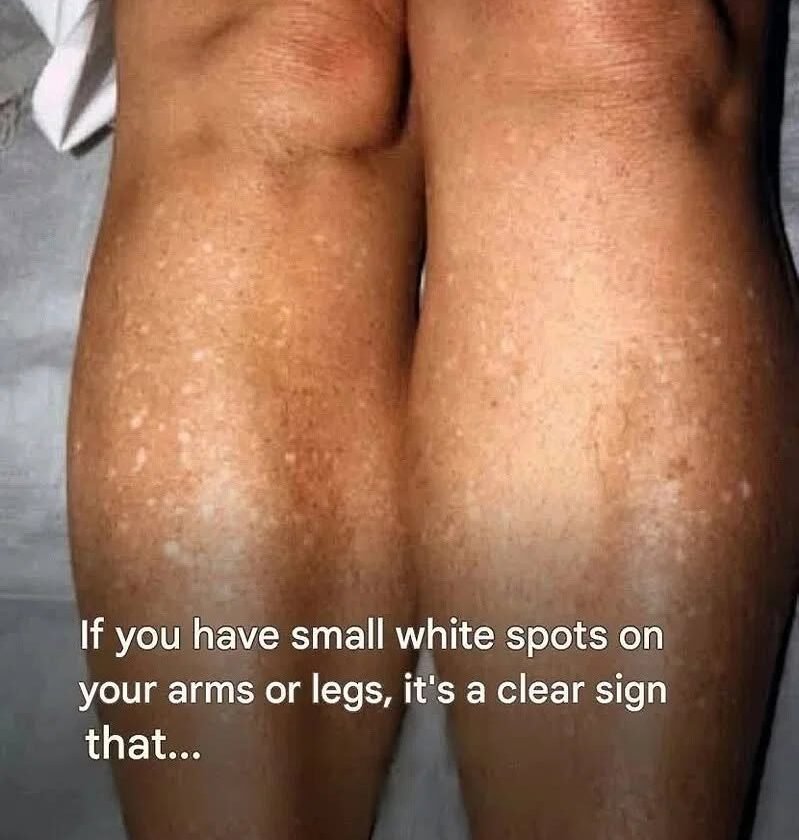
Common Causes of Small White Spots on Arms or Legs
-
Idiopathic guttate hypomelanosis (IGH): Tiny, flat, porcelain-white or pale spots—often a few millimeters wide with sharp borders—most commonly showing up on the shins, forearms, and sun-exposed skin with age and cumulative UV exposure. They are harmless and do not spread like an infection, though more can appear over time.
-
Pityriasis alba: Pale or off-white patches with soft, indistinct borders and sometimes fine dryness or light scaling. It is frequently linked to mild eczema or dry skin and often becomes more noticeable after sun exposure tans the surrounding skin.
-
Post-inflammatory hypopigmentation: Lighter spots left behind after skin inflammation—such as eczema, psoriasis, insect bites, minor scrapes, or acne/folliculitis—temporarily reduces pigment production as the skin heals.
-
Tinea versicolor (pityriasis versicolor): A common, harmless superficial yeast overgrowth on the skin that can leave small pale, white, tan, or pink spots (sometimes mildly scaly) that stand out more after tanning. It is more common on the trunk, shoulders, or upper arms and in warm, humid climates.
-
Vitiligo: An autoimmune condition where pigment-producing cells (melanocytes) are lost, creating smooth, distinct white patches (often more sharply demarcated and sometimes enlarging over time) that can appear on the hands, wrists, arms, legs, or elsewhere.
Practical Next Steps & When to Get Checked
-
Protect exposed skin daily: Broad-spectrum sunscreen (SPF 30+) helps prevent surrounding skin from tanning further (making light spots stand out more) and reduces UV-related pigment changes.
-
Moisturize dry or eczema-prone skin: Applying a plain, fragrance-free cream or ointment helps soothe dryness and post-inflammatory marks.
-
Avoid harsh scrubbing: Vigorous exfoliation won’t restore lost pigment and can irritate skin or trigger more post-inflammatory marks.
When to see a doctor or dermatologist: Have a professional evaluate the spots if they are growing or spreading quickly, becoming raised or crusty, itching or scaling noticeably, losing all pigment sharply (as in vitiligo), or if you aren’t sure whether a spot is simple pigment loss, a fungal rash, or another skin change.