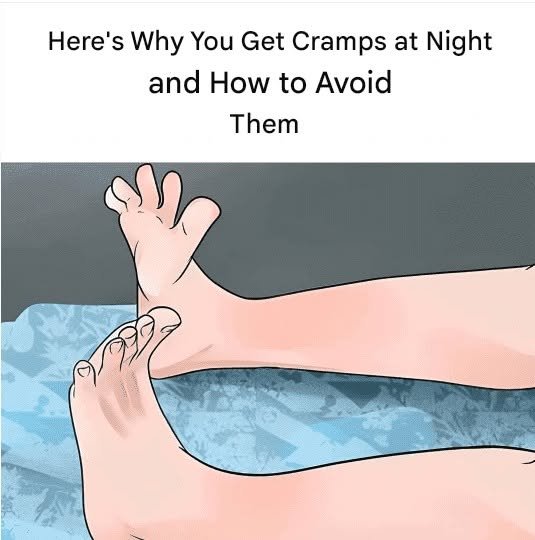
Why Cramps Strike at Night
-
Nerve hyperexcitability & fatigue: Muscles that worked hard during the day—from standing on hard floors, walking long distances, exercising, or sitting for long stretches—can develop altered nerve firing thresholds when winding down at night.
-
Foot & ankle resting position: Lying on your back or stomach naturally lets your toes point downward (plantarflexion), shortening the calf muscle and making a sudden spasm more likely when you stretch or shift.
-
Fluid & electrolyte shifts: Dehydration or imbalances in minerals like potassium, magnesium, or calcium can affect nerve-to-muscle signaling, though routine electrolyte pills don’t prevent night cramps for everyone.
-
Circulation, pregnancy, & medications: Pregnancy (especially later trimesters), peripheral artery or vein issues, nerve compression, thyroid or kidney conditions, and certain medications (such as diuretics or statins) can raise the risk.
What to Do When a Cramp Hits
-
Gently stretch the tight muscle: For a calf cramp, straighten your leg and flex your toes/foot upward toward your shin (or stand and gently press your heel down while leaning forward slightly).
-
Massage & apply warmth: Rub the knotted muscle gently to help it release, and use a warm towel or heating pad to ease lingering stiffness.
-
Walk it off briefly: Once the sharp spasm eases, taking a few slow steps around the room can help reset normal muscle tension.
How to Help Prevent Them
-
Do a gentle calf & hamstring stretch before bed: Spend a minute or two stretching lightly in the evening rather than doing an intense workout right before sleep.
-
Keep feet unpointed under covers: Heavy, tucked-in blankets can push your toes downward all night—loosen the bedding around your feet or sleep on your side with a pillow between your knees if helpful.
-
Stay steadily hydrated during the day: Sip fluids consistently rather than playing catch-up late at night (which also disrupts sleep).
When to check in with a doctor: Speak with a healthcare professional if cramps happen frequently, wake you up most nights, last more than 10 minutes, come with swelling, redness, skin changes, or leg weakness/numbness, or start after beginning a new medication.