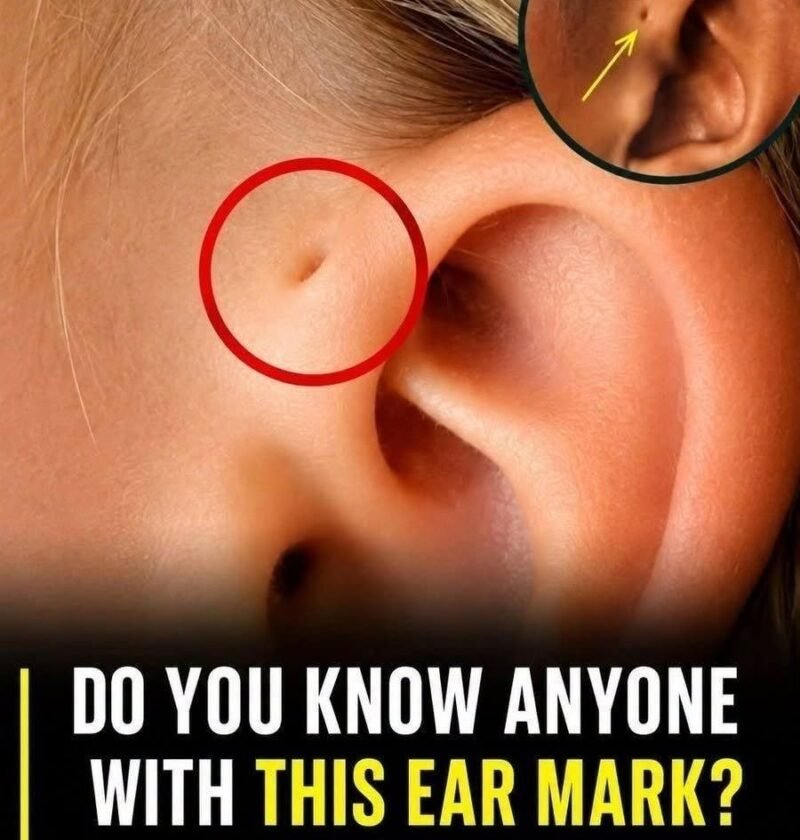
If you’ve ever noticed a tiny, almost imperceptible dimple or pinprick hole right where your ear cartilage meets your cheek, you aren’t imagining things. That minuscule mark is called a preauricular pit, and it’s a fascinating little quirk of human anatomy!
What Is a Preauricular Pit?
A preauricular pit is a benign, congenital malformation—meaning people are born with it. It typically appears as a single tiny hole or indentation just anterior to (in front of) the upper root of the ear.
-
The Embryonic Origin: They develop during fetal development (around the sixth week of gestation) when the ears are forming from multiple tiny tissue lumps (auricular hillocks). If these hillocks don’t fuse together completely, a small sinus tract or indentation is left behind.
-
Genetics: They can run in families and can appear on just one ear (unilateral) or both ears (bilateral). In evolutionary biology, some scientists jokingly point out they might be remnants of evolutionary gill slits, though functionally, they are just harmless skin anomalies.
Do They Cause Any Problems?
For the vast majority of people, a preauricular pit is completely harmless and requires zero medical attention. You might never even notice it unless you look closely in the mirror.
However, because the pit is actually the opening to a narrow, blind-ended tube (a sinus tract) under the skin, a few things are worth keeping in mind:
-
Risk of Infection (Preauricular Sinus): Because the tract can trap dead skin cells and oils, it can occasionally get clogged and infected, leading to localized swelling, tenderness, or a cyst.
-
Leave It Alone: Never try to squeeze, pop, or probe a preauricular pit with a needle or toothpick, as this pushes bacteria deep into the tract and can easily trigger an infection.