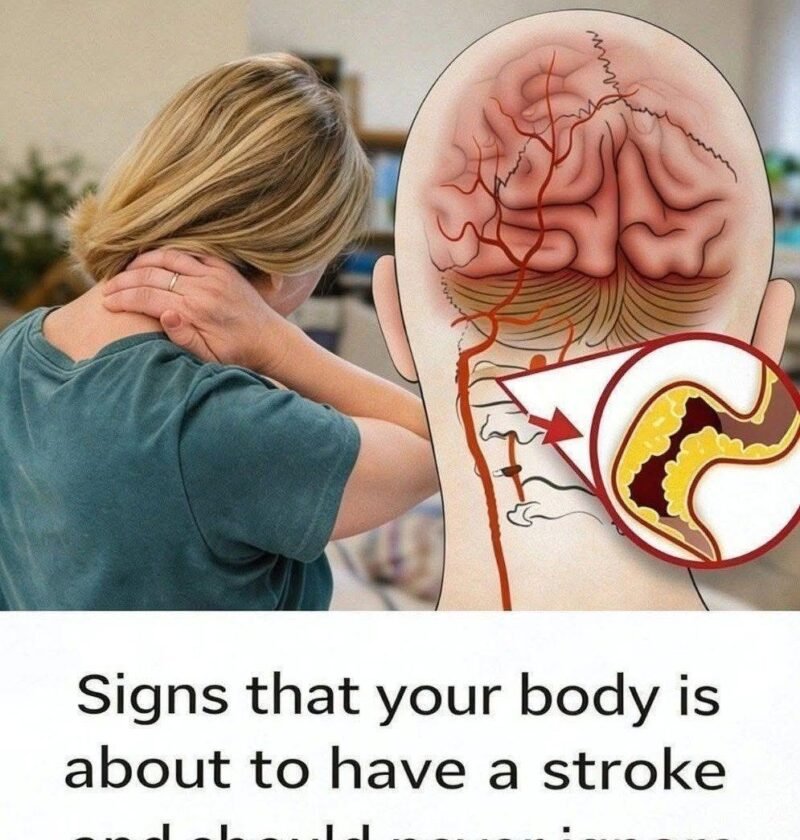
That headline delivers one of the most vital health messages on the internet, but standard clickbait lists often confuse people by mixing true stroke emergencies with vague, everyday symptoms like fatigue or minor stiffness.
A stroke is a time-critical medical emergency—every minute that blood flow is blocked or bleeding occurs in the brain, roughly 1.9 million brain cells die. Knowing the genuine, definitive warning signs can save a life or prevent permanent disability.
The 10 Legitimate, Clinical Warning Signs of a Stroke
Doctors divide acute stroke symptoms into sudden neurological deficits. The single most important rule is the word SUDDEN—if a symptom develops gradually over weeks, it is rarely an acute stroke.
-
Sudden Numbness or Weakness in the Face
-
What it looks like: One side of the face suddenly goes numb, or the mouth and cheek droop downward when trying to smile.
-
-
Sudden Numbness or Weakness in One Arm or Leg
-
What it looks like: One arm or leg feels heavy, numb, or drifts downward when you try to hold both arms out straight in front of you.
-
-
Sudden Slurred Speech, Trouble Speaking, or Confusion
-
What it looks like: Words become garbled, speech sounds thick or slurred, or you suddenly cannot understand what someone else is saying or find the right words.
-
-
Sudden Blurred, Double, or Lost Vision in One or Both Eyes
-
What it looks like: A sudden dark shadow or “curtain” falls over one eye, double vision occurs, or vision in one eye blanks out completely (amaurosis fugax).
-
-
Sudden Loss of Balance, Coordination, or Dizziness
-
What it looks like: Sudden, severe unsteadiness, feeling like the room is violently spinning, or stumbling as if intoxicated, especially when paired with numbness or slurred speech.
-
-
Sudden, Severe “Thunderclap” Headache
-
What it looks like: A blinding, agonizing headache that strikes with maximum intensity within seconds or minutes—often described as “the worst headache of my life.” This is a classic hallmark of a hemorrhagic stroke (a ruptured blood vessel or aneurysm).
-
-
Sudden Difficulty Swallowing (Dysphagia)
-
What it looks like: Saliva pooling, choking, or a sudden inability to swallow liquids or food normally without coughing.
-
-
Sudden Confusion or Inability to Process Information
-
What it looks like: Disorientation to time and place, sudden memory gaps, or an inability to comprehend simple instructions.
-
-
Sudden Unexplained Nausea, Vomiting, or Vertigo (Brainstem Stroke)
-
What it looks like: Persistent vomiting and dizziness originating in the brainstem, usually accompanied by double vision or clumsy limbs.
-
-
Sudden Weakness on Both Sides or Full-Body Collapse
-
What it looks like: A sudden loss of muscle tone across the entire body, causing a person to collapse while remaining conscious (often tied to brainstem strokes).
-
The Only Acronym You Need to Remember: BE FAST
Trying to memorize 10 separate symptoms during an emergency is difficult. Medical professionals rely on the BE FAST checklist to instantly spot a stroke:
-
B – Balance: Sudden loss of balance or coordination
-
E – Eyes: Sudden blurred or lost vision
-
F – Face: One side of the face drooping
-
A – Arms: One arm weak or drifting downward
-
S – Speech: Slurred speech or trouble speaking
-
T – Time: Call emergency services (911) immediately—even if the symptoms vanish after 5 minutes.
Why “Transient” Symptoms Still Matter: If someone has a Transient Ischemic Attack (TIA)—where stroke symptoms appear and completely resolve within minutes—it means a temporary clot blocked blood flow and dissolved on its own. Do not wait to see if it happens again. A TIA is a severe warning sign that a major, permanent stroke is likely to follow within days. Call emergency services or go straight to the nearest emergency room.