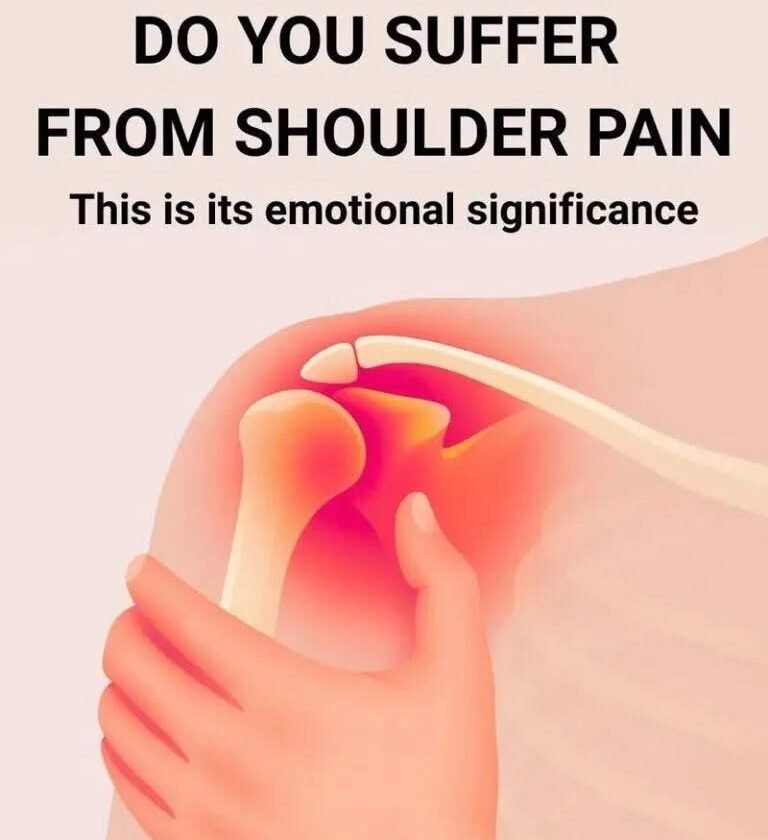
Medically, shoulder pain does not have a single symbolic “emotional meaning”—in the vast majority of cases, it comes from physical strain, rotator cuff irritation, posture, or joint inflammation. However, chronic psychological stress and emotional tension directly cause very real physical pain in the shoulders and upper back through well-documented mind-body mechanisms, while mind-body traditions often describe these patterns through metaphor.
1. The Physiological Reality: How Emotion Causes Physical Pain
When you experience ongoing stress, anxiety, or grief, your nervous system stays in a low-grade “fight-or-flight” state:
-
Chronic Muscle Guarding: Under stress, you unconsciously elevate your shoulders toward your ears and tighten your upper trapezius and neck muscles. Holding that subtle contraction for hours reduces blood flow, builds up metabolic waste, and creates painful myofascial trigger points (“knots”).
-
Shallow Chest Breathing: Stress shifts breathing from the diaphragm to the upper chest, forcing secondary muscles in the neck and shoulders (such as the scalenes and pectorals) to work overtime with every breath.
-
Heightened Pain Sensitivity: Prolonged cortisol and adrenaline exposure sensitizes pain pathways in the nervous system, making normal muscle tightness or minor joint wear feel significantly sharper.
2. Common Mind-Body & Somatic Metaphors
In somatic therapy, yoga philosophy, and holistic traditions, the shoulders are associated with responsibility, support, and protection. Practitioners often use these themes as reflective prompts rather than medical diagnoses:
-
“Carrying the weight of the world”: Feeling over-responsible for other people’s problems, financial pressure, or family duties.
-
Emotional armor or bracing: Rounding the shoulders inward to unconsciously protect the heart and chest during periods of vulnerability, grief, or conflict.
-
Left vs. Right Shoulder (Traditional Symbolism): Some holistic frameworks associate the right shoulder with outward action, work, and providing, and the left shoulder with receiving, relationships, and internal emotional burdens—though clinically, pain side usually reflects dominant-hand use or sleeping posture.
Practical Ways to Release Stress-Related Shoulder Tension
If your pain feels like a dull ache, tightness, or heaviness that worsens during stressful days:
-
Drop-and-Exhale Reset: Inhale while shrugging your shoulders tightly up toward your ears for 3 seconds, then exhale slowly and let them drop completely heavy. Repeat 3 times.
-
Diaphragmatic Breathing: Place one hand on your belly and breathe so your stomach rises rather than your collarbone, giving your upper shoulder muscles a break.
-
Warmth & Gentle Movement: Apply a warm compress for 15 minutes to restore blood flow, followed by slow shoulder rolls and doorway chest stretches to counteract hunching.
When to Have a Doctor Evaluate It
Because shoulder pain is frequently mechanical—and occasionally referred from elsewhere in the body—seek medical evaluation if you notice:
-
Sharp pain, weakness, or inability to lift your arm (signs of a rotator cuff tear or frozen shoulder).
-
Pain that wakes you at night or persists beyond 2 weeks without improvement.
-
Urgent warning signs: Sudden left shoulder or upper back pain accompanied by chest pressure, shortness of breath, sweating, or nausea requires immediate emergency care to rule out a heart-related issue.