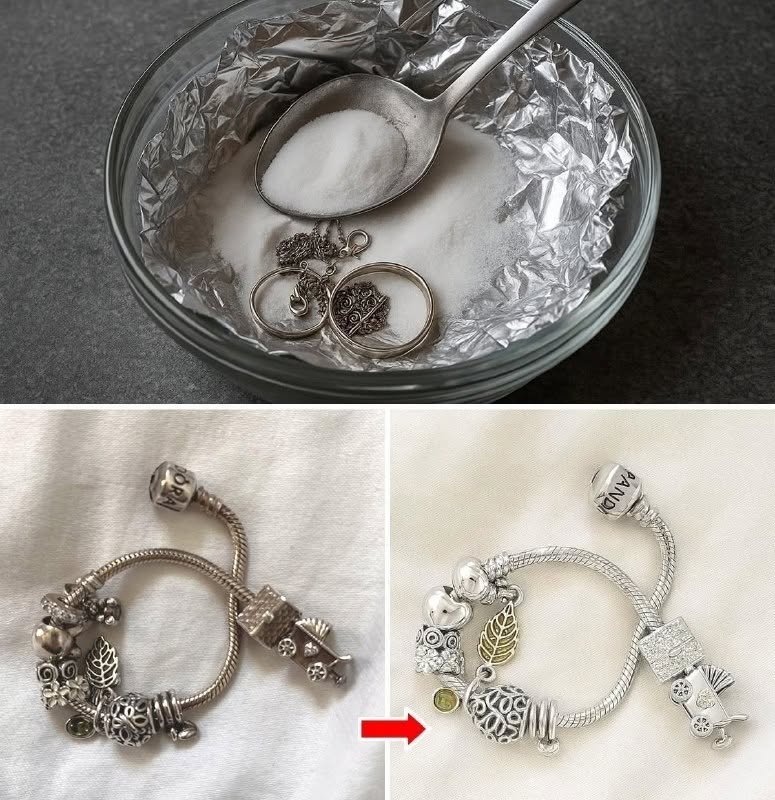
Blackened or tarnished silver is a common sight when jewelry, silverware, or decor items sit exposed to sulfur compounds in the air.
While commercial silver polishes work well, many are abrasive and gradually strip away a microscopic layer of real silver every time you use them. Fortunately, you can restore a brilliant mirror shine at home using basic kitchen chemistry.
The Best Method: The Aluminum Foil & Baking Soda Bath
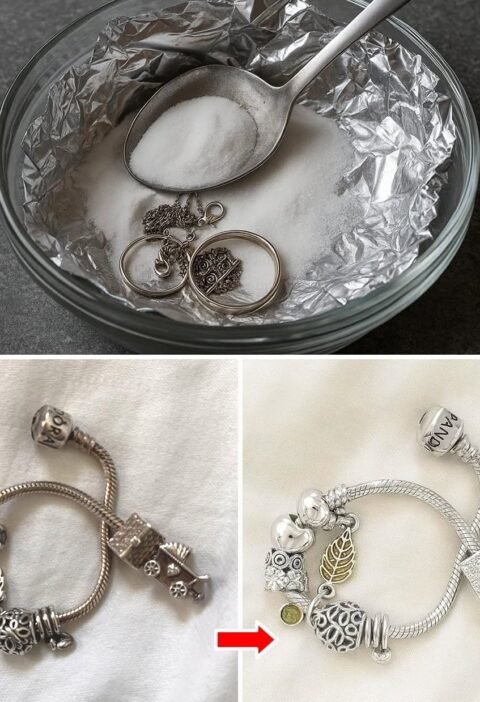
This is the gold-standard method used by museum conservators. Instead of scrubbing away the tarnish, it uses an electrochemical reduction reaction to chemically reverse the tarnish, transferring the black sulfur back onto a piece of aluminum foil without removing any of your silver.
-
What you need:
-
A glass or ceramic bowl (avoid metal bowls)
-
A sheet of aluminum foil
-
1 tablespoon of baking soda per cup of boiling water
-
1 tablespoon of salt (optional, helps speed up the reaction)
-
Boiling water
-
Soft microfiber cloth
-
-
How to do it:
-
Line the bowl: Line the inside of your glass or ceramic bowl completely with the aluminum foil, shiny side facing up.
-
Place the silver: Lay your blackened silver inside the bowl so that it makes direct physical contact with the aluminum foil. (If you have multiple pieces, ensure they touch the foil or each other).
-
Add the powders: Sprinkle the baking soda (and salt) directly over and around the silver.
-
Pour boiling water: Carefully pour the boiling water into the bowl. It will immediately begin to fizz and bubble, and you may notice a faint sulfur smell (like rotten eggs)—that’s the tarnish releasing into the air!
-
Let it react: Leave the silver in the solution for 30 seconds to 3 minutes, depending on how heavy the tarnish is.
-
Rinse and dry: Remove the silver with tongs, rinse it thoroughly under warm running water, and buff it dry with a soft microfiber cloth to reveal a brilliant shine.
-
Alternative Method: The Baking Soda Paste (For Detailed Items)
If your item is too large for a bowl or has deep, intricate engravings where tarnish adds character (like antique spoons or ornate picture frames), you can clean it manually.
-
How to do it:
-
Mix a small amount of baking soda with a few drops of water to form a thick, smooth paste.
-
Using your fingers or a soft microfiber cloth, gently dab the paste onto the silver. Do not scrub hard, as baking soda is a mild abrasive and can scratch high-polish finishes.
-
Let it sit for a minute, then rinse thoroughly with warm water and dry completely.
-
Pro-Tips to Prevent Future Tarnishing
-
Skip the Toothpaste Myth: While older internet hacks suggest using toothpaste to polish silver, never do this. Most modern toothpastes contain harsh silica abrasives that will permanently scratch and dull fine silver.
-
Store Smart: Keep your silver in anti-tarnish bags, wrap pieces in acid-free tissue paper, or toss a small piece of chalk or silica gel packets into your jewelry box to absorb moisture and airborne sulfur.