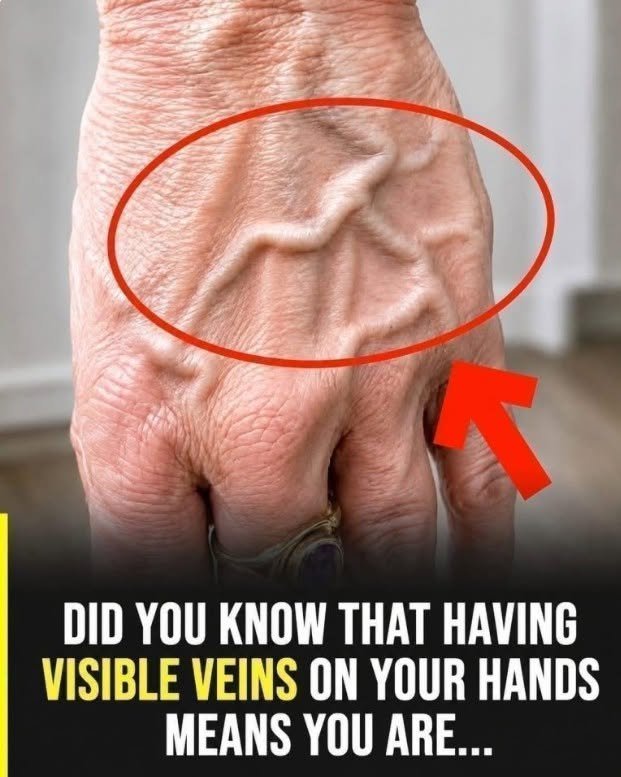
Prominent, bulging, or highly visible veins on the back of the hands are an extremely common sight—especially as we age. While they can sometimes catch you off guard in the mirror, they are usually a completely natural result of how our skin and circulatory systems change over time.
However, because hand veins can occasionally point to underlying vascular or inflammatory issues, it helps to know what causes them and when they warrant a closer look.
Here are 7 common causes of visible hand veins and when you should worry:
1. Natural Aging and Skin Thinning
-
Why it happens: As we age, our skin naturally loses collagen, elasticity, and the underlying layer of subcutaneous fat that acts as a cushion. At the same time, vein walls can weaken and lose some of their elasticity, causing them to stretch and become more prominent near the surface of the skin.
-
Should you worry? Not at all. This is a completely normal, harmless cosmetic part of getting older.
2. Low Body Fat Percentage
-
Why it happens: Fat acts as a natural blanket beneath the skin, smoothing out the contours of your hands and arms. If you have a lean physique, low body fat, or have recently lost weight, there is less tissue padding between your skin and your veins, making them stand out much more sharply.
-
Should you worry? No, as long as the weight loss was intentional and healthy.
3. Genetics and Body Structure
-
Why it happens: Just like some people naturally have curly hair or tall statures, genetics play a massive role in vein visibility. If your parents or grandparents had prominent hand veins, you likely inherited thinner skin or naturally superficial vein pathways.
-
Should you worry? Purely genetic vein visibility is entirely harmless.
4. Frequent Weight Lifting or Manual Labor
-
Why it happens: Regular heavy lifting, resistance training, or hard physical labor temporarily raises your blood pressure and increases blood flow to your working muscles. Over time, this repeated pressure can cause blood vessels to adapt, slightly expanding and strengthening veins to handle the load.
-
Should you worry? No. In fact, it is a healthy physiological response to exercise.
5. Hot Weather and Heat Exposure
-
Why it happens: When the weather is hot or humid, your body tries to cool itself down through a process called vasodilation. Your blood vessels expand and move closer to the skin’s surface to help release body heat, which can make your hand and arm veins suddenly look much larger.
-
Should you worry? This is temporary and resolves as soon as you cool down.
6. Superficial Phlebitis (Inflammation)
-
Why it happens: Unlike the harmless causes above, superficial phlebitis occurs when a vein close to the surface becomes inflamed or develops a small blood clot (thrombus). This can be triggered by a minor injury, an IV line, or poor circulation.
-
Should you worry? Yes, this requires attention. It usually presents as a vein that feels hard, tender, warm, or rope-like, accompanied by redness and swelling in the surrounding skin.
7. Venous Insufficiency
-
Why it happens: Tiny one-way valves inside your veins ensure blood flows smoothly back up toward your heart. If these valves weaken, blood can pool backward, causing veins to bulge, twist, or ache. While more common in the legs, it can affect upper extremities over time.
-
Should you worry? If bulging veins are accompanied by persistent throbbing, aching, or swelling in the hands and arms, it’s worth getting evaluated.
When Should You Actually Worry?
Most visible hand veins are purely a cosmetic concern. However, you should consult a doctor or vascular specialist if you notice any of these red flags:
-
Sudden changes: A hand vein pops out, swells, or becomes prominent overnight without exercise or weight loss.
-
Pain or tenderness: The vein feels hard to the touch, throbs, or hurts when you press on it.
-
Signs of infection: The skin over the vein is red, warm, swollen, or you develop a fever.
-
Asymmetry: Only one hand suddenly develops painful, bulging veins while the other remains completely normal.