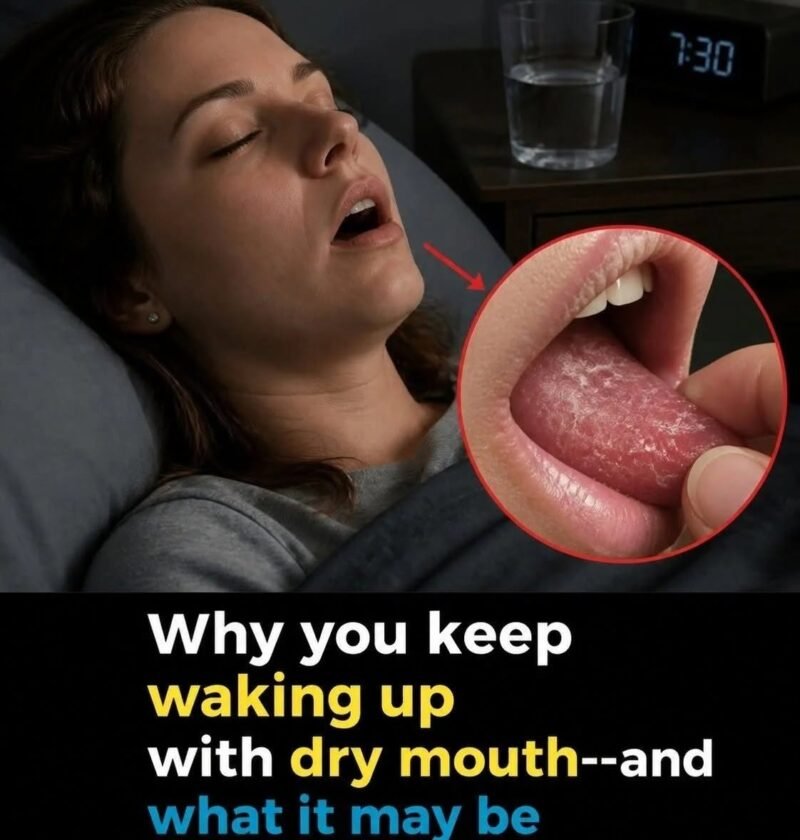
Waking up with a parched, sticky mouth is more than just a minor morning annoyance—it is often a direct signal from your body about your hydration levels, breathing habits, or underlying health.
When your salivary glands slow down production overnight, your mouth loses its natural defense system against bacteria, acid, and friction.
What Your Body Is Trying to Tell You
-
“I’m breathing through my mouth instead of my nose.” If you wake up with a tongue that feels like sandpaper, you likely spent the night open-mouth breathing—often driven by nasal congestion, sinus issues, snoring, or mild sleep apnea. The continuous airflow rapidly evaporates your saliva.
-
“My medications are drying me out.” Hundreds of common drugs (from allergy medications and blood pressure pills to antidepressants) list reduced saliva production as a side effect, which hits hardest overnight when overall bodily secretions naturally slow down.
-
“I need more water throughout the day.” Mild daytime dehydration forces your body to conserve moisture for critical internal organs, leaving your salivary glands underfunded by bedtime.
-
“My environment is too dry.” Low indoor humidity from heating or air conditioning, or air circulating directly from a bedside fan, can physically strip moisture from your mucous membranes while you sleep.
Why You Shouldn’t Ignore It
Saliva is essential for washing away food particles, neutralizing acids, and protecting your tooth enamel. Chronic nighttime dry mouth can quickly lead to an increased risk of tooth decay, gum irritation, bad breath, and throat discomfort.