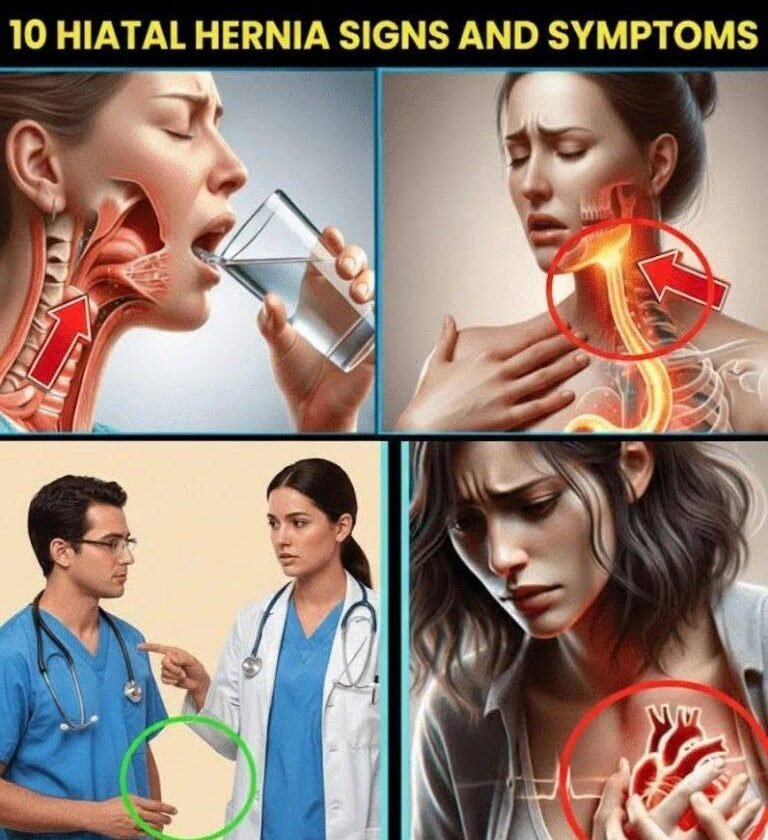
The headline “10 Overlooked Signs of a Hiatal Hernia” is reasonable as a prompt for awareness, but it can be misleading if it suggests these symptoms prove you have a hiatal hernia. Many of the symptoms overlap with GERD, indigestion, ulcers, gallbladder problems, and heart or lung conditions.
A hiatal hernia occurs when part of the stomach pushes through the opening in the diaphragm into the chest. Small hiatal hernias often cause no symptoms at all. (Mayo Clinic News Network)
Possible symptoms
Some people may experience:
- Heartburn or acid reflux
- Regurgitation of food or acid
- Frequent belching
- Bloating or abdominal discomfort
- Feeling unusually full after eating
- Difficulty swallowing or feeling that food sticks
- Chest discomfort or pain
- Nausea
- Chronic cough or hoarseness, particularly when reflux is also present
- Shortness of breath, especially with larger hernias
These symptoms aren’t specific to hiatal hernia. (Mayo Clinic News Network)
What can help?
If reflux is contributing to your symptoms, doctors may recommend smaller meals, avoiding foods that trigger your symptoms, not lying down soon after eating, weight loss if appropriate, stopping smoking, and elevating the head of the bed. Medications such as antacids, H2 blockers, or proton-pump inhibitors may also be used when appropriate. (NIDDK)
Most hiatal hernias don’t require surgery. Surgery is generally considered for large hernias or significant symptoms/complications that aren’t adequately controlled with other treatment. (Mayo Clinic News Network)
Don’t ignore these symptoms
Chest pain, severe or persistent abdominal pain, repeated vomiting, difficulty or pain with swallowing, vomiting blood, black/tarry stools, or unexplained weight loss should be medically evaluated rather than automatically attributed to a hiatal hernia. (NIDDK)
Bottom line: A hiatal hernia can contribute to reflux and digestive symptoms, but a symptom checklist cannot diagnose it. Depending on the situation, doctors may use tests such as upper-GI imaging or endoscopy to investigate the cause. (NIDDK)