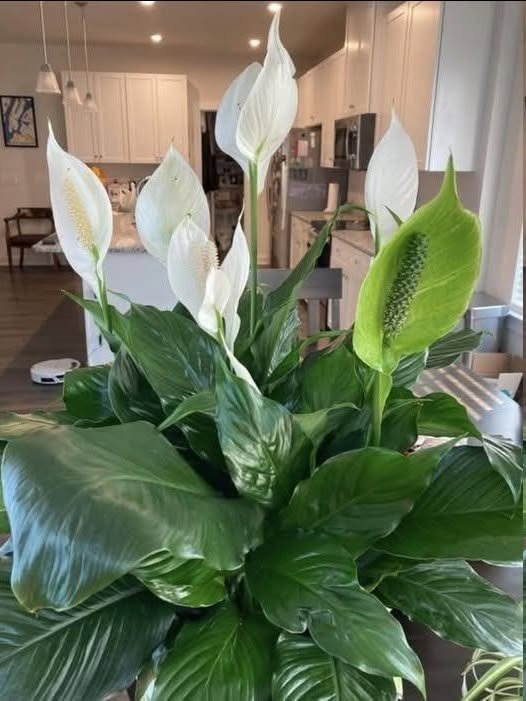
Peace Lilies (Spathiphyllum) are famous for being tough, resilient houseplants that can survive in dim corners for years. But if your plant is throwing out plenty of glossy green leaves while stubbornly refusing to produce those signature white sail-like blooms (spathes), it usually means it’s stuck in “survival mode” rather than “growth mode.”
Why Your Peace Lily Isn’t Flowering
-
The Light is Too Low: While peace lilies tolerate low-light offices, they rarely bloom there. Producing flowers takes a massive amount of energy, which the plant can only generate through photosynthesis fueled by adequate light.
-
It’s Too Young: If you bought your peace lily recently, it may have been forced into bloom commercially using growth hormones. Young plants often need 1 to 3 years of maturity before they are naturally ready to flower on their own.
-
Root Crowding vs. Oversizing: Ironically, peace lilies actually like being slightly root-bound. However, if they are trapped in a completely exhausted pot with zero soil nutrients left, blooming stops. Conversely, putting a small plant into a massive pot causes it to focus all its energy on growing roots instead of flowers.
Expert Tips to Trigger Lush Blooms
-
Upgrade to Bright, Indirect LightMove your peace lily within a few feet of an east- or north-facing window, or set it back from a bright south/west window where it gets plenty of ambient brightness without harsh direct sun rays (which will scorch the leaves).
-
Feed the Right Nutrients at the Right TimeDuring the active spring and summer growing seasons, feed your peace lily every 2 to 4 weeks with a balanced, water-soluble houseplant fertilizer diluted to half strength. Avoid high-phosphorus “bloom boosters” thinking they’ll force flowers; excess fertilizer will only burn the sensitive root system. Stop fertilizing entirely in autumn and winter.
-
Dial in Your Watering Routine Letting your peace lily suffer through dramatic, repeated “death drops” (severe wilting) stresses the plant out and inhibits flowering. Instead, water thoroughly when the top inch or two of soil feels dry, allowing excess water to drain completely out the bottom.
-
Prune Spent BloomsWhen old flowers turn green and brown, snip the entire flower stalk off cleanly right down at the base of the plant. This signals to the plant that it can stop wasting energy maintaining dying parts and redirect that energy into pushing out brand-new buds.