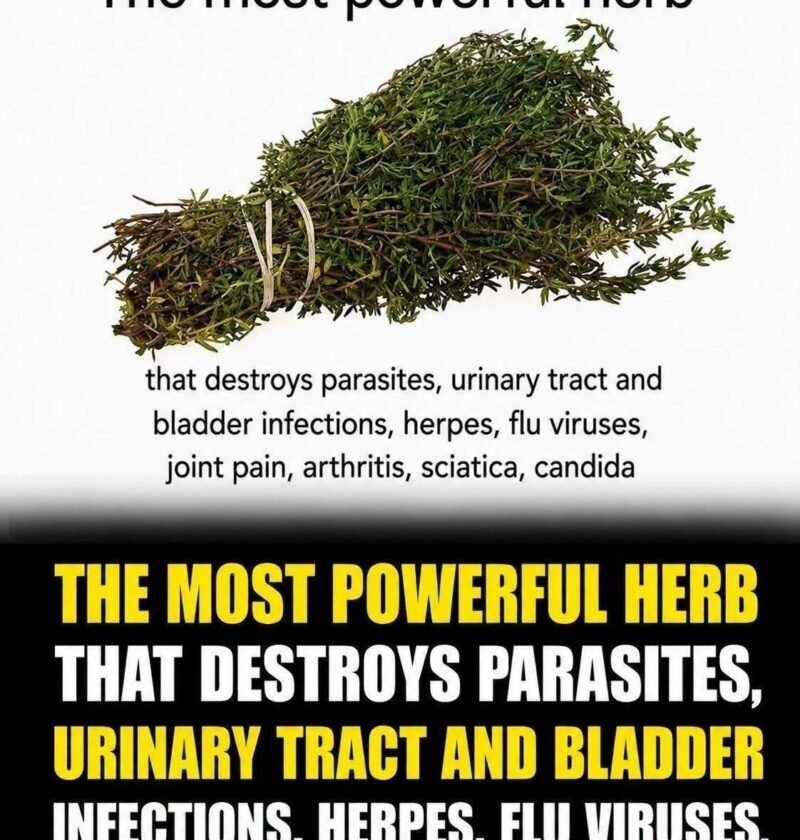
When viral headlines or marketing claims point to a single “most potent herb” capable of simultaneously destroying internal parasites and curing urinary tract issues, they are usually leaning into exaggerated, sensationalized wellness myths.
In clinical herbalism and medicine, no single plant acts as a universal cure-all for both distinct biological systems. However, certain potent herbs have well-documented properties that target either parasitic infections or urinary tract health.
1. Herbs Frequently Studied for Parasitic Cleansing
When addressing internal parasites (such as intestinal worms or protozoa), specific traditional herbs contain potent active phytochemicals that have been studied in laboratory and animal settings:
-
Wormwood (Artemisia absinthium): Contains artemisinin and bitter compounds that can paralyze or weaken certain intestinal worms, making it easier for the body to expel them. However, it is potent and toxic in high doses, requiring careful medical supervision.
-
Black Walnut Hull (Juglans nigra): Traditionally used in anti-parasitic protocols due to compounds like juglone, which exhibit antimicrobial and anti-helminthic properties.
-
Garlic (Allium sativum): Contains allicin, a powerful sulfur compound that exhibits broad-spectrum antimicrobial, antifungal, and anti-parasitic activity by disrupting the enzymes of pathogens.
2. Herbs Dedicated to Urinary Tract Health
Urinary tract issues (such as bacterial infections or kidney stones) require entirely different mechanisms—typically focusing on preventing bacteria from adhering to the bladder wall or increasing urine flow:
-
Uva Ursi (Arctostaphylos uva-ursi): Also known as bearberry, its leaves contain arbutin, which converts into an antiseptic compound in the urinary tract that helps combat bacteria. It is traditionally used for short-term urinary tract support.
-
Cranberry Extract: Rich in A-type proanthocyanidins (PACs), which physically prevent E. coli bacteria from sticking to the lining of the urinary tract.
-
Chanca Piedra (Phyllanthus niruri): Frequently called “stone breaker,” it is used traditionally to support kidney health and help flush out urinary tract mineral deposits.
The Medical Reality
-
No “One-Size-Fits-All” Remedy: Parasites live in the digestive tract and blood, requiring specific anti-helminthic or anti-protozoal treatments (often prescription medications like albendazole or metronidazole). Urinary tract infections (UTIs) happen in the urinary system and are typically caused by bacteria like E. coli, which require hydration, targeted urinary antiseptics, or antibiotics if an infection is active.
-
Safety First: Potent herbs are biologically active medicines. For instance, concentrated wormwood can cause liver and kidney toxicity if misused, and herbs like uva ursi are unsafe for pregnant women or long-term continuous use.
⚠️ When to See a Doctor:If you suspect you have a parasitic infection (experiencing chronic gastrointestinal distress, unexplained weight loss, or travel-related illness) or a urinary tract infection (marked by burning urination, pelvic pain, or cloudy urine), do not rely on generalized herbal “cleanses.” Diagnostic testing (such as stool samples or urinalysis) is essential to identify the exact cause and secure proper medical treatment.