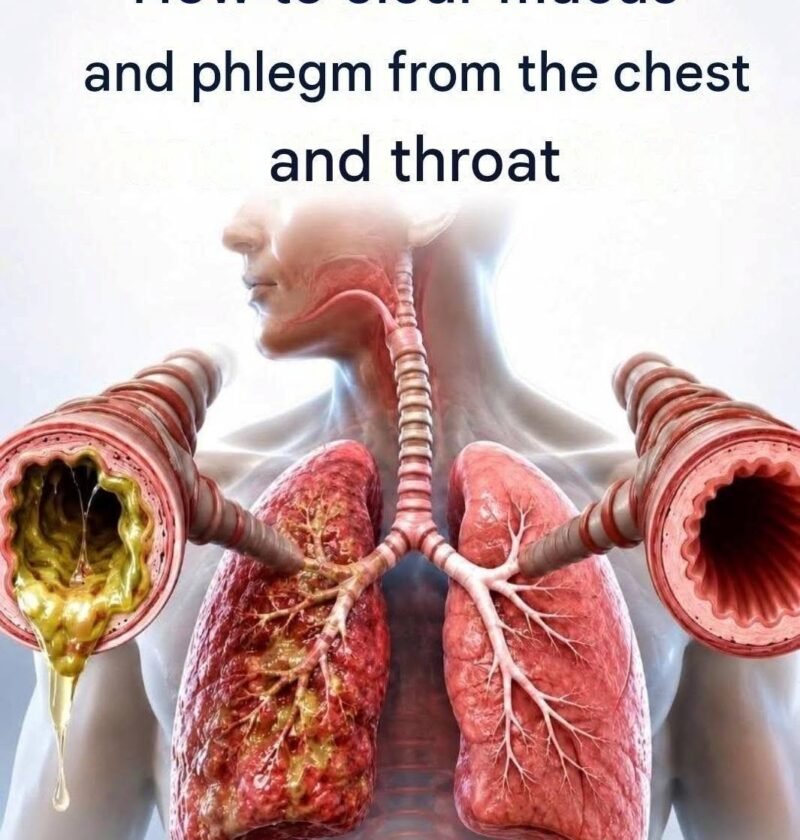
Clearing stubborn mucus from your chest and throat requires a combination of thinning the mucus so it moves easily and using techniques to physically expel it.
Here are the most effective, doctor-recommended methods to clear chest and throat congestion:
1. Hydration and Steam
-
Drink plenty of water: Staying well-hydrated is the single most effective way to thin out mucus, making it watery and much easier to cough up or clear. Warm liquids like herbal tea, warm water with lemon and honey, or clear broths are especially soothing for the throat.
-
Inhale steam: Take a hot shower and breathe deeply in the bathroom, or lean over a bowl of hot water with a towel draped over your head for 5 to 10 minutes. The moisture loosens congestion in both your airways and throat.
-
Use a humidifier: Running a cool-mist humidifier in your bedroom keeps your airways moist overnight, preventing mucus from drying out and hardening.
2. Airway Clearance Techniques
-
The Huff Cough: Instead of a forceful, hacking cough (which can irritate your throat and worsen inflammation), take a breath in, hold it for a few seconds, and gently exhale using your stomach muscles while making a “hah” sound (like fogging up a mirror). This moves mucus up from the lower airways without straining your vocal cords.
-
Controlled Hydration with Saline (or Saltwater Gargle): For mucus trapped specifically in the throat, gargling with warm salt water (about half a teaspoon of salt in a glass of warm water) several times a day reduces throat irritation and helps break down thick post-nasal drip.
3. Over-the-Counter (OTC) Support
-
Expectorants (Guaifenesin): Medications like Mucinex thin the mucus in your bronchial tubes and chest, making it easier to cough up.
-
Saline Nasal Sprays or Rinses: Often, chest and throat mucus originates as post-nasal drip from your sinuses. Using a saline rinse (Neti pot) clears out upper airway irritants before they can drip down your throat.
When to see a doctor: If your chest congestion lasts longer than a couple of weeks, is accompanied by a high fever, chest pain, shortness of breath, or if you cough up blood or discolored (green/rust-colored) mucus, consult a healthcare provider to rule out an infection like bronchitis or pneumonia.