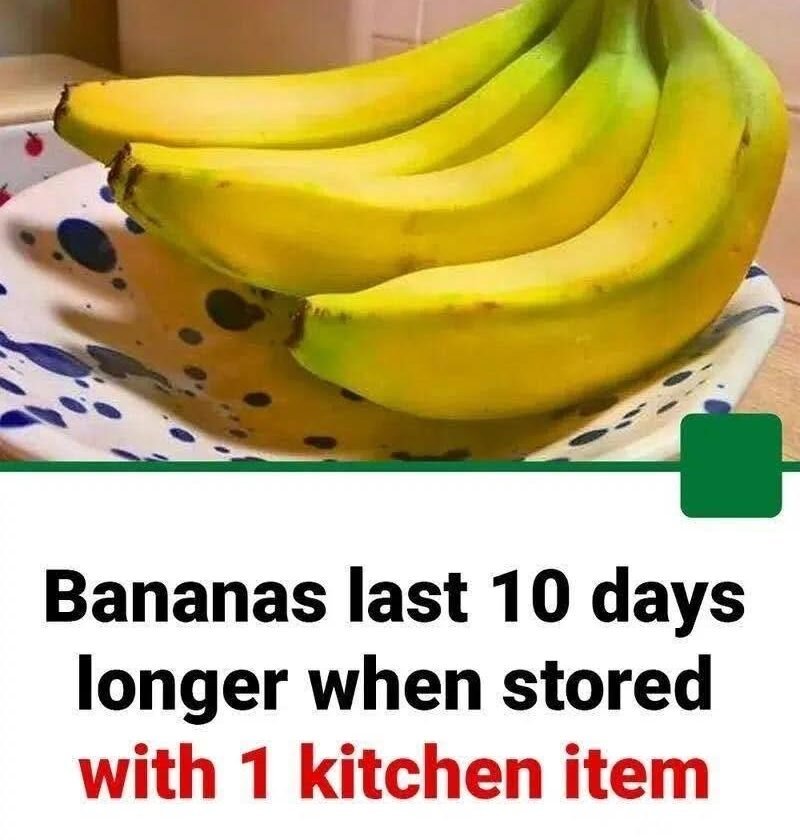
Viral food storage hacks love to promise secret kitchen tricks that supposedly work miracles—like claiming a single household item will magically keep bananas fresh and unblemished for weeks past their prime.
When food scientists and culinary experts look at how bananas ripen, the reality comes down to plant biology and simple gas emissions rather than kitchen magic.
Here is what science actually says about why bananas ripen so fast, how storage methods affect them, and what those viral “one kitchen item” hacks are really doing:
The Science of Banana Ripening: The Ethylene Factor
To understand why bananas rot (and how to slow it down), you have to look at ethylene gas.
-
The Hormone: Bananas are massive natural producers of ethylene gas, a plant hormone that acts as a chemical ripening agent.
-
The Chain Reaction: Ethylene gas triggers the conversion of starches into sugars, softens the fruit, and breaks down chlorophyll (turning the skin from green to yellow and eventually brown). When a bunch of bananas sits in a traditional fruit bowl, the ethylene gas they produce pools around them, accelerating their own ripening—and speeding up the ripening of any nearby fruit (like apples, avocados, or tomatoes).
The Viral “Kitchen Item” Hacks: Fact vs. Fiction
Viral videos typically point to one of a few common items to stop this process:
1. Wrapping the Stem in Plastic Wrap or Foil (The Most Popular Hack)
-
The Claim: Wrapping the crown (stem) of the banana bunch tightly in plastic wrap or aluminum foil stops them from ripening.
-
The Reality: There is a grain of truth here! Because the stem is where the highest concentration of ethylene gas escapes, wrapping it tightly can slightly slow down the gas release, keeping the bananas firm for a few extra days. However, it won’t magically add 10 days or freeze time.
2. Hanging the Bananas
-
The Claim: Using a banana hanger keeps them fresh longer.
-
The Reality: Hanging bananas improves air circulation around the entire bunch and prevents bruising. When bananas sit flat in a fruit bowl, the pressure points where they touch the hard surface bruise quickly, accelerating localized decay. Hanging them doesn’t stop ethylene gas, but it reduces physical damage.
How to Actually Extend the Life of Your Bananas
If you want to get the most out of your bunch without falling for exaggerated internet myths, use these evidence-based storage tips:
-
Separate the Bunch: As soon as you bring bananas home, cut or pull them apart. Separating them reduces the concentration of shared ethylene gas and slows the ripening cascade significantly.
-
Keep Them Away from Other Produce: Don’t store bananas right next to avocados, tomatoes, or apples, which are also high-ethylene producers.
-
Refrigerate (After They Ripen to Your Liking): Many people think the fridge ruins bananas because the peel turns completely black. While cold temperatures halt the ripening process and turn the skin dark due to enzyme activity, the fruit inside remains firm and edible for days longer.