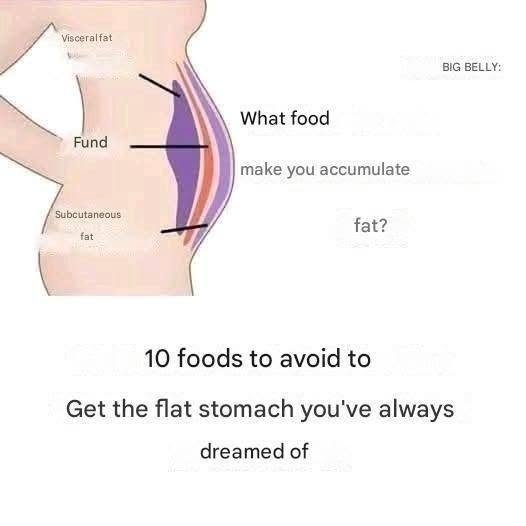
The phrase “10 foods to avoid to get the flat stomach you’ve always dreamed of” is a common clickbait headline. There isn’t a specific list of foods that guarantees a flat stomach, because body fat cannot be reduced from just one area, and no single food causes or prevents belly fat on its own.
That said, some foods can contribute to bloating, excess calorie intake, or weight gain if eaten frequently:
- Sugar-sweetened drinks (soda, sweet tea, energy drinks) – High in calories and added sugar.
- Ultra-processed snack foods (chips, cookies, pastries) – Often high in calories, refined starches, and unhealthy fats.
- Sugary desserts and candy – Easy to overeat and provide little nutritional value.
- Refined grains (such as white bread and many sugary breakfast cereals) – May be less filling than whole grains.
- Processed meats (sausages, bacon, hot dogs) – Often high in sodium and saturated fat.
- Fast food – Frequently high in calories, salt, and unhealthy fats.
- Excess alcohol – Can add significant calories and contribute to abdominal weight gain over time.
- Very salty foods – Can cause temporary water retention and make your abdomen feel bloated.
- Foods that personally cause gas or bloating – For some people, these include beans, onions, cabbage, or dairy if they’re lactose intolerant.
- Large portions of any high-calorie food – Portion size matters as much as the type of food.
What actually helps reduce belly fat?
- Eat a balanced diet rich in vegetables, fruits, whole grains, lean protein, legumes, and healthy fats.
- Be physically active, including both aerobic exercise and strength training.
- Get enough sleep and manage stress.
- Aim for gradual, sustainable weight loss if you have excess body fat.
A “flat stomach” is influenced by genetics, body composition, posture, digestion, and natural body shape, so it’s not a realistic or healthy goal for everyone. Focusing on overall health and fitness is generally more effective than trying to eliminate specific foods.