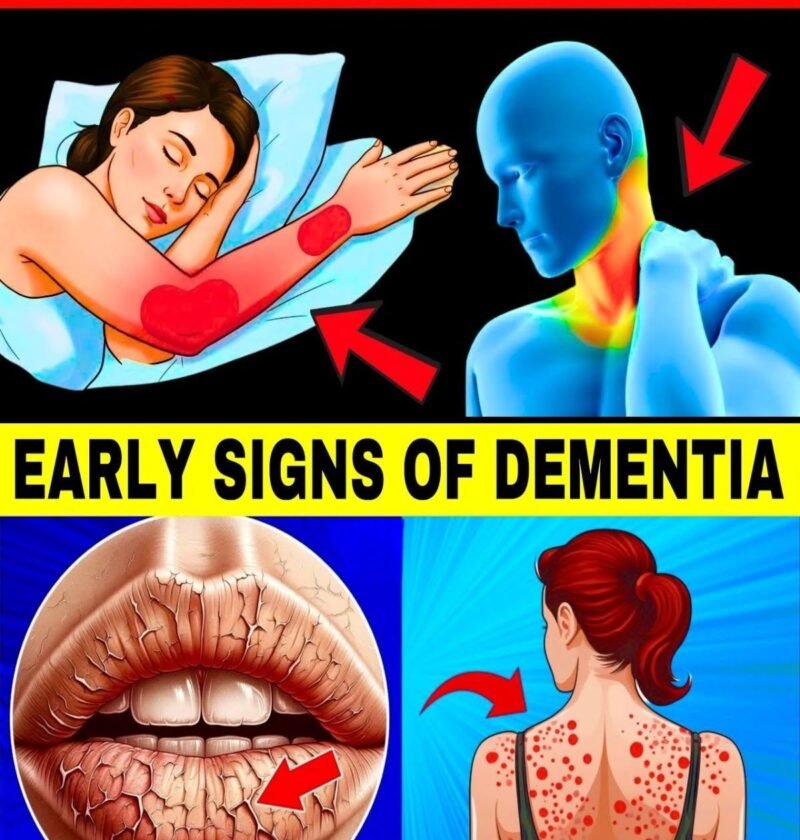
🧠 10 Early Warning Signs of Dementia You Should Never Ignore
Seeing one of these signs doesn’t mean someone has dementia. Memory and thinking problems can have many causes, including medication effects, depression, sleep problems, infections, or other medical conditions. But persistent changes that interfere with everyday life deserve a medical evaluation. (nhs.uk)
According to the Alzheimer’s Association, 10 important warning signs are: (Alzheimer’s Association)
- Memory loss that disrupts daily life — repeatedly forgetting recently learned information or important events.
- Difficulty planning or solving problems — trouble following a familiar recipe, managing bills, or organizing tasks.
- Difficulty completing familiar tasks — struggling with activities that were previously routine.
- Confusion about time or place — losing track of dates, seasons, or where you are.
- Problems with visual or spatial understanding — difficulty judging distance, reading, or navigating familiar surroundings.
- New problems with speaking or writing — difficulty finding familiar words or following conversations.
- Frequently misplacing things — putting objects in unusual places and being unable to retrace your steps.
- Poorer judgment — unusual financial decisions, neglecting personal care, or other significant changes in judgment.
- Withdrawal from social activities — losing interest in hobbies, work, or social interaction.
- Changes in mood or personality — becoming unusually anxious, suspicious, fearful, depressed, or irritable. (Alzheimer’s Association)
👴 What’s normal aging—and what isn’t?
Occasionally forgetting a name or appointment and remembering it later can happen with normal aging. Greater concern arises when problems are persistent, progressively worsening, or interfere with everyday independence. (Alzheimer’s Association)
🩺 What should you do?
If you or someone you love is experiencing these changes, arrange an appointment with a doctor. Early evaluation can identify potentially treatable causes and, when dementia is present, provide an opportunity to discuss treatment, support, safety, and future planning. (Alzheimer’s Association)
Important: Sudden confusion, sudden trouble speaking, facial drooping, weakness, or other abrupt neurological changes are not typical early dementia symptoms and can indicate a stroke—seek emergency medical help immediately.
Bottom line: Don’t panic over an occasional forgotten name. Repeated changes that interfere with normal life are the ones worth investigating.