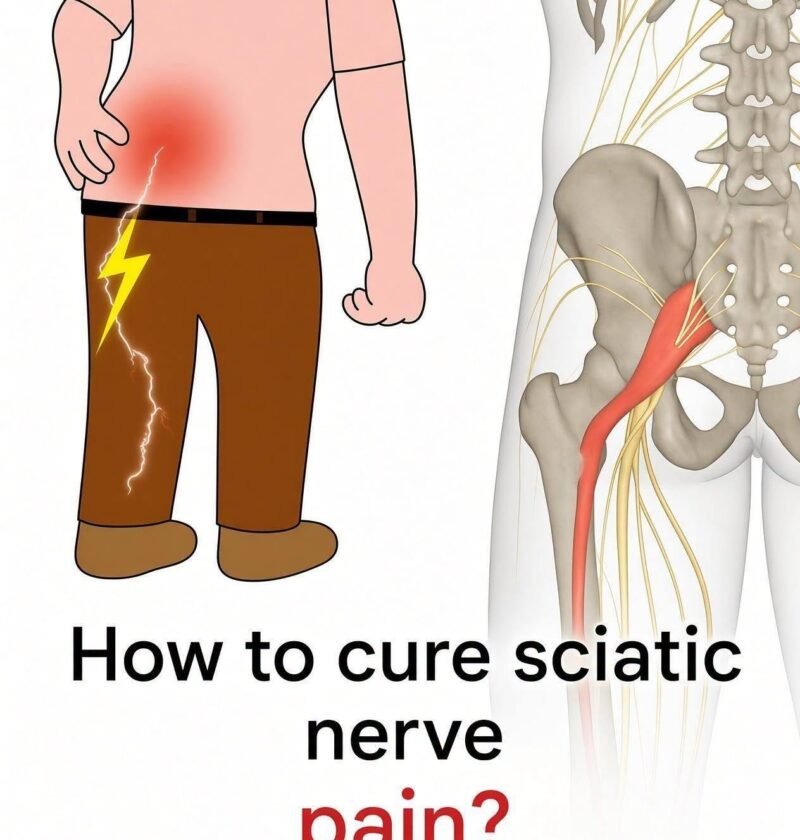
Sciatic nerve pain—which typically radiates from the lower back through the buttock and down the leg—can be sharp, burning, and deeply disruptive. When sciatica flares up, the right gentle movements can help decompress the nerve, relieve muscle tension, and ease pressure on the lower spine.
Here are 3 practical, low-impact exercises commonly recommended by physical therapists to help manage sciatic discomfort.
1. The Supine Figure-4 Stretch (Piriformis Stretch)
Tightness in the piriformis muscle deep in the buttock can often irritate or pinch the sciatic nerve as it runs underneath or through the muscle.
1.Setup:Lie comfortably on your back with knees bent and feet flat on the floor.
Lie flat on your back on a comfortable exercise mat or carpeted floor with both knees bent and your feet flat on the ground.
2.Position:Cross the painful leg’s ankle over the opposite knee.
Take the ankle of the affected leg and rest it across the opposite knee, creating a “figure-4” shape. Your knee should be pointing outward.
3.Stretch:Gently pull your uncrossed thigh toward your chest until you feel a comfortable stretch.
Reach your hands behind the thigh of the uncrossed leg and gently pull it toward your chest. Hold this position for 20 to 30 seconds while breathing deeply, then slowly release. Repeat 2 to 3 times.
(Note: If you cannot comfortably reach your thigh, loop a towel or yoga strap around the leg to assist).
2. Seated Spinal Twist
Gentle rotation can help restore mobility to the lower back and relieve tension along the spine and hips that may be contributing to nerve compression.
1.Setup:Sit upright on a firm chair with both feet flat on the floor.
Sit tall near the front edge of a sturdy chair, keeping your feet flat on the floor and your spine nice and straight.
2.Position:Place your right hand on the outside of your left knee.
Slowly twist your torso to the left, placing your right hand on the outside of your left knee and your left hand behind you on the chair for support.
3.Twist:Hold gently for 20 to 30 seconds, then switch sides.
Turn your head to look over your left shoulder as you gently deepen the stretch. Go only as far as feels comfortable—never force a twist. Hold for 20 to 30 seconds, return to the center, and repeat on the opposite side.
3. Gentle Knee-to-Chest Stretch
This movement helps decompress the lower lumbar spine and lengthens the lower back muscles, which can take pressure off the roots of the sciatic nerve.
1.Setup:Lie flat on your back with your legs extended straight.
Lie on your back on a flat surface with your legs extended and your shoulders relaxed against the floor.
2.Position:Bring one knee up and clasp your hands around your shin.
Slowly bend your right knee and draw it up toward your chest, clasping your hands around your shin or just behind your thigh. Keep your left leg flat or bend the knee if it feels more comfortable for your lower back.
3.Stretch:Hold for 20 to 30 seconds, lower gently, and switch legs.
Gently pull the knee slightly closer until you feel a mild, comfortable stretch in your lower back and glute. Hold for 20 to 30 seconds, lower it back down with control, and repeat with the left leg. You can also pull both knees to your chest simultaneously if that feels better.
Important Safety Guidelines
-
Never Push Through Sharp Pain: Stretching should feel like a mild, relieving pull. If an exercise causes sharp, shooting, or worsening pain down your leg, stop immediately.
-
When to Seek Medical Care: Consult a healthcare provider or physical therapist right away if your sciatica is accompanied by progressive leg weakness, numbness (“pins and needles” that won’t go away), or any loss of bowel or bladder control (which requires urgent medical evaluation).