The headline “You cut open a watermelon and saw cracks? Stop eating it immediately! Here’s what it means!” is a masterclass in internet panic. It takes a completely normal, natural structural quirk of fruit growth and transforms it into a toxic biological hazard, warning readers that a cracked watermelon is harboring dangerous chemicals or deadly pathogens.
In botanical reality, internal cracking or hollowing inside a watermelon—often called hollow heart—is not a sign of poison or spoilage. It is simply a quirk of agricultural development.
Let’s look at why watermelons crack on the inside and separate internet alarmism from what is actually safe to eat.
What Causes “Hollow Heart” in Watermelons?
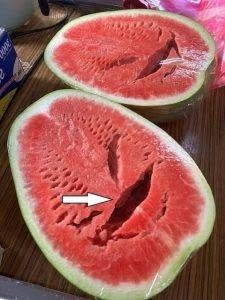
If you slice open a crisp, red watermelon and find a hollow cavity or distinct internal cracks running through the flesh, you are looking at hollow heart:
-
Pollination and Growth Dynamics: Hollow heart occurs when pollination during the flowering stage is slightly uneven or incomplete. If the flower isn’t fertilized perfectly, the outer rind of the melon develops faster than the internal placental tissue. As the melon expands rapidly under ideal watering conditions, the inner flesh pulls apart, creating dry, hollow cracks or gaps.
-
Nutritional and Variety Factors: Certain heirloom or large-fruited watermelon varieties are simply more prone to this genetic quirk. It has nothing to do with artificial ripening agents, toxic fertilizers, or chemical injections.
How to Tell the Difference Between Safe Cracks and Actual Spoilage
While a structural crack from hollow heart is completely harmless to eat (though the flesh right around the gap can sometimes be a bit mealy or woody in texture), you do want to know how to spot a genuinely spoiled melon.
Here is how to evaluate a watermelon safely:
-
Safe (Hollow Heart): The flesh is bright red or pink, smells fresh and sweet, has firm texture away from the gap, and shows no signs of mold or slimy decay. It is entirely safe to slice up and eat.
-
Unsafe (Spoiled or Fermented): If the watermelon flesh is mushy, slimy, water-soaked, discolored (grayish-brown), or gives off a sharp, sour, fermented, or alcoholic odor, do not eat it. When a cut melon sits too long at room temperature or is contaminated by bacteria or fungi, it will naturally spoil, just like any fresh fruit.
The Takeaway
You don’t need to throw away a perfectly good watermelon just because it has a few internal cracks. Hollow heart is an aesthetic growth blemish, not a toxic threat. As long as your melon smells fresh, looks vibrant, and isn’t showing signs of rot or sour fermentation, it is ready to eat.