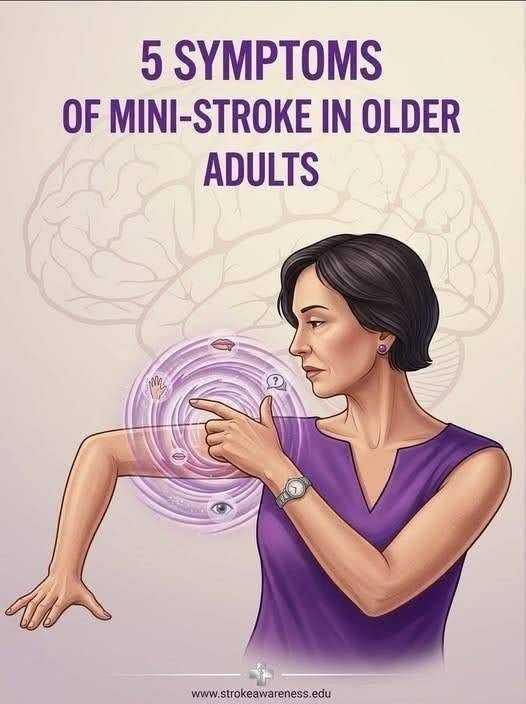
While a Transient Ischemic Attack (TIA)—commonly known as a mini-stroke—can affect adults of any age, older adults experience them with particular frequency due to age-related changes in blood vessel elasticity and cardiovascular health.
Because TIA symptoms often appear suddenly and disappear completely within minutes, they are frequently misattributed to “normal aging,” exhaustion, or joint stiffness. Recognizing how these warning signs manifest in seniors can prevent a devastating major stroke.
5 Critical Signs of a Mini-Stroke in Seniors
1. Sudden One-Sided Weakness or “Clumsiness”
-
What it looks like: A senior might suddenly drop a coffee cup, struggle to lift one arm, or drag a leg while walking across the room. They might brush it off as a “touch of arthritis” or a pinched nerve.
-
Why it happens: A brief interruption of blood flow to the brain’s motor cortex, which controls movement on the opposite side of the body.
2. Sudden Facial Droop or Uneven Smile
-
What it looks like: One side of the mouth suddenly sags, or the eyelid droops when trying to speak or smile. Loved ones are often the first to notice this asymmetry during a conversation.
-
Why it happens: Temporary ischemia affecting the facial nerve pathways in the brain.
3. Sudden Slurred Speech or Inability to Find Words
-
What it looks like: Words suddenly come out garbled, speech sounds thick and slurred, or the person stares blankly and struggles to comprehend what is being said to them.
-
Why it happens: Temporary oxygen deprivation to the brain’s specialized language centers.
4. Sudden, Severe Dizziness and Loss of Balance
-
What it looks like: A sudden, overwhelming bout of unsteadiness, stumbling, or vertigo that makes walking across a room feel impossible—often mistaken for inner ear issues or a sudden drop in blood pressure.
-
Why it happens: Compromised blood flow to the cerebellum, the brain’s balance and coordination center.
5. Sudden Vision Changes in One or Both Eyes
-
What it looks like: A sudden blurring of vision, double vision, or a temporary dark shadow passing across one eye like a curtain closing.
-
Why it happens: A brief vascular blockage affecting the optic nerve or visual processing areas in the brain.
🚨 Why Immediate Action Matters:When these symptoms vanish after five or ten minutes, the temptation is to say, “I’m fine now.” However, a TIA is a medical emergency and a loud warning alarm. Up to half of all major strokes following a TIA occur within the first 24 to 48 hours. If a senior experiences any of these sudden signs—even if they resolve—call emergency services immediately.