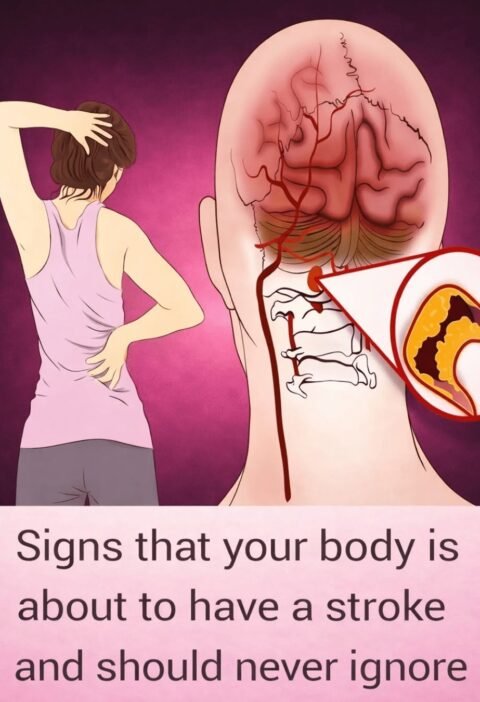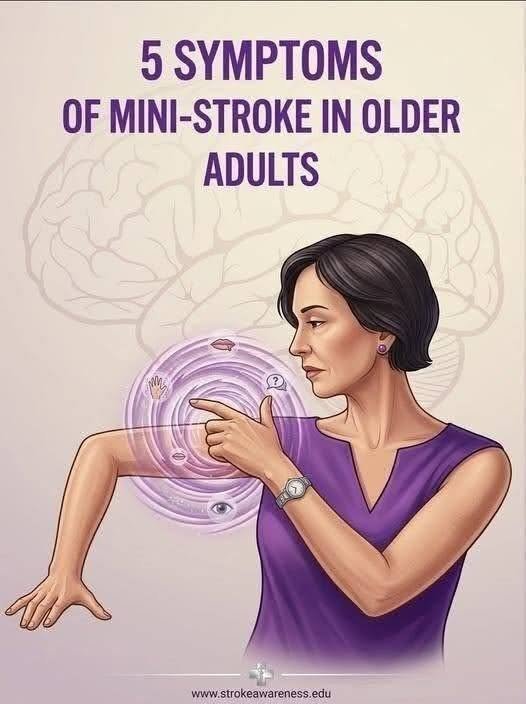
A mini-stroke—medically known as a Transient Ischemic Attack (TIA)—occurs when blood flow to a part of the brain is temporarily blocked. Unlike a major stroke, the blockage resolves quickly on its own, and the symptoms typically last anywhere from a few minutes to under 24 hours, leaving no permanent damage.
However, a TIA is a critical warning sign. Up to a third of people who experience a mini-stroke will go on to have a full-blown stroke, with the highest risk occurring within the first few days and weeks following the event.
In seniors, these symptoms are frequently dismissed as normal signs of aging, fatigue, or medication side effects. Five key symptoms that should never be ignored include:
1. Sudden Weakness or Numbness (Usually on One Side)
-
What it looks like: A sudden loss of strength or a heavy, numb feeling in the face, arm, or leg. A senior might suddenly drop a cup they are holding, find that one side of their body feels unresponsive, or struggle to lift one arm evenly with the other.
-
Why it’s overlooked: It is often written off as “circulatory issues,” a pinched nerve, arthritis stiffness, or “sleepy limbs.”
2. Sudden Facial Drooping or Difficulty Speaking
-
What it looks like: One side of the face suddenly droops when the person tries to smile. Their speech may become slurred, garbled, or hard to understand, or they may struggle to find the right words or understand what you are saying to them.
-
Why it’s overlooked: It can be mistaken for dental issues, dry mouth, exhaustion, or a brief senior “brain fog” moment.
3. Sudden Loss of Balance or Severe Dizziness
-
What it looks like: A sudden, unexplained loss of coordination, trouble walking, staggering, or a spinning sensation (vertigo) that makes it impossible to stand straight.
-
Why it’s overlooked: Because balance issues and dizziness are common in older age, families often blame inner ear issues, low blood pressure, or a reaction to a new medication.
4. Sudden Vision Changes in One or Both Eyes
-
What it looks like: A sudden darkening, blurring, double vision, or temporary loss of sight in one or both eyes—often described by patients as a shade or curtain pulling down over their field of vision.
-
Why it’s overlooked: It is frequently dismissed as normal age-related vision decline, cataracts, dry eyes, or eye fatigue.
5. A Sudden, Unusually Severe Headache
-
What it looks like: A sharp, intense headache that strikes completely out of nowhere with no known cause, sometimes accompanied by a stiff neck, confusion, or vomiting.
-
Why it’s overlooked: It is easily blamed on a tension headache, sinus pressure, weather changes, or dehydration.
🚨 Act FAST: If you notice any of these symptoms in a senior—even if they disappear completely after a few minutes—treat it as a medical emergency. Remember the FAST acronym to evaluate a potential stroke: