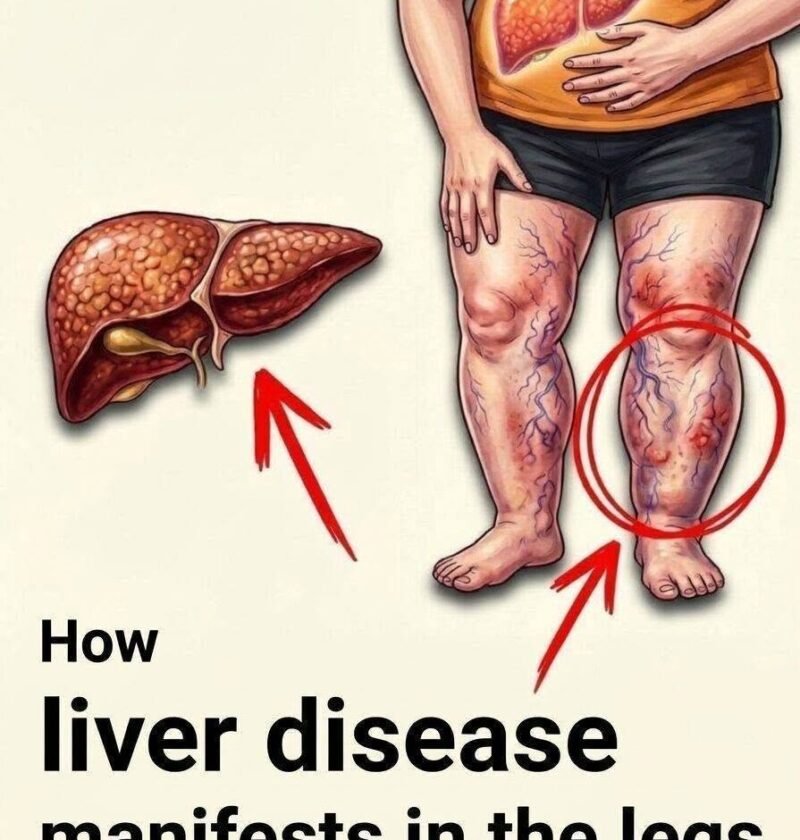
When viral health articles warn that your legs are sending signals about your liver, they are usually highlighting how systemic issues—like poor circulation, fluid imbalances, or toxin build-up—manifest visibly in your lower extremities. Because the liver processes nutrients, filters blood, and regulates proteins, a struggling liver can create noticeable changes all the way down in your legs and feet.
5 Leg and Foot Warning Signals Linked to Liver Health
-
1. Pitting Edema (Swelling in the Lower Legs and Ankles): When the liver is stressed or damaged (such as in cirrhosis or fatty liver disease), it stops producing enough of a crucial blood protein called albumin. Albumin keeps fluid inside your blood vessels. Without it, fluid leaks out into surrounding tissues. Gravity pulls this fluid downward, leading to swollen, heavy legs and ankles where pressing a finger leaves a temporary indent (“pitting”).
-
2. Persistent Itchy Soles (Pruritus): While itching isn’t exclusive to the legs, many people with liver sluggishness or bile duct issues experience intense, deep-seated itching, particularly on the soles of their feet and palms of their hands. This happens because the liver isn’t processing bile properly, causing bile salts to build up in the bloodstream and deposit under the skin.
-
3. Unexplained Bruising (Purpura or Easy Bruising): The liver manufactures the proteins responsible for blood clotting. When liver function declines, your body can’t clot blood efficiently. If you notice that your shins and thighs are covered in mysterious bruises from very minor bumps—or tiny, pinpricked red/purple dots (petechiae)—it can be a sign of low clotting factors.
-
4. Spider Veins and Capillary Clusters (Spider Angiomas): While common overall, a sudden proliferation of fine, spider-like blood vessels spreading across the lower legs, thighs, or ankles can sometimes reflect elevated estrogen levels. A healthy liver helps clear excess hormones like estrogen from the body; when it’s overworked, hormone imbalances can dilate peripheral blood vessels.
-
5. Extreme Muscle Cramps and Weakness: Chronic liver dysfunction often disrupts electrolyte balances (such as magnesium, potassium, and sodium) and impairs how the body processes energy. This frequently triggers painful, sudden muscle cramps in the calves and feet, especially at night, accompanied by general muscle fatigue.
⚠️ A Quick Medical Reality Check
While these leg symptoms can point toward liver strain, they can also be caused by dozens of other common conditions—ranging from vein issues (like chronic venous insufficiency) and poor circulation to long hours standing on your feet, vitamin deficiencies, or kidney issues.
If you notice persistent, severe swelling, yellowing of the skin or eyes (jaundice), dark urine, or abdominal discomfort alongside these leg signs, it is important to consult a physician for proper blood panels (like a liver function test).