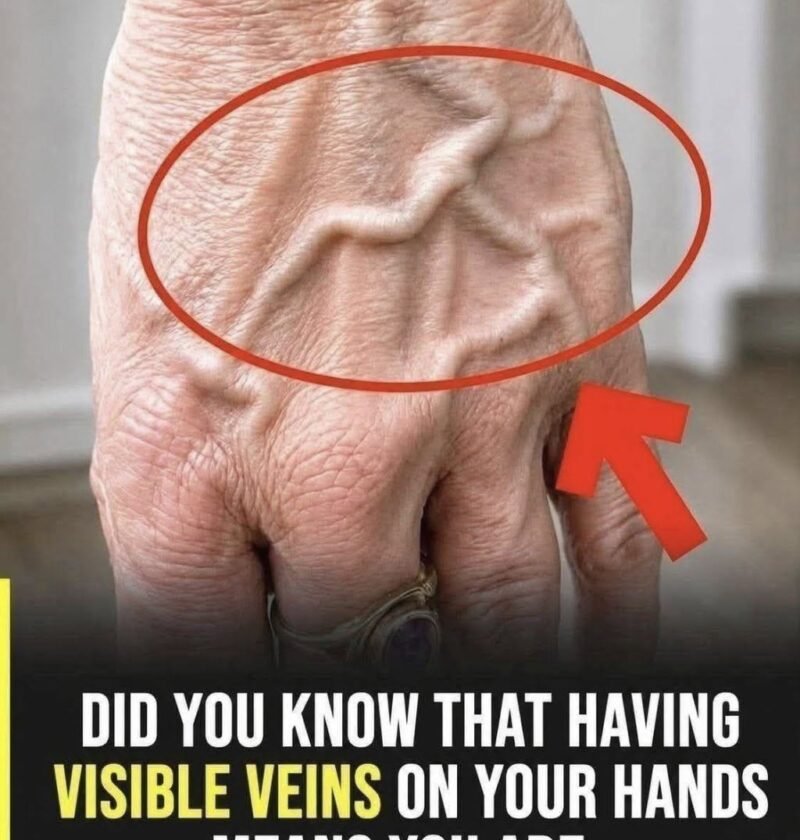
Having visible veins is a very common topic in health clickbait (often finishing with phrases like “…having low body fat,” “…aging,” or “…at risk for poor circulation”).
The reality is that seeing your veins is rarely tied to just one mysterious secret—it usually comes down to a completely normal combination of biology, genetics, and lifestyle.
Why Veins Become Visible (The Real Reasons)
-
Low Body Fat & High Muscle Mass: If you have a lower body fat percentage, there is less fatty tissue cushioning the space between your skin and your blood vessels, making them naturally easier to see. Similarly, regular exercise increases blood flow and temporarily causes veins to dilate and push closer to the surface.
-
Genetics and Skin Tone: Some people naturally inherit thinner skin or transparent skin undertones, or a family predisposition to prominent vein patterns. Fair skin also makes veins look much more pronounced than darker skin tones.
-
Aging: As you age, your skin naturally loses collagen, elasticity, and subcutaneous fat, causing it to thin out and reveal the structural map of your blood vessels underneath.
-
Environmental Factors: Heat causes your blood vessels to expand (vasodilate) to help cool your body down, which can make veins temporarily stand out more on hot days.
When Visible Veins Do Warrant Attention
While flat, visible veins are usually harmless, certain changes mean it is worth talking to a doctor or a vascular specialist:
-
Varicose or Bulging Veins: If veins become twisted, rope-like, raised, or are accompanied by aching, throbbing, heavy legs, or swelling, it can indicate chronic venous insufficiency (weakened valves inside the veins).
-
Sudden or Isolated Changes: New, prominent veins appearing rapidly in unusual areas (like the abdomen or chest) or a single limb becoming swollen, warm, red, or painful should be evaluated promptly to rule out issues like blood clots.