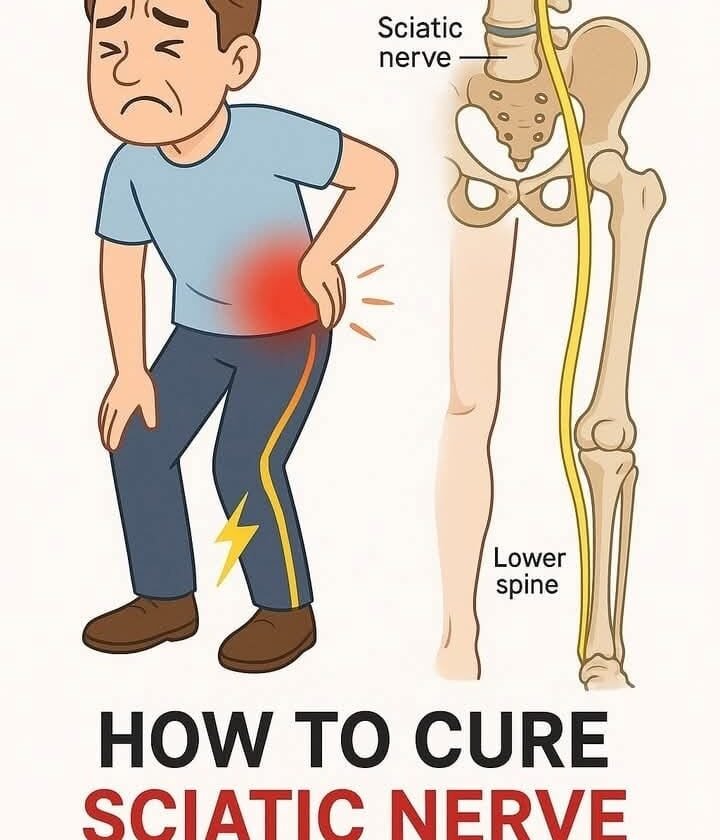
Sciatic nerve pain—often called sciatica—occurs when the sciatic nerve, which runs from your lower back down through your hips, buttocks, and each leg, becomes compressed or inflamed. While severe cases require medical intervention, many people find relief from mild to moderate discomfort using targeted natural and at-home strategies.
1. Gentle Stretching and Movement
While rest is important during an acute flare-up, prolonged bed rest can actually make muscles stiffer and worsen compression. Gentle, targeted stretches help relieve pressure on the nerve:
-
Reclined Pigeon Pose: Lie on your back, cross your affected ankle over the opposite knee, and gently pull your uncrossed thigh toward your chest until you feel a mild stretch in your glutes.
-
Seated Spinal Twist: Sit on the floor with your legs straight, bend one knee and place your foot flat on the outside of the opposite knee, then gently twist your torso toward the bent knee.
-
Knee-to-Chest Stretch: Lie on your back, pull one knee gently toward your chest, hold for 20 to 30 seconds, and switch sides to release lower back tension.
2. Temperature Therapy (Hot and Cold)
Alternating between ice and heat is one of the simplest ways to manage acute discomfort and muscle spasms:
-
Cold Packs: Use an ice pack wrapped in a cloth on the painful area for 15 to 20 minutes several times a day during the first 48 to 72 hours of a flare-up. Cold helps constrict blood vessels, numb sharp pain, and reduce local inflammation.
-
Heat Therapy: After the first couple of days, switch to a heating pad or take a warm bath. Heat relaxes tight lower back and gluteal muscles that may be pinching the nerve.
3. Posture and Ergonomic Adjustments
How you sit, stand, and move every day plays a massive role in whether your sciatic nerve stays irritated:
-
Avoid Prolonged Sitting: Sitting puts direct pressure on the gluteal muscles and lower spine. Take a brief walking break every 30 to 45 minutes.
-
Support Your Lower Back: Use an ergonomic chair or place a small rolled towel or lumbar cushion in the curve of your lower back while driving or working at a desk.
-
Mind Your Lifting: Always lift heavy objects by bending at your knees and hips rather than rounding your lower back.
4. Anti-Inflammatory Dietary Habits
Because sciatica is fundamentally driven by inflammation and nerve irritation, supporting your body with anti-inflammatory foods can help:
-
Incorporate Omega-3 Fatty Acids: Foods like salmon, chia seeds, walnuts, and flaxseeds help combat systemic inflammation.
-
Focus on Antioxidant-Rich Produce: Berries, leafy greens, turmeric, and ginger contain natural compounds that support joint and tissue health.
-
Stay Hydrated: Proper hydration keeps your spinal discs plump and well-cushioned, reducing the likelihood of nerve pinching.
When to Seek Medical Attention:Most sciatica episodes improve over a few weeks with self-care, but you should consult a doctor or physical therapist if your pain is severe, doesn’t improve after a couple of weeks, or gets progressively worse.Seek immediate emergency medical care if you experience sudden loss of bowel or bladder control (cauda equina syndrome), progressive leg weakness, or numbness in your groin and inner thighs.