Your feet are often referred to as a “window to your health.” Because they are the furthest part of your body from your heart and packed with nerve endings and tiny blood vessels, systemic issues—ranging from circulation problems to vitamin deficiencies and autoimmune conditions—often show up in your feet long before anywhere else.
Here are 9 foot symptoms you should never ignore and what they might be trying to tell you:
1. Persistent Cold Feet
-
What it means: While cold feet are often just a reaction to low temperatures, constant or extreme coldness can signal poor blood circulation, peripheral artery disease (PAD), or an underactive thyroid (hypothyroidism), which slows down your body’s metabolism and temperature regulation.
-
When to pay attention: If your feet are cold even in warm environments, or if accompanied by skin discoloration or slow-healing sores.
2. Numbness or a “Pins and Needles” Sensation
-
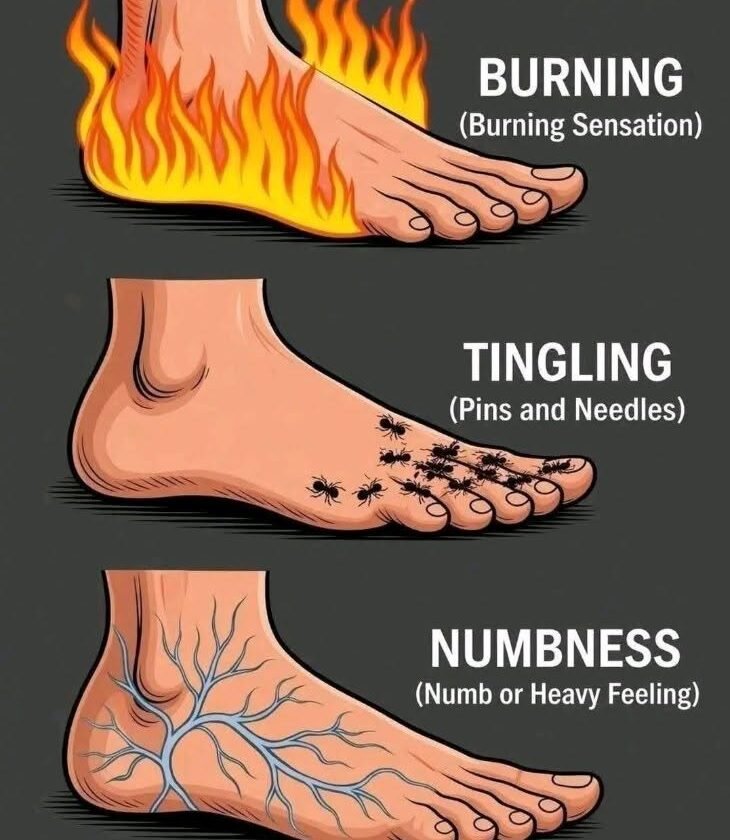
What it means: Chronic numbness or tingling in the feet (peripheral neuropathy) is a classic warning sign of type 2 diabetes due to high blood sugar damaging nerves over time. It can also point to a Vitamin B12 deficiency, nerve compression (like sciatica), or chronic alcohol use.
3. Painful, Swollen Big Toe
-
What it means: A sudden, intensely painful, red, and swollen big toe joint is the hallmark symptom of gout, a type of inflammatory arthritis caused by a buildup of uric acid crystals in the joint.
-
When to pay attention: If the pain comes on abruptly (often waking you up at night) and makes even the weight of a bedsheet unbearable.
4. Yellow, Thickened, or Brittle Toenails
-
What it means: Changes in toenail texture and color are most frequently caused by a fungal infection (onychomycosis). However, persistent nail changes can also be linked to psoriasis, iron deficiency anemia, or chronic respiratory issues.
5. Slow-Healing Sores or Ulcers on the Feet
-
What it means: Cuts, blisters, or sores that take weeks to heal—or don’t heal at all—are a major red flag for poor circulation or uncontrolled diabetes. Unhealed foot ulcers carry a high risk of infection and require immediate medical evaluation.
6. Spoon-Shaped or Pitted Toenails
-
What it means: Toenails that curve upward like a spoon (koilonychia) are often associated with severe iron-deficiency anemia. Tiny pits or dents in the nail surface can be linked to skin conditions like psoriasis or alopecia areata.
7. Cramping or Pain in the Arched Foot and Calves
-
What it means: Sudden muscle spasms or cramping in the foot arch or calf muscles can stem from dehydration, electrolyte imbalances (like low potassium, magnesium, or calcium), or overexertion. However, persistent cramping during walking can also indicate vascular issues.
8. Swelling in Both Feet and Ankles (Edema)
-
What it means: Puffy, swollen feet that leave an indentation when pressed (pitting edema) mean your body is retaining fluid. This can be caused by standing for too long, pregnancy, or medication side effects, but it can also signal heart failure, kidney disease, or liver dysfunction.
9. Burning Feet
-
What it means: A persistent burning sensation in the soles of the feet—especially at night—is another common indicator of diabetic nerve damage, small fiber neuropathy, or a severe deficiency in B-complex vitamins.
💡 When to See a Doctor: If you notice persistent changes in your foot color, chronic numbness, unhealing sores, or severe joint pain, don’t brush it off as just a long day on your feet. A visit to your primary care physician, podiatrist, or a specialist can help uncover the root cause