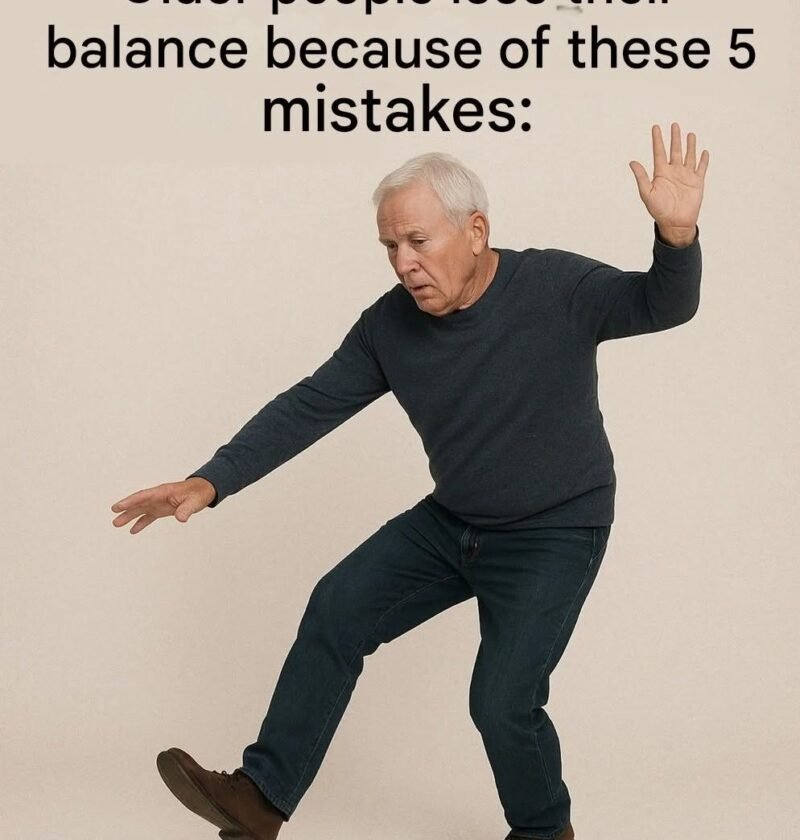
…the exact kind of practical, prevention-focused advice that genuinely keeps older adults safe, active, and independent!
Unlike the scare-tactics we usually see in clickbait, looking at the actual missteps that undermine balance as we age is incredibly valuable. Falls are one of the biggest threats to mobility and independence in later life, but many of the root causes are completely fixable.
Physical therapists and geriatric specialists point to several everyday habits and oversight errors that quietly erode stability over time:
The 5 Common Balance Mistakes
-
The “Soft Sole” Trap (Wearing Cushion-Heavy or Ill-Fitting Shoes)
-
The Mistake: Wearing heavily cushioned, squishy running shoes or loose slippers around the house all day.
-
Why it hurts balance: Your feet are packed with sensory receptors (proprioceptors) that tell your brain where your body is in relation to the ground. Extremely thick, soft soles or floppy house shoes act like a foam mattress under your feet, muting those vital signals and making it much harder to catch a stumble.
-
The Fix: Choose supportive shoes with a firm, low-profile sole and good traction—even indoors if your floors are slick.
-
-
Neglecting Lower-Body Strength (Especially the Calves and Glutes)
-
The Mistake: Assuming that walking alone is enough to maintain stability.
-
Why it hurts balance: When you start to tip forward or backward, your body relies on explosive ankle strategies—primarily your calf muscles and shins—to correct your center of gravity. If those muscles weaken from lack of use, you lose your body’s built-in “shock absorbers.”
-
The Fix: Incorporate simple, targeted resistance work like heel-to-toe raises, gentle sit-to-stands from a dining chair, and side-leg lifts.
-
-
Silent Vision and Lighting Blind Spots
-
The Mistake: Skipping regular eye exams or walking around dimly lit homes at night.
-
Why it hurts balance: Balance is a three-way partnership between your inner ear (vestibular system), your muscles and joints (proprioception), and your eyes. If your depth perception is off or you can’t clearly see a rug edge in the hallway, your brain loses its primary navigational tool.
-
The Fix: Keep annual eye checkups up to date, ensure prescription glasses are current, and install motion-activated nightlights along common pathways (like the path from the bedroom to the bathroom).
-
-
Medication Oversight (The “Daze” Factor)
-
The Mistake: Not reviewing how prescription or over-the-counter medications interact.
-
Why it hurts balance: A wide variety of common medications—including blood pressure drugs, antihistamines, sleep aids, and anxiety medications—can cause mild dizziness, low blood pressure upon standing (orthostatic hypotension), or daytime drowsiness.
-
The Fix: Have a doctor or pharmacist periodically review your medication regimen to check for dizziness side effects or drug interactions.
-
-
Cluttered Living Spaces (The Environmental Hazard)
-
The Mistake: Leaving loose throw rugs, electrical cords, or hallway clutter in high-traffic walking paths.
-
Why it hurts balance: Even the best athlete in the world will stumble if an unanchored rug bunches up underfoot. As reflexes naturally slow down with age, catching a snagged toe becomes much harder.
-
The Fix: Secure or remove loose area rugs, clear floor clutter, and ensure clear, open pathways in every room.
-
The Reality Check
Balance isn’t a fixed trait you simply lose as you age; it’s a dynamic skill that responds brilliantly to care and training. Small adjustments—like trading slippery slippers for supportive shoes, clearing a hallway, or doing a few minutes of daily single-leg stands while holding onto the kitchen counter—go an astonishingly long way in preserving total freedom of movement.
Have you been looking into ways to make a home safer or protect mobility for yourself or a loved one?