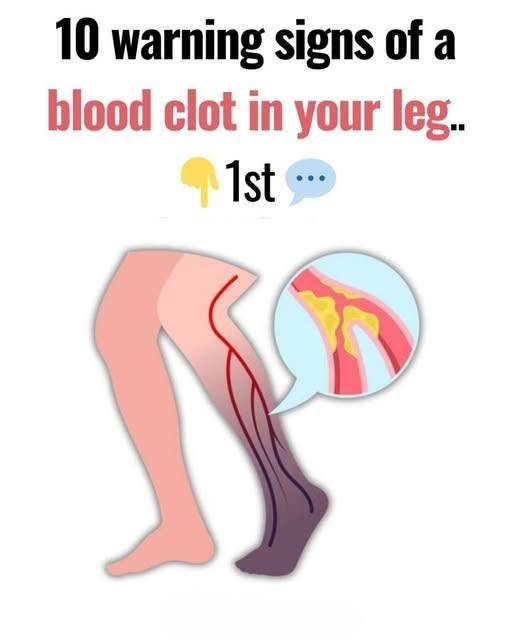
Recognizing the signs of a blood clot in the leg—most commonly known as Deep Vein Thrombosis (DVT)—is critically important. If a blood clot breaks loose from a vein in your leg, it can travel through your bloodstream to your lungs, causing a potentially life-threatening condition called a pulmonary embolism (PE).
10 Warning Signs of a Blood Clot in the Leg
-
Unilateral Leg Swelling
-
Swelling typically occurs in only one leg or ankle (rather than both). If your entire leg swells up or one calf suddenly looks noticeably larger than the other, it is a major red flag.
-
-
Pain or Tenderness in the Calf or Thigh
-
You may feel a deep, dull ache, cramping, or persistent tenderness in your leg, often starting in the calf. It frequently feels like a severe muscle pull or cramp that won’t go away.
-
-
Skin Discoloration (Redness or Discoloration)
-
The skin over the area where the clot has formed may turn noticeably red, pinkish, or even bluish/purple compared to the surrounding skin.
-
-
Warmth to the Touch
-
The affected area of the leg often feels noticeably warmer or hotter than the skin on your healthy leg due to restricted blood flow and localized inflammation.
-
-
Visible Surface Veins
-
You might notice new or unusually prominent surface veins appearing near the surface of the skin around the site of the clot.
-
-
Pain When Flexing Your Foot
-
Stretching your foot upward (dorsiflexion) or pressing down on the calf muscle can trigger sharp, intense pain or a deep cramp.
-
-
Pitting Edema
-
If you press your thumb firmly into the swollen skin for a few seconds and an indentation remains behind (pitting), it indicates fluid buildup caused by impaired circulation.
-
-
Slow-Healing Sores or Heaviness
-
A chronic feeling of heaviness, fatigue, or dull pressure in the limb, sometimes accompanied by skin changes or slow-healing ulcers around the ankle.
-
-
Sudden Shortness of Breath (Sign of a Pulmonary Embolism)
-
Emergency Warning: If a clot breaks free and travels to your lungs, you may experience sudden, unexplained shortness of breath or difficulty catching your breath.
-
-
Unexplained Rapid Heart Rate and Chest Pain
-
Emergency Warning: Sharp chest pain (which often worsens when you take a deep breath or cough), coupled with a sudden rapid pulse or lightheadedness, signals that the clot has migrated to the lungs.
-
High-Risk Situations for DVT
Blood clots can develop unexpectedly, but certain factors significantly increase your risk:
-
Prolonged Immobility: Long-haul flights, road trips lasting over 4 hours, or being on strict bed rest after surgery.
-
Surgery or Trauma: Major orthopedic surgeries (like hip or knee replacements) or severe physical injuries.
-
Hormonal Factors: Pregnancy, use of oral contraceptives (birth control pills), or hormone replacement therapy.
-
Medical History: A personal or family history of blood clotting disorders, active cancer, or obesity.
Medical Emergency: If you suspect you have a DVT—especially if it is accompanied by sudden chest pain, rapid heart rate, or shortness of breath—seek emergency medical attention immediately or call emergency services. DVT is diagnosed quickly with a simple ultrasound and treated effectively with blood thinners, but it requires prompt medical evaluation.