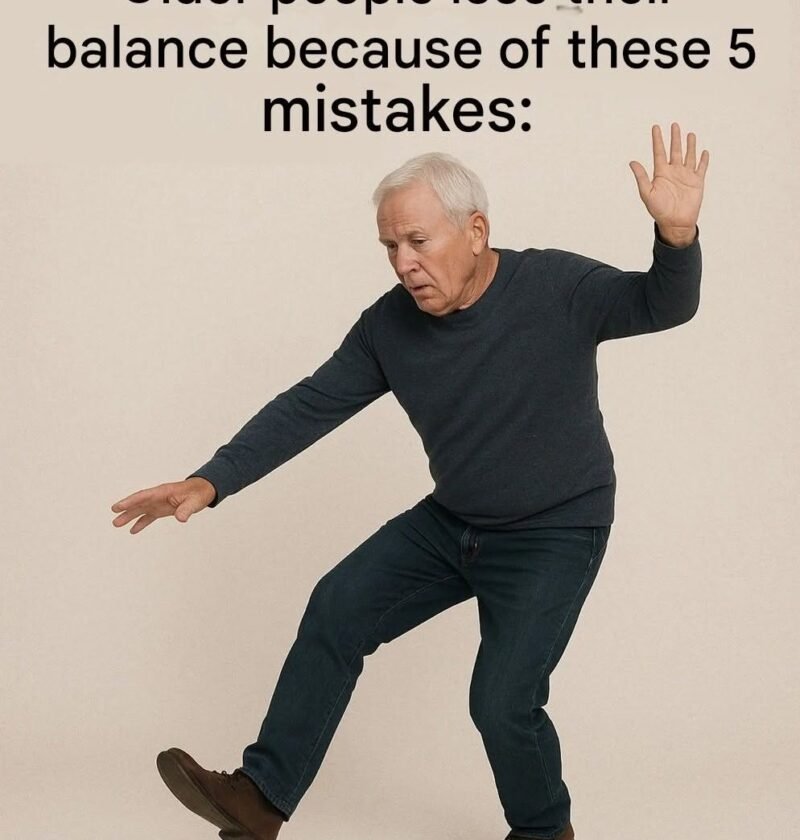
Maintaining balance is a complex coordination act involving the eyes, inner ear, muscles, and nerves. As we age, subtle changes in our bodies make us more susceptible to stumbles and falls.
Here are 5 common mistakes and habits that contribute to balance loss in older adults, along with simple ways to correct them.
1. Stopping Regular Strength and Balance Exercises
-
The Mistake: Many older adults naturally slow down their physical activity out of caution, or assume that daily walking is enough. However, without targeted resistance and balance training, muscle mass and bone density decline (a process called sarcopenia). Weak legs and a weakened core make it much harder to recover if you trip or stumble.
-
The Fix: Incorporate simple, low-impact exercises like heel-to-toe walking, single-leg stands (holding onto a counter for safety), and chair squats 2 to 3 times a week to keep stabilizing muscles strong.
2. Wearing Unsupportive or Improper Footwear
-
The Mistake: Walking around the house in slick socks, worn-out slippers with no traction, or high heels outside strips away the body’s natural sensory feedback from the feet. Thin-soled or poorly fitting shoes reduce stability and increase the risk of sliding.
-
The Fix: Wear supportive, closed-heel shoes with non-skid rubber soles both indoors and outdoors. If walking barefoot at home is preferred, switch to non-slip grip socks instead of regular smooth socks.
3. Neglecting Vision and Hearing Check-Ups
-
The Mistake: Dismissing failing eyesight or untreated hearing loss as a normal part of aging. Your eyes are critical for spatial awareness, while the inner ear houses your vestibular system (your body’s internal gyroscope). When either sense is impaired, your brain receives incomplete signals about where you are in space.
-
The Fix: Get your eyes checked annually and update your prescription lenses promptly. Additionally, address hearing issues, as studies show that proper hearing support significantly improves spatial balance and reduces fall risk.
4. Overlooking Medication Side Effects
-
The Mistake: Taking multiple medications (polypharmacy) without reviewing how they interact. Many common prescriptions and over-the-counter drugs—including blood pressure medications, sedatives, antihistamines, and anti-anxiety meds—can cause side effects like dizziness, drowsiness, blurred vision, or sudden drops in blood pressure when standing up.
-
The Fix: Regularly review all current medications and supplements with a primary care doctor or pharmacist to identify any dizziness-inducing side effects or risky drug combinations.
5. Ignoring Home Hazards and Clutter
-
The Mistake: Leaving familiar living spaces unmodified, assuming “I’ve lived here for 30 years, I know where everything is.” Loose throw rugs, electrical cords across walkways, poor lighting in hallways, and the absence of grab bars in bathrooms are leading culprits behind household stumbles.
-
The Fix: Clear high-traffic pathways, anchor or remove loose throw rugs (or use double-sided carpet tape), install bright nightlights in hallways and bathrooms, and add sturdy grab bars near the toilet and inside the shower.
Are you or a loved one looking for specific exercises or home modifications to improve stability and prevent falls?