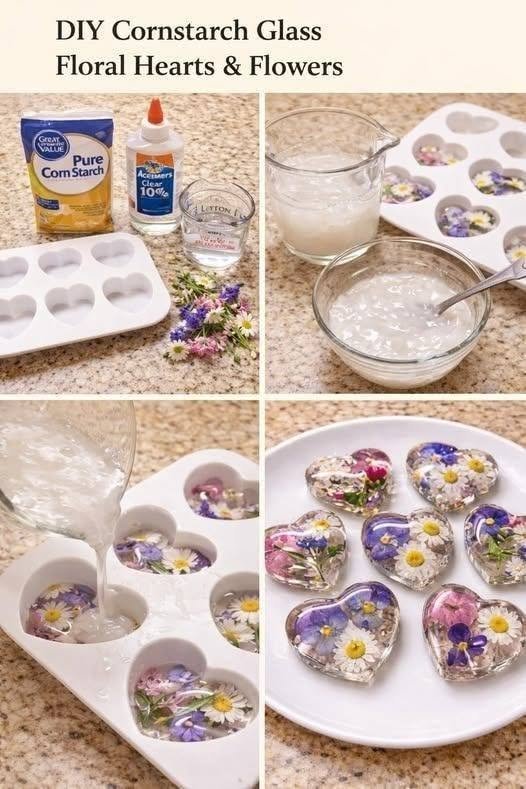
Headlines like “Cornstarch Glass Floral Hearts & Flowers: The Stunning DIY Craft That Looks Like Stained Glass” highlight one of the internet’s most popular viral crafting trends. These projects usually promise a cheap, beginner-friendly way to make translucent, colorful ornaments or suncatchers that mimic real stained glass using household ingredients—specifically cornstarch, glue, food coloring, and water.
While these viral DIY tutorials make for gorgeous, aesthetic social media videos, it helps to look at what these crafts actually involve, how they hold up in reality, and what safety or durability factors to keep in mind.
How the “Cornstarch Glass” Craft Works
Most of these viral tutorials involve cooking a mixture of cornstarch, water, and white craft glue (or clear school glue) over a stove or in a microwave until it thickens into a glossy, translucent paste. Crafters then divide the mixture, mix in food coloring or acrylic paint to create vibrant hues, and pour or paint them into wire frames, cookie cutters, or onto silicone mats to dry.
-
The Appeal: When it dries, the cornstarch-and-glue mixture hardens into a semi-flexible, translucent sheet that catches the light remarkably well—hence the resemblance to stained glass or colored gelatinous suncatchers. It uses cheap, non-toxic household items, making it a fun craft project to try with older kids.
The Reality: Durability and Limitations
While the finished product can look stunning fresh off the drying rack, these DIY faux-glass creations come with a few notable drawbacks that viral videos rarely mention:
-
High Sensitivity to Moisture (Hygroscopic Nature): Cornstarch and water-based glues are naturally hydrophilic—meaning they love moisture. If you hang these “suncatchers” on a humid window, in a steamy bathroom, or outside where morning dew hits them, the cornstarch will absorb moisture from the air, soften, turn sticky, or even melt/warp over time.
-
Fragility and Shrinkage: As the water completely evaporates from the cooked cornstarch mixture, the pieces tend to shrink, curl at the edges, or become brittle. Without a proper sealing agent (like a heavy-duty clear varnish or resin), they won’t last more than a few weeks before degrading.
-
Not Food-Safe or Permanent: Unlike actual glass or kiln-fired ceramics, these decorations are strictly temporary indoor crafts.
Tips If You Want to Try It
If you decide to give a cornstarch craft a whirl on a rainy afternoon:
-
Add a Sealant: Once your floral hearts or designs are completely dry, coating them with a clear, waterproof acrylic spray or sealer can protect them from ambient humidity and prevent them from getting sticky.
-
Keep Them Indoors: Hang them on an interior glass door, a wall, or a window that doesn’t get condensation or direct, heavy weather exposure.
-
Expect Experimentation: Getting the exact consistency right—so it pours smoothly without cracking as it dries—often takes a bit of trial and error compared to how effortless it looks in a 30-second sped-up video.
Have you been trying out viral DIY craft videos lately, or did this particular floral stained-glass look catch your eye for a specific project?