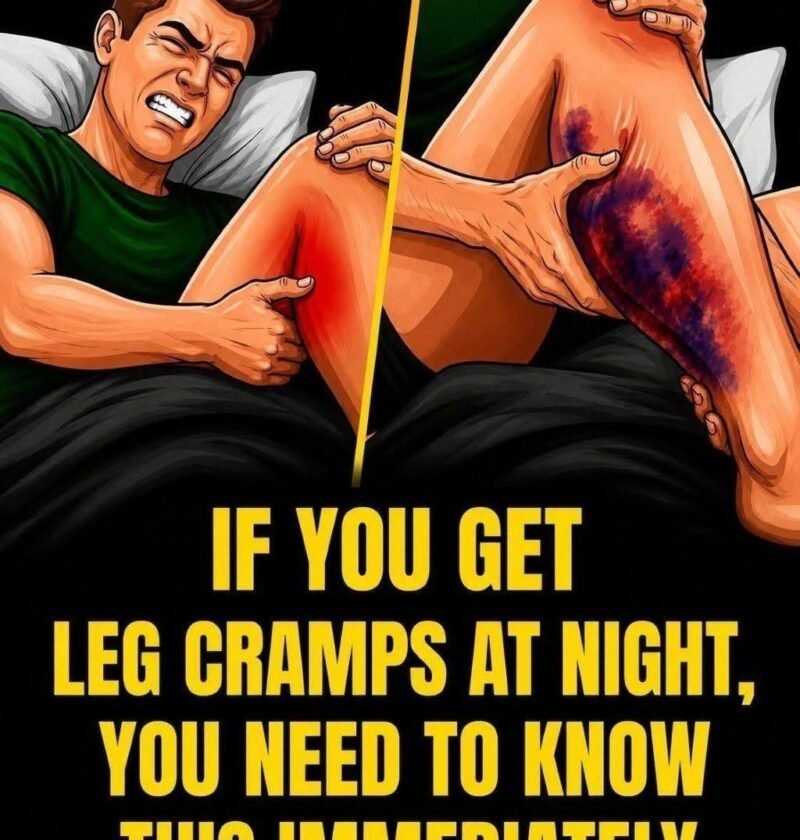
That classic alarmist headline—“Don’t Ignore Leg Cramps at Night. Here’s What You Should Know”—is designed to instantly grab your attention. Articles using this hook love to play on the intense, jarring pain of a midnight charley horse to convince you that your muscles are locking up because of a terrifying systemic failure or an expensive mineral deficiency, often ending with a pitch for pricey electrolyte drops or unverified cramp-cure tonics.
While waking up with a severely knotted calf is intensely unpleasant, the vast majority of nocturnal leg cramps are entirely harmless.
When you separate sensationalized marketing from clinical reality, what causes these sudden midnight spasms, and when should you actually pay attention?
Why Do Nighttime Leg Cramps Happen?
Most nocturnal leg cramps are classified as “idiopathic,” meaning they happen spontaneously without a clear, dangerous underlying cause. However, sleep medicine and neurology point to a few primary physiological triggers:
-
Muscle Fatigue and Overexertion:
-
The Reality: If you spent the day standing on hard floors, walked much more than usual, or pushed through an intense workout, your neuromuscular system is fatigued. As your muscles relax and you drift off to sleep, tired muscle fibers can misfire and spasm.
-
-
Prolonged Muscle Shortening:
-
The Reality: How you sleep matters. If you sleep with your feet pointed downward (plantarflexion)—which happens naturally under heavy blankets or when sleeping on your stomach—your calf muscles remain in a shortened, contracted position for hours, making them much more vulnerable to sudden cramping when stretched.
-
-
Mild Dehydration and Electrolyte Shifts:
-
The Reality: While dehydration doesn’t cause every cramp, a lack of adequate fluid balance can make nerve endings hyper-excitable, leading to spontaneous muscle contractions.
-
-
Nerve Irritation or Compression:
-
The Reality: Mild nerve compression in the lower spine (like minor lumbar radiculopathy) can sometimes send erratic signals down the leg, triggering spasms as muscles relax at night.
-
What Doesn’t Usually Cause Nighttime Cramps
Clickbait loves to claim that sudden cramps mean your kidneys are failing or your circulation is completely blocked.
-
Arterial Blockage (PAD): While poor circulation can cause pain in the legs (called claudication), that pain typically happens during exercise or walking and stops when you rest—whereas nighttime cramps happen while you are completely at rest.
When Should You Actually Pay Attention?
While a random midnight cramp that resolves with a quick stretch is completely normal, you should consult a doctor if:
-
The cramps are frequent and severe: Happening multiple times a night, every single night, disrupting your sleep.
-
They are accompanied by other symptoms: Such as significant muscle weakness, visible muscle wasting, numbness, or swelling and redness in the leg.
-
They spread beyond the calf: Affecting your arms or upper body as well.
Simple Ways to Manage Them
You don’t need expensive miracle cures. When a cramp strikes, a firm, immediate stretch (pulling your toes upward toward your shin) lengthens the muscle and stops the spasm. During the day, regular calf-stretching routines, staying well-hydrated, and wearing supportive shoes can significantly reduce how often they happen.
Are you or someone you know waking up with frequent night cramps, or did a viral health warning catch your eye?