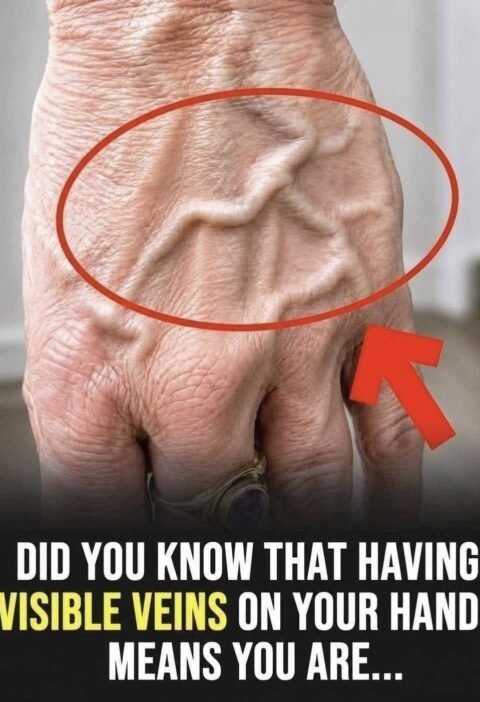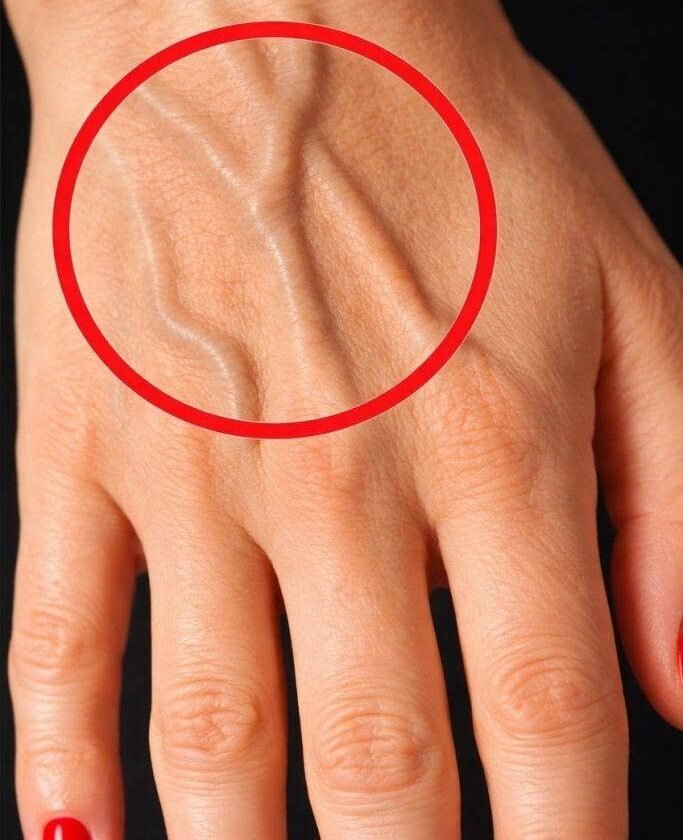
That classic, dramatic ellipsis hook—“If your veins are visible, it means you are…”—is a staple of social media health fear-mongering.
Articles using this exact phrasing love to play on your anxieties. They will take a completely normal physical trait and use it to tease an alarming conclusion—claiming it either means you have a terrifying underlying vascular disease or that you’ve discovered a secret “miracle” anti-aging hack.
When you cut through the clickbait hype, having visible veins is almost always a normal part of human anatomy, genetics, and aging rather than a hidden medical emergency.
Why Are Veins Visible? (The Real Physiological Reasons)
Your veins are the blood highway returning deoxygenated blood back to your heart. Whether they stand out or seem invisible depends on a few straightforward biological factors:
-
Low Body Fat Percentage:
-
The Reality: Fat acts as a natural insulating cushion beneath the skin. If you have a lower overall body fat percentage, your skin sits closer to your underlying blood vessels, making them naturally more prominent (especially on the hands, arms, and feet).
-
-
Genetics and Fair Skin:
-
The Reality: The amount of subcutaneous fat you have, the natural thickness of your dermal layer, and even the transparency of your skin are largely written in your DNA. People with very fair skin often notice their bluish-green veins much more easily because light penetrates and reflects off the blood vessels through pale skin.
-
-
Aging and Loss of Skin Elasticity:
-
The Reality: As we age, our skin naturally thins, and we lose collagen and subcutaneous fat. This age-related thinning makes superficial veins much more visible, particularly on the hands and legs.
-
-
Physical Exertion, Heat, and Hydration:
-
The Reality: When you exercise or when the weather is warm, your body pushes blood closer to the skin’s surface to release heat and cool you down, causing veins to temporarily dilate and stand out. Similarly, being well-hydrated increases overall blood volume, which can make veins appear fuller.
-
When Should You Pay Attention to Your Veins?
While normal visible veins are entirely harmless, there are specific medical scenarios where vein appearance warrants a doctor’s evaluation:
-
Varicose Veins: Unlike flat, superficial veins that show up due to low body fat or thin skin, varicose veins are swollen, twisted, and enlarged veins that usually appear in the legs. They happen when tiny one-way valves inside the veins weaken, causing blood to pool. They can cause aching, heaviness, or discomfort and are worth discussing with a doctor or vein specialist.
-
Sudden Changes or Swelling: If a vein becomes suddenly hard, painful, red, or tender to the touch (which can sometimes indicate superficial phlebitis or a clot), it requires professional medical attention.
The Bottom Line
Seeing your veins doesn’t mean you are falling apart or harboring a secret health crisis—it usually just means you are human!
Are you noticing visible veins in a specific area, or just decoding another viral clickbait headline?