Sensational health headlines warning you to “avoid surgery if possible” regarding gallbladder removal (cholecystectomy) often exploit fear. While no major surgery should be taken lightly, delaying necessary intervention when an organ is actively failing or infected can lead to life-threatening complications like sepsis or a ruptured gallbladder.
To understand what happens after removal, it helps to look at what the gallbladder actually does—and how the body adapts when it is gone.
What Does the Gallbladder Do?
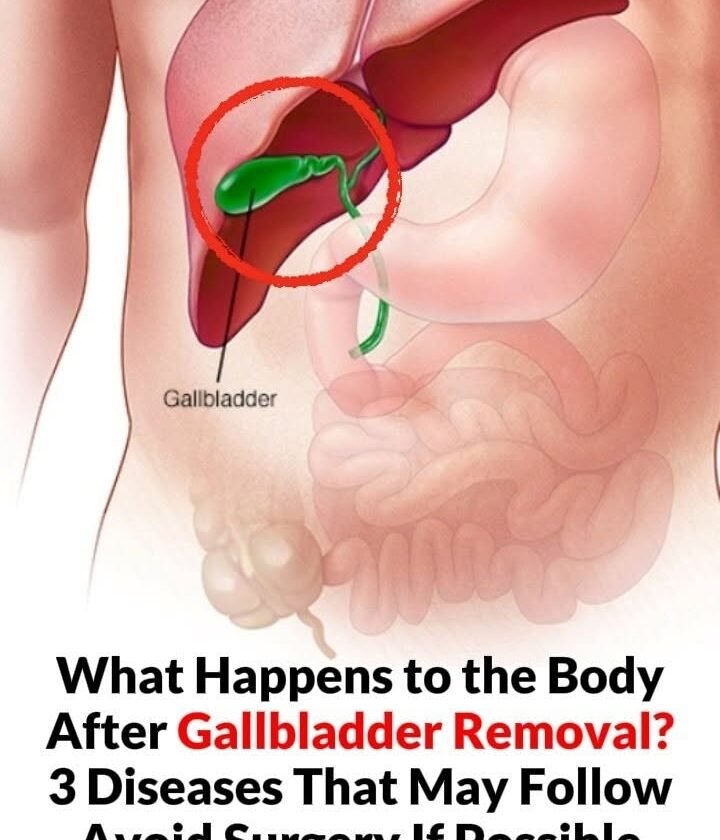
The gallbladder is a small, pear-shaped organ that sits just under your liver. Its primary job is to store and concentrate bile—a fluid produced by the liver that helps your body break down and digest dietary fats.
When you eat a fatty meal, the gallbladder contracts and squirts bile into your small intestine.
What Happens to the Body After Removal?
When the gallbladder is removed, bile doesn’t stop flowing; it just changes its delivery route. Instead of being stored in a reservoir, bile drips continuously and directly from your liver down into your small intestine.
For most people, the body adapts seamlessly within a few weeks or months: the common bile duct expands slightly to take over some storage capacity, and digestion continues normally. However, because bile is no longer released in concentrated, meal-timed bursts, some individuals experience temporary or long-term digestive shifts (such as looser stools or mild fat intolerance).
The Reality Behind “Diseases That May Follow”
Clickbait articles often list scary post-surgical conditions as a reason to avoid operations altogether. While certain issues can occur after a cholecystectomy, they are generally manageable or affect a minority of patients:
-
Bile Acid Malabsorption (BAM) / Chronic Diarrhea
-
What happens: Because bile now flows continuously into the intestines without being regulated by a gallbladder, it can occasionally overwhelm the lower intestine’s ability to reabsorb it, leading to sudden, urgent diarrhea after meals.
-
How it’s managed: Easily treated with dietary adjustments (reducing heavy, greasy fats in a single sitting) or prescription bile acid sequestrant medications.
-
-
Post-Cholecystectomy Syndrome (PCS)
-
What happens: This is an umbrella term for persistent abdominal symptoms—such as upper right pain, bloating, indigestion, or nausea—that linger or appear after surgery. It is often caused by minor remnant issues, such as a tiny leftover gallstone in the bile duct, sphincter of Oddi dysfunction, or unrelated gastrointestinal issues (like irritable bowel syndrome or acid reflux) that mimic gallbladder pain.
-
How it’s managed: Investigated via imaging or endoscopy to find the specific root cause.
-
-
Altered Fat Digestion and Nutrient Absorption
-
What happens: Without concentrated bile surges, digesting very high-fat meals can occasionally cause temporary bloating or make it slightly harder to absorb fat-soluble vitamins (A, D, E, K).
-
How it’s managed: Eating smaller, more frequent meals containing moderate, healthy fats rather than massive, greasy meals.
-
When Is Gallbladder Surgery Actually Necessary?
While lifestyle changes, diet modifications, and certain medications can manage mild, asymptomatic gallstones, surgery (cholecystectomy) becomes medically essential when:
-
You experience frequent, agonizing gallbladder attacks (biliary colic).
-
Gallstones block a bile duct, causing dangerous inflammation (cholecystitis), jaundice, or infection.
-
The gallbladder becomes infected, scarred, or at risk of rupturing.
Leaving a severely diseased or infected gallbladder in place to avoid surgery is dangerous and can lead to systemic infection.
Are you or someone you know currently navigating gallbladder issues, or trying to manage post-surgery digestion?