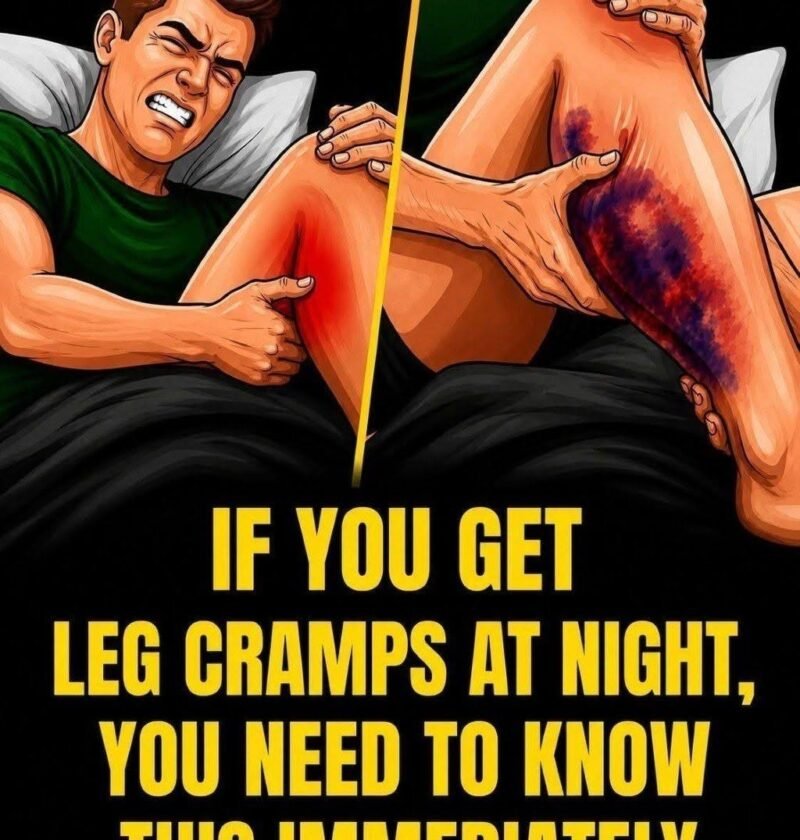
Waking up in the middle of the night with a sudden, agonizing knot in your calf or foot is an experience that instantly shatters your sleep. While nocturnal leg cramps usually pass after a few painful minutes, medical experts emphasize that you shouldn’t just brush them off as a harmless nighttime nuisance.
Here is what you need to know about why nighttime leg cramps happen, when they signal something deeper, and how to find relief:
—
### What Actually Causes Nighttime Leg Cramps?
Nocturnal leg cramps are involuntary contractions of the skeletal muscles—most frequently affecting the calf muscles, feet, or hamstrings. While doctors often classify most nighttime cramps as “idiopathic” (meaning they occur on their own without a clear underlying illness), they are usually triggered by a combination of physical and physiological factors:
1. **The Sleep Position Trap:** When you sleep on your side or stomach, your feet often point downward (a position called plantar flexion). This posture keeps your calf muscles and Achilles tendons in a shortened state for hours, making them highly susceptible to sudden spasms when a stray movement stimulates them.
2. **Nerve and Muscle Fatigue:** Overusing your muscles during the day, or conversely, living a sedentary lifestyle where your legs rarely move through their full range of motion, can leave muscle fibers tight and unstable.
3. **Electrolyte Imbalances:** Low levels of essential minerals like **magnesium, potassium, calcium, or sodium** disrupt the delicate electrical signals that travel between your nerves and muscle cells, preventing your muscles from relaxing properly.
4. **Dehydration:** Inadequate fluid intake throughout the day reduces overall blood volume and impairs optimal muscle and nerve function.
5. **Medication Side Effects:** Several common prescription drugs can interfere with electrolyte balances or trigger cramping, including **diuretics (water pills)** used for high blood pressure and **statins** used for cholesterol management.
6. **Underlying Health Conditions:** Frequent, severe cramps can sometimes point to metabolic issues (like type 2 diabetes), circulatory problems (like peripheral artery disease), or structural issues (like flat feet or nerve compression).
—
### Immediate Relief: What to Do When a Cramp Strikes
When a cramp hits at 3:00 AM, act fast with these steps:
* **Stretch Instantly:** Straighten your leg and pull your toes upward toward your shin (dorsiflexion) to manually stretch and lengthen the cramped muscle.
* **Walk It Off:** Gently walking around or shaking out your leg sends signals to your nervous system to release the contraction.
* **Apply Heat or Massage:** Rub the tight muscle gently with your hands, or use a warm washcloth, heating pad, or warm shower to help relax the muscle fibers.
—
### How to Prevent Future Night Cramps
* **Bedtime Stretches:** Dedicate 2 to 3 minutes before getting into bed to gently stretch your calves and hamstrings.
* **Loosen Your Bedding:** Avoid tucking your blankets or sheets tightly in at the bottom of the mattress, which forces your feet downward all night. Let your feet rest naturally.
* **Hydrate and Nourish:** Drink plenty of water throughout the day, and incorporate magnesium-rich foods (like nuts, seeds, and leafy greens) and potassium-rich foods (like bananas and sweet potatoes) into your meals.
—
> **When to See a Doctor:** If your leg cramps happen almost every night, are intensely painful, leave lasting muscle weakness, or are accompanied by swelling or skin discoloration, do not ignore them. Schedule a visit with your physician to check for underlying nutritional deficiencies, circulation issues, or medication interactions.