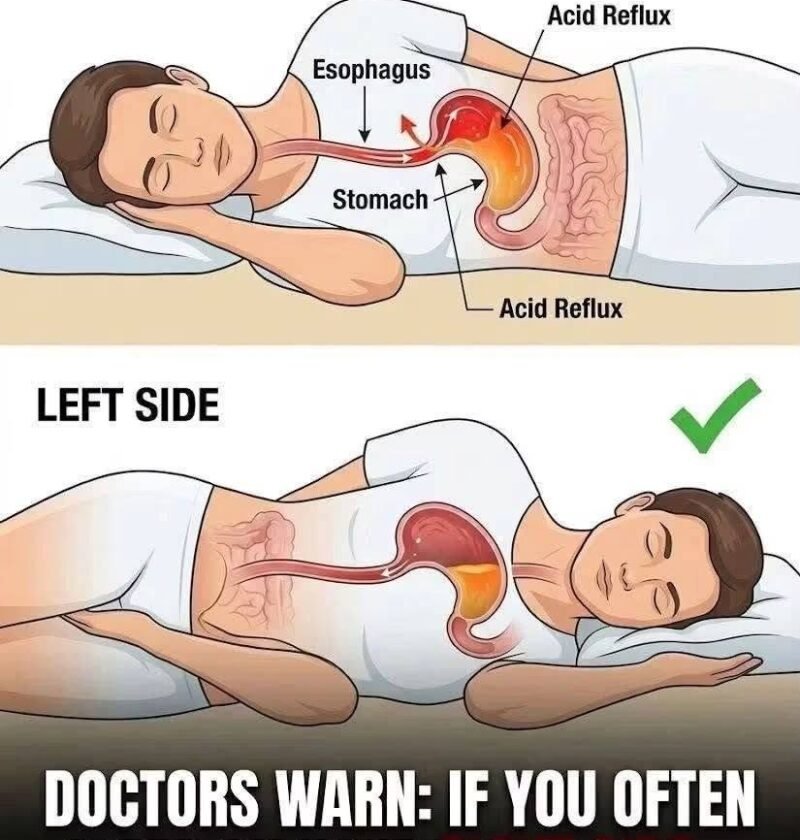
Sleeping on your left side is one of the most widely recommended lifestyle adjustments by gastroenterologists for managing acid reflux and GERD (Gastroesophageal Reflux Disease). The reason comes down to basic human anatomy and gravity.
Here is why left-side sleeping helps keep stomach acid where it belongs:
1. Anatomical Alignment (The Stomach’s Position)
Your stomach sits on the left side of your upper abdominal cavity. Because of this natural asymmetry:
-
When you sleep on your left side: The junction where your esophagus meets your stomach (the lower esophageal sphincter, or LES) is positioned above the level of gastric acid. Gravity works against the acid, making it much harder for it to bubble upward into your esophagus.
-
When you sleep on your right side: Your stomach is positioned higher than the esophagus. Gravity naturally encourages stomach contents and acid to pool right against the valve, making acid reflux and heartburn significantly more likely.
2. The Shape of the Stomach (The Gastric Fundus)
The upper part of your stomach (the fundus) extends to the left. Lying on your left side keeps this acid-filled pouch hanging below the esophageal opening. When you lie on your right side, the stomach fluid shifts to cover the valve, increasing the frequency and duration of acid exposure.
3. Reduced Transient LES Relaxations
Studies tracking esophageal pH levels overnight have consistently shown that acid clearance is much faster and reflux episodes are significantly fewer when sleeping on the left side compared to the right side or the back.
Additional Tips for Managing Nighttime Reflux
While left-side sleeping is a powerful tool, combining it with a few other habits can provide even better relief:
-
Elevate the Head of Your Bed: Raising your entire upper body by 6 to 9 inches (using bed risers or a wedge pillow—not just extra head pillows) helps gravity keep acid down.
-
Avoid Late-Night Meals: Try to finish eating at least 2 to 3 hours before lying down to give your stomach time to empty its contents.
-
Watch Trigger Foods: Spicy foods, citrus, tomato-based sauces, caffeine, alcohol, and high-fat meals can relax the esophageal sphincter and trigger nighttime reflux.
Are you or a loved one dealing with nighttime heartburn or acid reflux?