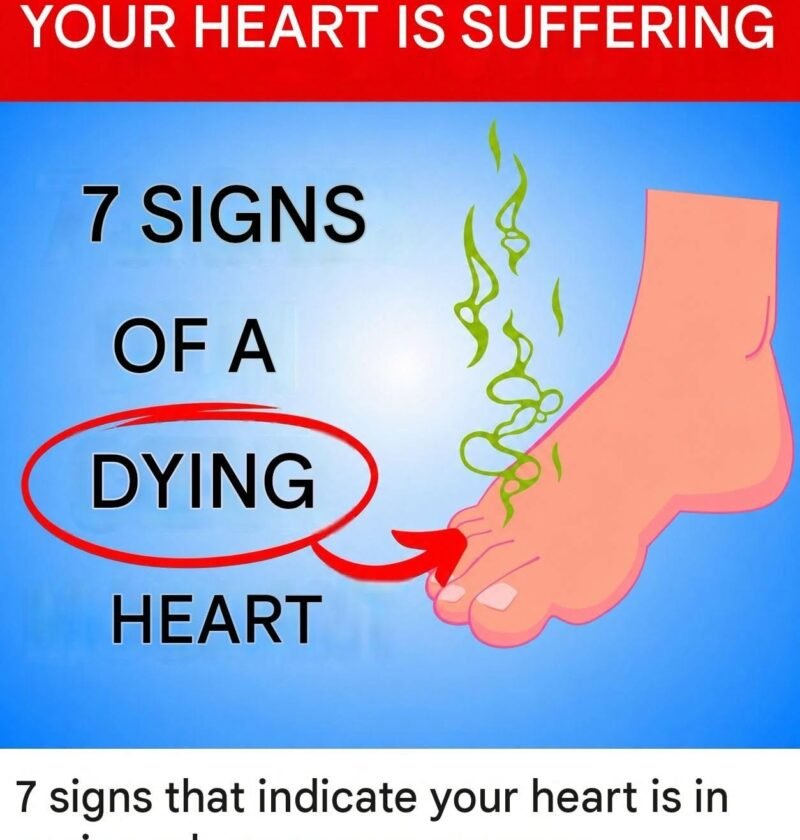
can sometimes strike suddenly without warning, the body often sends critical signals when the cardiovascular system is under acute stress or failing.
Here are 7 serious signs that indicate your heart may be in danger and requires immediate medical attention:
1. Crushing Chest Pain, Pressure, or Tightness (Angina)
The classic sign of a heart struggling for oxygen (myocardial ischemia) or undergoing a heart attack is discomfort in the center or left side of the chest.
-
What it feels like: It is often described not as sharp pain, but as heavy pressure, squeezing, fullness, tightness, or a crushing weight (as if someone is sitting on your chest).
-
The Warning: If this pressure lasts more than a few minutes or comes and goes with physical exertion, it is a major medical red flag.
2. Radiating Pain Down the Arm, Jaw, Back, or Neck
Heart distress doesn’t always stay confined to the chest. Because the nerves originating from the heart share pathways with nerves in the upper body, pain frequently refers to neighboring areas.
-
The Warning: Unexplained pain, numbness, or aching radiating down the left arm (or sometimes both arms), shooting up into the jaw or teeth, creeping up the neck, or stabbing between the shoulder blades should never be ignored.
3. Sudden, Severe Shortness of Breath (Dyspnea)
If you find yourself gasping for air or severely winded after doing very little—or even while resting or lying flat—it can indicate that the heart is struggling to pump blood effectively.
-
The Warning: When the heart muscle weakens, fluid can back up into the lungs (a hallmark of acute heart failure or a failing left ventricle), making normal breathing difficult. Sudden, unexplained breathlessness is a medical emergency.
4. Cold Sweats, Diaphoresis, and Clammy Skin
Breaking out in a sudden, cold, clammy sweat for no apparent reason—often accompanied by pale skin—is a classic autonomic nervous system response to severe cardiac stress.
-
The Warning: If you suddenly feel chilled, weak, and drenched in a cold sweat while resting, especially when paired with chest discomfort or nausea, call emergency services immediately.
5. Sudden, Unexplained Dizziness, Lightheadedness, or Fainting (Syncope)
Your brain relies on a steady, strong stream of blood pumped by the heart. If your heart rate drops dangerously low, beats erratically (dangerous arrhythmias), or fails to pump with enough force, blood pressure plummets.
-
The Warning: Sudden fainting, severe lightheadedness, or feeling like the room is spinning can indicate that your heart is failing to supply the brain with adequate blood flow.
6. Rapid, Pounding, or Irregular Heartbeat (Palpitations with Symptoms)
While everyone occasionally experiences a harmless skipped heartbeat or flutter due to caffeine or stress, sudden and severe palpitations are different.
-
The Warning: If your heart starts racing uncontrollably, fluttering erratically, or pounding heavily—especially if it is accompanied by dizziness, chest pain, or shortness of breath—it can signal a dangerous arrhythmia (such as ventricular tachycardia or atrial fibrillation with rapid ventricular response).
7. Rapid, Unexplained Swelling in the Feet, Ankles, or Legs (Edema)
When the heart (specifically the right side) is failing or pumping inefficiently, blood flow slows down. This causes fluid to back up in the circulatory system and leak into surrounding tissues due to gravity.
-
The Warning: While mild swelling can happen from sitting too long, rapid or worsening swelling in the lower legs, ankles, or abdomen, accompanied by sudden weight gain, is a classic sign of worsening congestive heart failure.
What to Do in an Emergency
If you or someone nearby experiences sudden chest pressure, radiating pain, severe breathlessness, or fainting, do not wait to see if it passes. Call emergency services (such as 911) immediately. Chewing an aspirin (if not allergic and advised by emergency dispatchers) can sometimes help buy critical time during a suspected heart attack.
Are you or a loved one currently experiencing any of these symptoms, or are you looking into cardiovascular warning signs out of general concern?