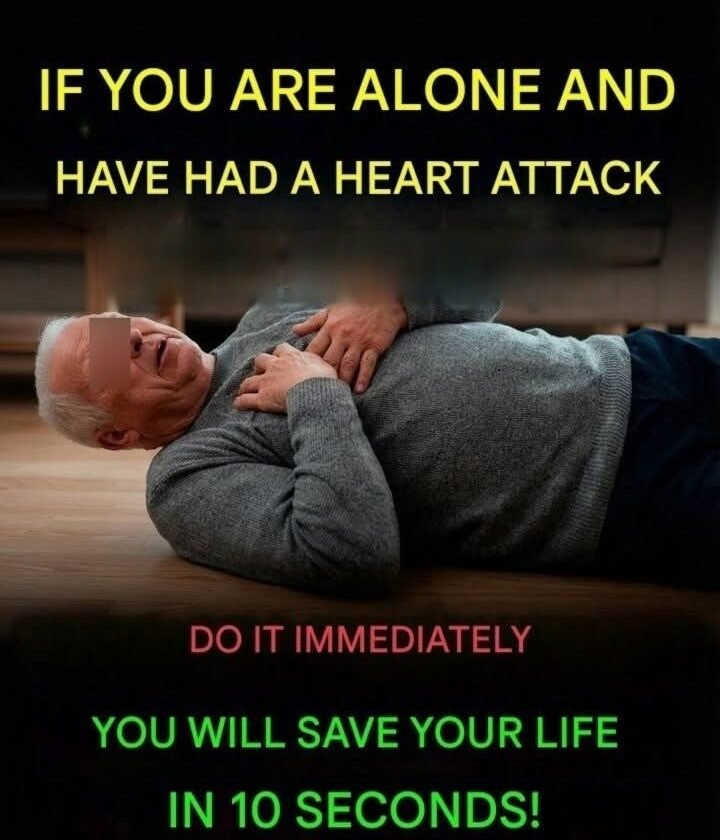
When viral articles offer advice on surviving a heart attack alone, they are addressing a terrifying scenario: experiencing a cardiac emergency when no one else is around. While sensationalized posts often promote dangerous home remedies like “cough CPR,” legitimate cardiac guidance for being alone centers on fast, proven actions that buy precious time until professional help arrives.
When every second counts, here are the evidence-based steps you must take if you suspect you are having a heart attack while home alone:
1. Call 911 (or Your Local Emergency Number) Immediately
-
The Clinical Reality: Do not try to sleep it off, do not wait to see if the pain subsides, and do not call a relative or friend first. Calling emergency services immediately is the single most important action you can take. Paramedics begin advanced life support and continuous heart monitoring the moment they arrive at your door.
2. Unlock Your Front Door
-
The Action: If you are able to walk and are home alone, walk to your front door and unlock it (or unlatch a security chain).
-
Why It Matters: If your condition rapidly deteriorates and you lose consciousness, emergency responders can gain entry instantly without having to break down your door, saving vital minutes.
3. Chew an Aspirin (If Available)
-
The Action: If you are not allergic and have no history of severe bleeding disorders or stomach ulcers, chew and swallow a regular, uncoated aspirin (325 mg).
-
Why It Matters: Chewing the aspirin allows it to enter your bloodstream much faster than swallowing it whole. It helps prevent blood platelets from clumping together, which slows down the progression of the blood clot blocking your coronary artery.
4. Sit Down and Rest Immediately
-
The Action: Stop whatever physical activity you are doing right away. Sit down on the floor, in a sturdy armchair, or lean against a wall.
-
Why It Matters: Straining your heart or standing up while experiencing cardiac distress increases your heart’s demand for oxygen and puts you at risk of sudden fainting or injury if you lose consciousness. Keeping your body completely still reduces the heart’s workload.
What to Avoid Doing
-
Do Not Attempt “Cough CPR”: As discussed previously, aggressively coughing does not unblock a coronary artery and will only exhaust you or cause you to pass out faster.
-
Do Not Try to Drive Yourself to the Hospital: Driving during a heart attack puts both your life and others on the road in extreme danger. If you pass out behind the wheel, you risk a catastrophic accident. Let emergency medical transport handle getting you to care safely.
Heart Health Reminder: Knowing the early warning signs—such as sudden crushing chest pressure, shortness of breath, cold sweats, or pain radiating down your arm or into your jaw—allows you to act before an emergency escalates.
Are you reviewing these emergency steps for personal preparedness, or is there a specific heart health question on your mind today?